
by plittle@westcoastdetectives.us | Jun 28, 2026 | Blog
How to Know When You Need a Private Investigator for Company Problems – Act FAST Before Losses Mount!
At West Coast Detectives International, I hear it all the time:
“I wish I’d called you a year ago!”
Business owners, executives, and managers watch problems spiral out of control—then discover too late that a skilled private investigator could have stopped the bleeding early.
Don’t wait until the damage is done.
A professional PI operates right in that critical zone between initial suspicion and full prosecution. We deliver the rock-solid facts you need to act decisively—right now—before small issues explode into major financial hits, legal nightmares, or reputational disasters.
The All-Too-Common Mistake
You notice red flags: inventory disappearing, suspicious expenses, employee theft, or possible fraud. You pick up the phone and call the local police.
Their response? “What proof do you have? Can you document the loss?”
When you say it’s just a strong suspicion, they reply: “We need concrete facts to open a case.” Then they often refer you straight to us.
That’s exactly when you need to move with urgency—not later.
Why Speed and Facts Matter More Than Ever
Fact-finding isn’t just for building criminal cases. It’s your best defense for the company itself.
A swift, professional investigation gives you:
- Ironclad evidence before you confront anyone or involve law enforcement
- Protection from lawsuits—labor disputes, wrongful termination claims, or regulatory violations
- Workforce trust and respect—when management acts fairly and based on facts, employees see justice, not favoritism
Delaying means more money walks out the door, morale tanks, and your options shrink fast.
Bottom line: Prevention beats enforcement every single time. The earlier you bring in experts, the faster you stop the problem and protect your bottom line.
Signs It’s Time to Call in Outside Investigation Support Immediately
(Stay tuned—next we’ll break down the clear warning signs and red flags that scream “Call a PI today!”)
At West Coast Detectives International, our team blends 100+ years of experience with cutting-edge techniques to deliver results you can act on right now. Don’t become another “I wish I’d called sooner” story.
Reach out today—before the problem gets worse. Your company’s security and success depend on it.
West Coast Detectives International – Prevention is always less costly than enforcement.
A complaint lands on an executive desk. Revenue is drifting off target, a key employee is acting outside policy, or a threat appears that cannot be handled through routine HR or legal channels. That is usually the moment leaders start asking what kind of problems in a company will necessity hiring a investigator – or, stated more clearly, what kind of problems in a company will necessitate hiring an investigator.
The answer is not every problem. Many business issues belong with managers, auditors, HR, or outside counsel. But some situations cross a line. They involve deception, hidden relationships, reputational exposure, personal safety, or facts that cannot be established through ordinary internal review. In those cases, a qualified investigator is not a luxury. It is a risk-control measure.
What kind of problems in a company will necessitate hiring an investigator?
The most common trigger is uncertainty with consequences. If the company faces legal, financial, operational, or security damage and leadership does not have reliable facts, an investigator may be necessary. The role is not to confirm a suspicion for political convenience. It is to establish what is true, what is untrue, what can be proven, and what actions should follow.
That distinction matters. An internal rumor may be unpleasant, but not every rumor justifies a formal investigation. On the other hand, a quiet allegation of procurement fraud, executive misconduct, trade secret theft, or workplace threats can carry serious downstream impact if ignored for even a few days. Timing, evidence preservation, and discretion often decide whether a company contains a problem or lets it spread.
Fraud, theft, and financial irregularities
When numbers stop making sense, leadership often starts with accounting controls. That is appropriate. But when financial discrepancies appear tied to human behavior rather than clerical error, the matter often requires investigative work.
This can include embezzlement, fake vendors, payroll schemes, expense abuse, inventory diversion, kickbacks, procurement manipulation, or collusion between insiders and third parties. In many of these cases, the real issue is not just the missing money. It is the method. If a scheme exists, leadership needs to know who is involved, how long it has been running, what vulnerabilities made it possible, and whether the activity touches other departments or jurisdictions.
An investigator helps move beyond suspicion into factual development. That may involve interviews, timeline analysis, open-source intelligence, records review, surveillance where lawful and appropriate, and coordination with counsel or law enforcement when needed. The trade-off is that a rushed or poorly scoped inquiry can tip off the subject and compromise evidence, so these cases require discipline.
Internal misconduct that exceeds routine HR handling
Some employee issues are straightforward management matters. Others are not. If allegations involve harassment, discrimination, retaliation, violence, conflicts of interest, policy evasion by senior personnel, or abuse of authority, the company may need an independent investigative process.
This is especially true when the accused person is high-ranking, politically protected, or closely connected to the decision-makers who would normally review the case. Internal teams may be capable, but they are not always seen as neutral. That lack of perceived independence can create legal and reputational problems of its own.
A professional investigator can establish a defensible factual record. That does not mean every allegation is substantiated. In fact, one of the most valuable outcomes is a clear finding that prevents an organization from overreacting to rumor or office politics. Serious investigative work protects the innocent as much as it exposes misconduct.
Threats to executives, staff, facilities, or events
Security-related incidents often begin as fragments. A troubling message. An agitated former employee. A protest movement with unclear intent. A social media post that may be bluster or may be precursor behavior. Companies often make mistakes at both extremes – dismissing warning signs too early or reacting without enough intelligence.
This is one of the clearest examples of what kind of problems in a company will necessitate hiring an investigator. Threats require assessment, source validation, and often a broader understanding of capability, intent, access, and escalation risk. The question is not simply whether someone made a statement. The question is whether that person can act on it, whether they have support, whether travel or event plans increase exposure, and what protective steps should be taken.
For high-profile organizations and individuals, the stakes rise quickly. A credible investigation may intersect with protective intelligence, executive protection planning, insider risk review, and coordination across multiple locations. In those environments, speed matters, but so does judgment. Overstating a threat can be disruptive. Understating it can be catastrophic.
Intellectual property loss and information leakage
A company may not realize it has an internal leak until a competitor moves too fast, sensitive plans appear outside authorized channels, or confidential conversations show up in litigation, media, or negotiation settings. Trade secrets, client lists, pricing models, product designs, strategic roadmaps, and proprietary processes all have value. Once exposed, that value can be difficult to recover.
An investigator may be needed when there is reason to believe information is being copied, transferred, sold, or improperly shared. The challenge here is that these cases often sit at the intersection of legal review, digital forensics, employee conduct, and external relationships. A narrow approach misses the bigger picture.
Sometimes the source is a departing employee. Sometimes it is a vendor, contractor, consultant, or joint venture partner. Sometimes it is an executive with undeclared competing interests. Fact-finding must be careful, lawful, and well documented. Companies that move aggressively without evidence can create liability. Companies that move too slowly may lose strategic assets.
Vendor fraud, third-party risk, and due diligence failures
Not all company problems originate inside the company. Some begin with who the company chose to trust.
Before major partnerships, acquisitions, investments, international expansions, or high-value contracts, due diligence is not a formality. It is a protective function. If a third party has hidden litigation, sanctions exposure, corruption indicators, shell structures, extremist ties, reputation problems, or a history of deception, the company needs that information before money moves or names are publicly associated.
When problems emerge after a deal is underway, the need for investigation becomes more urgent. Leadership may need to know whether it is facing a bad business outcome or intentional misrepresentation. That difference affects legal strategy, financial exposure, insurance issues, regulatory reporting, and brand protection.
For multinational activity, the complexity increases. Surface-level database checks are rarely enough in high-risk regions or politically sensitive environments. This is where experienced investigative and intelligence support becomes materially different from standard screening.
Litigation support and disputed facts
By the time a company is in active litigation, facts are often contested, motives are disputed, and witnesses may be selective with memory. Counsel builds the legal case, but investigators often help establish the factual architecture beneath it.
This may involve locating witnesses, verifying alibis or timelines, identifying undisclosed relationships, analyzing public records, researching corporate affiliations, or developing background on adverse parties. In some matters, the goal is not dramatic discovery. It is credibility testing. If a claimant, executive, partner, or opposing witness has omitted key information, that omission can change the posture of the case.
Still, not every lawsuit needs an investigator. The question is whether independent fact development will materially affect exposure, leverage, or settlement posture. If the answer is yes, waiting too long can narrow options.
When leadership cannot trust internal reporting
One of the clearest warning signs is not a single incident but a pattern. Reports do not align. Departments blame each other. Senior leaders receive filtered information. Whistleblowers fear retaliation. Regional offices operate with unusual autonomy. Something is off, but no one can pin it down.
This is where external investigative support can be particularly effective. An outside team is less embedded in company politics and often better positioned to test narratives, identify inconsistencies, and follow leads without internal pressure. Independence does not guarantee a better result, but in sensitive cases it often produces a more credible one.
Organizations sometimes delay at this stage because they worry an investigation will signal distrust. In reality, unresolved distrust is already present. The better question is whether leadership wants assumptions or verified facts.
Signs the problem has crossed the threshold
A company generally should consider hiring an investigator when the issue involves suspected deception, significant financial loss, executive or employee safety concerns, possible criminal conduct, high-level misconduct, reputational damage, or cross-border complexity. The threshold is also crossed when evidence may disappear, witnesses may coordinate stories, or an internal review would not be seen as impartial.
That does not mean the answer is always a full-scale investigation. Sometimes a limited scoping inquiry is the smarter first step. It allows counsel or leadership to understand whether the matter is real, how broad it may be, and what level of response is justified. The disciplined approach is not to overreact. It is to right-size the response before the facts harden against you.
For organizations operating in sensitive, high-visibility, or international environments, that judgment call is rarely theoretical. It affects people, assets, and institutional credibility. Firms such as West Coast Detectives International are typically brought in when the issue is serious enough that discretion, field experience, and defensible intelligence gathering matter as much as speed.
The best time to bring in an investigator is not after the damage is public. It is when the first credible signs tell you this is no longer a routine management problem and the facts need to be established before the risk grows legs.

by plittle@westcoastdetectives.us | Jun 27, 2026 | Blog
What is Effective Due Diligence in Corporate Investigation?
At West Coast Detectives International, we don’t do cookie-cutter investigations — and that’s exactly why we deliver results when others fall short. Every corporate case hits with its own high-stakes challenges, but we attack them with a proven, battle-tested model that adapts instantly while covering every critical angle.
Forget boilerplate. You’ve seen it with attorneys — they pull out the standard template, swap in your details, and call it done. That lazy approach fails hard in serious corporate investigations. We use sharp checklists to ensure nothing slips through the cracks, but we never stop there. We launch a full-throttle, fact-driven workup tailored to the unique realities of your case — digging deep, moving fast, and striking with precision.
We’ve seen it too many times: clients rush to us in crisis mode after other investigators did a quick “once-over” and completely missed obvious red flags we uncover in hours. Our mission? Hunt down every single fact, chase down every question, and slam the door on loose ends — so you get ironclad intelligence you can act on immediately.
We operate with urgency, relentless drive, and zero tolerance for half-measures. When corporate risks are on the line, speed and thoroughness aren’t optional — they’re everything.
Here are some of the powerful tools and aggressive approaches we deploy to stay ahead of the threat:
Ready to protect what you’ve built? Let’s move fast and get it done right. Contact West Coast Detectives International today.
A promising deal can unravel for reasons that never appear in a pitch deck, management presentation, or polished data room. That is why knowing how to conduct corporate due diligence is not an administrative exercise. It is a protection measure. For acquirers, investors, boards, and legal teams, due diligence is where assumptions are tested, hidden exposure is identified, and decision-making shifts from optimism to verified fact.
Corporate due diligence is often treated as a checklist. In practice, the strongest work is not mechanical. It is investigative. It asks whether the company in front of you is the same company that exists in filings, on the ground, in litigation records, in supplier relationships, and in the market’s private judgment. The gap between those versions is where risk usually lives.
What corporate due diligence is meant to answer
At its core, due diligence is about reducing uncertainty before you commit capital, sign a contract, appoint a partner, or expand a strategic relationship. The central question is straightforward: are you dealing with a lawful, financially stable, operationally credible organization whose risks are understood and acceptable?
That sounds simple, but the answer rarely sits in one place. Financial records may look clean while ownership structures raise concerns. Leadership may appear credible while prior ventures suggest a pattern of disputes. Operations may be profitable while sanctions exposure, regulatory weakness, or reputational liabilities sit just beneath the surface. Good due diligence brings those layers together.
How to conduct corporate due diligence with the right scope
The first mistake many organizations make is starting too broadly or too narrowly. If the scope is too broad, teams burn time collecting low-value information. If it is too narrow, material risk remains untouched. The right scope depends on the decision in front of you.
An acquisition demands a deeper examination than a short-term vendor contract. A cross-border joint venture requires more attention to beneficial ownership, political exposure, local legal systems, and informal business practices than a domestic supplier review. A board appointment or executive hire may require less financial analysis and more reputational, litigation, and background scrutiny.
Before gathering documents, define what is actually at stake. Consider the size of the transaction, the jurisdictions involved, the regulatory environment, the sensitivity of the industry, and how much operational dependency you will have on the target. A company handling critical infrastructure, defense-related work, sensitive customer data, or politically exposed relationships should trigger a much tighter review.
Start with the control questions
A disciplined review usually begins by answering a set of control questions. Who truly owns the company? Who controls it in practice? Is the legal entity structure straightforward or layered through multiple jurisdictions? Are there undisclosed affiliates, nominee relationships, or signs that beneficial ownership has been obscured?
These are not abstract legal issues. Ownership determines exposure to sanctions, corruption risk, hidden conflicts of interest, and reputational fallout. In higher-risk environments, the formal shareholder registry may be only the starting point.
Review the company on paper and in reality
There is a difference between document review and factual verification. Both matter.
The document side includes corporate formation records, annual filings, governing documents, licenses, material contracts, insurance coverage, tax status, debt obligations, and audited financials where available. This establishes the official record. It also reveals inconsistencies, missing filings, unexplained structural changes, and documents that appear clean only because they were prepared for scrutiny.
The factual side tests whether the paper record matches reality. Does the company truly operate where it claims to operate? Are key executives active and credible? Do major customers, suppliers, or industry participants quietly describe the company as dependable, unstable, politically connected, or litigious? Is the workforce real in scale and capability, or overstated? In serious diligence work, this distinction matters because sophisticated counterparties know how to curate a file room.
Financial strength is more than revenue
Financial due diligence should go beyond top-line performance. Revenue growth can hide weak cash flow, customer concentration, delayed receivables, covenant pressure, or unusual related-party transactions. A healthy-looking balance sheet may depend on aggressive assumptions, unresolved tax positions, or liabilities that have not yet matured into formal claims.
Look closely at cash generation, debt structure, contingent liabilities, margin stability, and dependency on one market, one customer, or one founder. Ask whether recent performance is durable or situational. If the business relies on a single contract renewal, a politically sensitive jurisdiction, or a narrow financing window, the risk profile changes materially.
Litigation, compliance, and regulatory exposure
A company can survive commercial friction. It is much harder to absorb recurring allegations of fraud, labor violations, corruption, export control breaches, environmental misconduct, or sanctions evasion. Legal and compliance review should examine not just active litigation, but patterns.
One employment claim may be routine. Ten similar claims across several years may indicate a leadership or culture problem. One customs issue may be correctable. Repeated border seizures, licensing irregularities, or unexplained intermediary payments may suggest a larger compliance failure.
This is where jurisdiction matters. Domestic records can often be searched systematically. International risk is less tidy. In some markets, the most meaningful warning signs do not appear in public databases at all. They emerge through local legal review, source inquiries, language-specific media, and experienced field verification.
Reputation is not a soft factor
In high-value transactions, reputation is often treated as secondary to finance and law. That is a mistake. Reputational damage can impair financing, trigger board concern, erode customer trust, and invite regulatory attention long after a deal closes.
A proper reputational review should assess media history, executive conduct, prior business failures, activist attention, social media narratives where relevant, and market perception among people who actually transact in that sector. It should also distinguish between noise and substance. A controversial founder is not automatically a deal-breaker. Quiet allegations from credible industry participants may matter more than loud online commentary.
Management credibility deserves direct scrutiny
A company’s risk profile often tracks the judgment of the people running it. Executive backgrounds should be verified carefully, including employment history, education, board roles, prior ventures, litigation, enforcement actions, and signs of inflated credentials or omitted affiliations.
This is especially important when leadership is central to the company’s value. Founder-led businesses can be dynamic and profitable, but they can also carry concentration risk, governance weakness, or undisclosed behavior that becomes material only after the transaction is complete.
How to conduct corporate due diligence across borders
Cross-border diligence is where many internal teams lose visibility. Records are fragmented. Language barriers distort findings. Local intermediaries may sanitize information. Political and security conditions can affect what can be verified and how reliably it can be done.
When reviewing an overseas entity, pay close attention to beneficial ownership, politically exposed persons, local court history, corruption indicators, permit integrity, and whether the business depends on relationships that would not survive scrutiny from US regulators or institutional investors. In some regions, a site visit or discreet human-source inquiry may reveal more than weeks of desktop research.
This is one reason specialized firms such as West Coast Detectives International are often engaged on sensitive matters. Not because every case requires dramatic measures, but because serious diligence sometimes depends on experienced investigators, local access, and the ability to verify facts discreetly in places where public records tell only part of the story.
Know when findings are serious enough to change the deal
Due diligence is not successful simply because it produces a thick report. It succeeds when findings are translated into decision points. Some issues are manageable through pricing adjustments, indemnities, escrow structures, enhanced representations, compliance remediation, or post-close monitoring. Others should stop the transaction.
The hard part is judgment. A pending lawsuit may be tolerable if reserves are adequate and the underlying facts are understood. An opaque ownership structure tied to sanctioned parties is different. Weak internal controls may be fixable. Deliberate misrepresentation by management is a more serious signal, because it contaminates everything else you have been told.
The purpose is not to demand a risk-free company. Few exist. The purpose is to know which risks you are accepting, which you can control, and which you should walk away from.
Build a process that can stand up to scrutiny
If the decision later faces board review, investor questions, regulator attention, or litigation, your diligence process should be defensible. That means documenting sources, preserving inconsistencies, noting gaps, and separating verified facts from informed assessments.
It also means resisting time pressure when the stakes are high. Urgency is common in transactions. It is also one of the conditions under which people ignore warning signs. If a target pushes aggressively to limit access, shorten review windows, or explain away missing records, treat that behavior as information, not just inconvenience.
Strong corporate due diligence is patient, skeptical, and proportionate. It uses records, interviews, public sources, and where necessary, field-level verification to build a coherent picture of the entity and the people behind it. When done correctly, it does more than reduce risk. It gives leadership the confidence to proceed, renegotiate, or decline for reasons grounded in fact rather than pressure.
In serious business, that is often the difference between a strategic move and an avoidable problem.

by plittle@westcoastdetectives.us | Jun 27, 2026 | Blog
How to Harness AI and Technology to Dominate in Investigative Work
At West Coast Detectives International, clients constantly ask: “Are you using AI—and how?”
The answer is YES—and we’re using it aggressively to stay ahead.
Technology has revolutionized our field. We now process massive volumes of data in record time, pulling critical intelligence from countless sources without ever stepping into the field. That means faster results, lower costs, and a decisive edge on every case.
But the real game-changer? Artificial intelligence.
When deployed with speed and precision, AI supercharges investigations—uncovering hidden patterns, connections, and leads that would take humans weeks to find.
However—caution is non-negotiable.
We’ve all seen the headlines: prosecutors who lazily let AI draft court briefs, only to get hammered by judges for hallucinations and inaccuracies. Sanctioned. Embarrassed. Case damaged.
In our world, that kind of carelessness isn’t just embarrassing—it can destroy credibility, lose cases, or worse.
That’s why we treat AI as a powerful weapon, never the final authority.
We never let AI replace the human investigator’s judgment, instincts, and hard-earned experience. Every AI-generated insight gets rigorous human oversight. We verify facts, challenge assumptions, and ensure the final report carries the unmistakable touch of seasoned professionals who stand behind every word.
Understand the strengths. Respect the weaknesses. Backstop everything with sharp human eyes.
Done right, AI isn’t just helpful—it’s absolutely transformative. It accelerates everything while we maintain the gold-standard accuracy our clients demand.
Here at West Coast Detectives International, we’ve spent serious time testing, refining, and integrating these tools into our operations.
Ready to see how we’re winning with AI?
We’re sharing the exact strategies, best practices, and lessons we’ve learned—so you can leverage this technology the smart, aggressive, and responsible way.
The future of investigations is here. Let’s seize it—together.
West Coast Detectives International Prevention is less costly than enforcement.™
A surveillance clip with no timestamp integrity, a social profile built by a bot farm, and a flood of location data with no legal context can derail an otherwise sound case. That is the reality behind how to use technology and AI in investigations. The question is not whether advanced tools belong in modern investigative work. The question is how to deploy them without contaminating evidence, compromising privacy, or replacing experienced judgment with false confidence.
For serious investigative assignments, technology is an amplifier, not a substitute. It accelerates review, highlights patterns, and helps teams work across borders and time zones. AI can sort large data volumes, flag anomalies, compare language patterns, and surface relationships that would take a human analyst far longer to identify manually. Yet the strongest investigations still depend on disciplined collection, source validation, legal compliance, and human interpretation grounded in field experience.
Why technology and AI changed investigative work
Investigations used to slow down at the point where information became too abundant. That bottleneck is now different. Corporate disputes generate years of email and chat records. Threat cases involve online activity, device metadata, travel patterns, and public records from multiple jurisdictions. Due diligence may require assessment of beneficial ownership structures, sanctions exposure, media history, litigation records, and local source reporting. The volume alone demands technical support.
Technology helps investigators collect, preserve, and review information at scale. AI helps identify what deserves attention first. In a threat management case, for example, an AI-assisted workflow can cluster hostile messages, identify escalation language, and detect recurrence across accounts. In a due diligence assignment, it can compare names, entities, and addresses across fragmented records, revealing inconsistencies worth deeper inquiry.
That said, speed can create risk. AI systems can misread sarcasm as threat language, confuse people with similar names, or overstate a connection because two data points appear statistically linked. An investigator who accepts machine output without challenge is not being efficient. He is creating exposure.
How to use technology and AI in investigations without weakening the case
The best starting point is not the tool. It is the investigative objective. Before any platform is selected, the team should define what must be proved, what decisions the client needs to make, what legal authorities apply, and what evidence standard the matter may later face. A corporate internal investigation, a civil matter, and a security threat assessment each require different handling.
From there, technology should be mapped to the mission. Digital forensics tools preserve device data and document chain of custody. OSINT platforms broaden situational awareness, but their output must be corroborated. Geospatial tools help reconstruct movement and establish timing. AI-assisted analytics can prioritize records for review, identify communication networks, and detect outlier behavior. None of those functions replaces interviews, source handling, records authentication, or field verification.
A disciplined workflow usually follows four stages. First, data is collected lawfully and preserved in a defensible manner. Second, the material is normalized so that dates, names, file formats, and source references can be compared accurately. Third, analytic tools, including AI where appropriate, are used to identify patterns, gaps, and contradictions. Fourth, findings are validated by trained investigators who can test alternative explanations and assess reliability.
That last stage matters most. If AI flags a probable relationship between a subject and a shell company, an investigator still needs to determine whether the link is current, material, and attributable. If a model highlights threatening language, an experienced professional must evaluate capability, intent, proximity, and context before any protective recommendation is made.
Where AI performs well and where it does not
AI is particularly useful when the challenge is scale. Large document populations, repetitive communications, multilingual material, and open-source pattern detection are all appropriate use cases. Language models can help classify text, summarize lengthy material for analyst review, and surface recurring topics. Machine learning systems can identify unusual transaction sequences, changes in online behavior, or image similarities across large archives.
AI is weaker where ambiguity, deception, and human motive dominate. It does not truly understand why a source lies, whether an interview subject is concealing fear rather than guilt, or how regional culture affects what appears suspicious on paper. It can point to indicators. It cannot independently establish truth.
This is why high-stakes firms do not run investigations on autopilot. They use AI to reduce drag, not to surrender judgment. In protective intelligence, for example, AI can support monitoring by triaging inbound threats and spotting repeated references to a principal, venue, or route. But escalation decisions still belong to professionals who understand protective posture, operational exposure, and real-world capability.
The legal and ethical line cannot be an afterthought
Any discussion of how to use technology and AI in investigations that ignores legal exposure is incomplete. Privacy laws, labor rules, consent requirements, evidence admissibility standards, and cross-border data restrictions all shape what can be collected and how it can be used. The fact that a tool can gather information does not mean an investigator should gather it.
There is also a reputational dimension. An aggressive technical approach that lacks justification can create more risk than it resolves, particularly for public-facing companies, executives, and institutions operating in multiple jurisdictions. Investigative work should always be proportionate to the threat, dispute, or decision at hand.
That is why auditability matters. Teams should be able to explain where data came from, what processing occurred, which analytic methods were used, and how conclusions were reached. If an AI-assisted finding cannot be explained in plain language, it should not be carrying decisive weight.
Building an investigation that combines AI with human tradecraft
The most reliable model is hybrid by design. Technology handles volume and speed. Human investigators handle ambiguity and consequence. When those roles are defined correctly, the result is not just faster work. It is better work.
A strong investigative team uses technical collection and analytics to narrow uncertainty, then applies interviews, source inquiries, contextual research, and strategic judgment to verify the picture. HUMINT remains critical because many meaningful facts never appear in databases. The local reputation of a business partner, the practical influence of a nominee director, the off-record concern of a former associate, or the reality of a security environment on the ground often requires experienced human access.
This is where many organizations make the wrong assumption. They believe more software means more certainty. In practice, more software often means more noise unless the assignment is led by professionals who know what matters, what does not, and what must be proved before action is taken.
For that reason, sophisticated firms such as West Coast Detectives International treat AI as one layer inside a broader investigative architecture. The enduring standard is still factual reporting, source validation, operational discretion, and mission readiness.
Common mistakes clients should avoid
One common mistake is treating AI output as evidence instead of lead generation. A flagged pattern is a starting point for inquiry, not a final answer. Another is overcollecting data because storage is easy and analytic tools are available. Excess collection increases legal risk, review burden, and the chance that irrelevant material clouds the case.
A third mistake is selecting tools before defining decision points. If the client needs to know whether a prospective partner presents corruption risk in a specific market, the investigative plan should be shaped around that decision. Broad, undirected technical collection may generate impressive dashboards while failing to answer the actual question.
Finally, many teams underestimate the importance of documentation. If collection steps, analytic assumptions, and validation efforts are not recorded clearly, the findings may be difficult to defend later before counsel, a board, an insurer, or a government stakeholder.
What effective practice looks like going forward
The future of investigations will involve more automation, more cross-platform data fusion, and better predictive support. It will also require more restraint. As synthetic identities improve, misinformation spreads faster, and digital behavior becomes easier to manipulate, investigators will need higher standards for authentication, provenance, and corroboration.
That means the real advantage will not belong to whoever buys the newest platform first. It will belong to teams that can combine advanced tools with disciplined methodology, legal awareness, and field-tested judgment. In high-risk matters, credibility is built by what you can verify, explain, and defend under pressure.
Technology and AI have earned a place in serious investigative work. The right use is measured, lawful, and tied to mission objectives. When that standard is met, the result is not just more data on a screen. It is clearer insight, faster protective action, and better decisions when the stakes are real.
The strongest investigations still come down to a simple principle: use every appropriate tool available, but never let the tool outrank the truth.

by plittle@westcoastdetectives.us | Jun 25, 2026 | Blog
The Critical Difference Between a Basic Background Check and a Real Due-Diligence File – Act Now Before It’s Too Late!
At West Coast Detectives International, we’ve been on the front lines of this evolution for the last 25 years – and the stakes have never been higher!
Back in the day, a true background investigation meant boots-on-the-ground investigators asking the tough questions and digging deep into records. That often required actual trips to county offices and real human intelligence to uncover the full picture. It was thorough. It was powerful. And it delivered answers that mattered.
Then technology exploded. Suddenly, basic background checks became fast, cheap computer searches. Too many companies started treating them like a simple checkbox for liability protection – quick, surface-level, and dangerously incomplete.
We refused to go that route.
At West Coast Detectives International, we saw the gaping holes and unanswered risks in those standard reports. So we built something better – two powerful tiers designed for today’s high-stakes environment:
? Standard Background – Perfect for regular employees without access to sensitive or business-critical areas. Still powered by real investigators who go beyond automated searches to deliver reliable, actionable intelligence.
? Executive Due-Diligence File – Reserved for your high-impact leaders: CEOs, CFOs, decision-makers, and anyone who can make or break your company. This is deep, comprehensive, multi-layered intelligence that leaves nothing to chance.
We combine cutting-edge technology with seasoned investigators who know exactly where to look – and what red flags really mean. The result? Crystal-clear insights into who you’re really bringing into your organization and the risks they may carry.
Because in today’s world, good intelligence isn’t optional – it’s urgent prevention for a stronger, safer future.
Don’t settle for checkbox compliance when your company’s reputation, operations, and bottom line are on the line.
Choose West Coast Detectives International – where we deliver the decisive intelligence you need to hire with confidence and move forward fast.
Prevention starts today. Let’s protect your future
A failed hire can be expensive. A failed acquisition, overseas partnership, or executive relationship can become a litigation event, a security exposure, or a public crisis. That is why the question of due diligence versus background checks matters more than most decision-makers first assume.
These terms are often used interchangeably by people who should know better. In practice, they serve different missions. One is usually designed to verify a person against known records and stated facts. The other is built to assess broader risk, hidden connections, operational realities, and the gap between what is presented and what is true.
For high-stakes clients, that distinction is not academic. It affects whether you are merely checking a box or actually protecting an organization, family office, legal position, or personal reputation.
Due Diligence Versus Background Checks: The Core Difference
A background check is typically narrower in scope. It is often used to confirm identity, employment history, education, criminal records, civil filings, and other baseline data points. In many settings, it is a compliance tool. It helps an employer, landlord, or institution verify that an individual is who they claim to be and whether obvious red flags appear in accessible records.
Due diligence is broader and more strategic. It examines not just a subject’s record, but the full risk environment around a person, company, transaction, or relationship. That can include beneficial ownership, political exposure, sanctions concerns, reputational issues, undisclosed litigation, business affiliations, local operating conditions, and intelligence from sources not captured in standard databases.
Put simply, a background check asks, “What is on file?” Due diligence asks, “What are we really dealing with?”
That difference becomes critical when the stakes involve cross-border business, executive protection, NGO operations, sensitive appointments, investment decisions, or associations that may attract criminal, political, or reputational scrutiny.
Where Background Checks Work Well
Background checks have a legitimate role. Used properly, they are efficient, practical, and often necessary. If a company needs to verify a prospective employee’s identity, confirm credentials, and screen for clear criminal history in relevant jurisdictions, a background check is often the appropriate first layer.
The same is true for routine volunteer screening, vendor onboarding in lower-risk categories, and internal compliance processes where the objective is consistency and defensibility. In these cases, the question is not whether a subject is perfect. The question is whether there are immediate disqualifiers or material discrepancies.
A good background check can reveal false employment claims, fabricated degrees, prior arrests or convictions where legally reportable, civil judgments, bankruptcy issues, and address history inconsistencies. That is useful information. But useful does not mean sufficient.
The limitation is structural. Background checks usually rely on available records, submitted identifiers, and the jurisdictions searched. They are only as complete as the data they can lawfully and practically access. They may not reveal offshore relationships, informal power structures, silent partners, local reputation in a foreign market, exposure to extremist environments, or the operational behavior of a company that looks clean on paper.
When Due Diligence Is the Better Tool
Due diligence becomes necessary when the decision carries meaningful financial, legal, reputational, or security consequences. That includes mergers and acquisitions, joint ventures, executive hires, principal-level domestic staff, foreign distributors, philanthropic partners, litigation support, major investors, and any relationship formed in a high-risk region.
In those situations, records alone rarely tell the whole story. A business may appear compliant while operating through proxies. An executive candidate may have no criminal record yet carry a pattern of concealed conflicts, undisclosed side entities, harassment allegations that never reached court, or relationships that create leverage and risk. A foreign partner may present polished documents while local sources tell a very different story about corruption, coercion, or political patronage.
This is where professional due diligence earns its place. It does not stop at record retrieval. It tests narratives. It compares claimed facts against field reality. It looks for what is missing, who is connected, and whether the subject can withstand scrutiny under real-world conditions.
For sophisticated clients, due diligence is less about collecting more paper and more about producing actionable factual intelligence.
Why Records Alone Can Mislead
Decision-makers often assume that no obvious record means no serious problem. That is a dangerous assumption.
Many major risks do not begin as reportable criminal events. They begin as patterns – financial stress, concealed affiliations, erratic conduct, extremist sympathies, harassment allegations settled quietly, unexplained travel, shell entities, politically exposed relationships, or a reputation for unethical conduct that is widely known within an industry but nowhere in the standard screening package.
International matters add another layer. Records may be fragmented, inaccessible, manipulated, or unreliable. Naming conventions vary. Corporate registries may obscure true ownership. Litigation records may not be digitized. Media archives can be incomplete or politically influenced. In some regions, the most valuable intelligence still comes from experienced local inquiry, source development, and contextual analysis.
That is one reason experienced investigative firms build around both data and human intelligence. Databases are useful. They are not a substitute for judgment, verification, and field-capable inquiry.
Due Diligence Versus Background Checks in High-Risk Settings
The higher the risk environment, the less useful commodity screening becomes as a standalone measure. Consider an executive traveling into a politically unstable region, a corporation retaining a local intermediary, or a prominent individual entering a close personal or business relationship with someone who has international ties. In each case, the issue is not just identity verification. It is exposure.
Exposure can come from association, leverage, fraud, terrorism-linked environments, organized crime adjacency, corruption risk, or reputational compromise. Standard background checks are rarely built to assess those dimensions in a serious way.
A due diligence inquiry, by contrast, can be tailored to the mission. It may review ownership structures, media and litigation patterns, source-based reputation, travel and threat context, sanctions adjacency, and local security conditions. It can also distinguish between noise and true indicators. Not every rumor matters. Not every lawsuit signals misconduct. The point is disciplined assessment, not panic.
Clients operating at this level do not need excess information. They need relevant intelligence and sound judgment.
The Legal and Practical Trade-Offs
There is no universal answer because scope should match purpose. A routine hiring decision does not always justify a full investigative due diligence file. On the other hand, treating a sensitive appointment or international partnership as a routine screening matter can create far greater cost later.
There are also legal boundaries to respect. Background checks tied to employment or tenancy may trigger specific federal and state requirements. Due diligence assignments must be structured carefully around lawful collection, privacy expectations, jurisdictional rules, and the client’s legitimate purpose. Serious firms understand these boundaries and work within them.
There is also a cost question. A standard background check is usually faster and cheaper. Due diligence requires more time, more skill, and often more specialized assets. But cost has to be measured against consequence. If the decision involves executive access, confidential information, brand reputation, physical safety, or a seven-figure transaction, the cheaper option can become the more expensive mistake.
Choosing the Right Level of Inquiry
The practical question is not which service sounds more thorough. It is what level of inquiry the situation actually requires.
If you need baseline verification for a low-risk decision, a background check may be enough. If you are evaluating trust, influence, hidden exposure, or international credibility, it usually is not. If the relationship could create public fallout, invite litigation, compromise security, or place personnel in a vulnerable environment, due diligence should be considered the minimum serious standard.
A disciplined provider will not force every matter into the same template. Some cases call for a clean, lawful records review. Others require a layered approach that combines record research, source inquiries, reputational analysis, and risk interpretation. The best outcomes come from matching the assignment to the threat profile, not from buying the quickest package available.
That is especially true when the subject is sophisticated enough to manage appearances. Individuals and entities that present the greatest risk are often very good at looking ordinary.
For clients facing consequential decisions, the real question is simple: are you verifying paperwork, or are you evaluating risk? Once that is clear, the choice between a background check and due diligence usually becomes clear as well. And when the decision affects safety, reputation, or serious capital, clarity is a form of protection.

by plittle@westcoastdetectives.us | Jun 23, 2026 | Blog
International Background Investigations for High-Stakes Decisions – Lock In the Right People, Every Time!
At West Coast Detectives International, we’re fired up to deliver the ultimate deep-dive intelligence you need when hiring critical team members with international backgrounds. We don’t just scratch the surface — we go full throttle with cutting-edge tools, blending elite HUMINT (human intelligence) expertise with the most advanced technology available today!
Too many providers settle for a basic tech-only scan and call it a “complete background.” That’s not protection — that’s playing Russian roulette with your company’s future! A cheap, quick digital search might look good on paper, but it leaves massive gaps that can explode into costly liability, internal sabotage, or reputation-damaging malfeasance down the road.
Real professionals know better. When you partner with us and commit to the proper protocol for building a full target package on a high-level hire — investing the right time and resources — you’re choosing prevention over painful cleanup. You’re securing peace of mind and protecting everything you’ve built.
Here’s the action plan: Assess the real risks on the table. Then pick up the phone and connect with a true top-tier provider like West Coast Detectives International. Share every detail about what this individual could access or impact inside your organization. We’ll immediately craft a custom, high-impact action plan designed specifically for your situation — no templates, no shortcuts, just results.
Ready to level up your hiring intelligence? Following are some of the powerful tools and tactics we deploy when building bulletproof international backgrounds. Let’s make sure your next high-stakes decision is a winning one!
Check out my latest You Tube video on How to detect if you are being followed.
https://youtu.be/Js-w3zyliV8
A polished resume, a clean online presence, and a confident introduction can conceal serious risk. That is why international background investigation services matter when the decision carries legal exposure, financial consequence, reputational stakes, or personal safety concerns. In cross-border matters, surface-level screening rarely answers the questions that serious clients actually need resolved.
For a multinational employer, the issue may be executive hiring in a jurisdiction with uneven records access. For legal counsel, it may be verifying the history of a foreign witness, partner, or claimant. For a family office or prominent individual, it may be the difference between trust and preventable exposure. The common thread is simple – once a matter crosses borders, the investigation must move beyond database results and into verified facts.
What international background investigation services actually cover
At the professional level, this work is not limited to checking whether a name appears in a few searchable systems. It is a structured inquiry designed to confirm identity, affiliations, business interests, litigation history, adverse media, education, employment claims, regulatory issues, criminal exposure where legally obtainable, and reputation indicators within the subject’s operating environment.
That last point is often where the value lies. A subject may appear clean in formal records while carrying a known pattern of misconduct, undisclosed conflicts, sanctions exposure through associates, or a long history of failed ventures under related names. In many jurisdictions, those realities are learned through local-source reporting, corporate record analysis, litigation review, and informed HUMINT collection rather than a standardized online search.
The scope depends on the assignment. A pre-employment matter for a regional executive differs from pre-transaction due diligence on a foreign principal. An investigation tied to personal security concerns may require more emphasis on aliases, travel activity, threat indicators, prior incidents, and local reputation. Serious firms tailor the inquiry to the decision at hand rather than forcing every client into the same checklist.
Why cross-border investigations are harder than domestic screening
Domestic background checks can be complicated enough. International work adds legal, cultural, linguistic, and operational barriers that commodity providers often understate. Records are fragmented. Naming conventions vary. Transliteration creates errors. Courts and registries may not be digitized, centralized, or open to the public. In some countries, the most useful records exist only in person, only in local language, or only through experienced field resources who understand how to verify what they find.
There is also the problem of false confidence. A report that says no record found may simply reflect poor access, not a clean history. That distinction matters. Sophisticated clients do not need the appearance of certainty. They need to know what has been verified, what could not be verified, what the local constraints are, and where further inquiry is warranted.
Political and security conditions can also affect the quality of an investigation. In unstable or corruption-affected environments, records may be manipulated, outdated, or selectively available. A professional investigator accounts for that. The assignment then becomes less about collecting paperwork and more about testing claims against multiple independent sources.
International background investigation services for high-stakes decisions
The higher the stakes, the more dangerous shortcuts become. A corporation entering a foreign partnership may focus on financial capability and miss beneficial ownership concerns, local political exposure, or an undeclared history of disputes. An NGO deploying personnel into sensitive regions may verify credentials but fail to identify ideological ties, security incidents, or credibility issues in-country. A high-profile individual may rely on personal references without understanding who is standing behind them, financially or operationally.
International background investigation services are most effective when they are aligned to a specific risk decision. That may involve hiring, vendor onboarding, executive appointment, investment review, litigation support, pre-marital concerns, child safety, travel planning, or protective intelligence. The principle is the same. Investigative work should reduce uncertainty before the client is committed, exposed, or vulnerable.
This is where seasoned firms separate themselves from volume-screening vendors. The work requires judgment. Which jurisdictions matter most? Which records are probative and which are noise? Which discrepancies are administrative and which suggest deception? A serious investigation is not defined by the length of the report. It is defined by the reliability and relevance of the findings.
What a credible international investigation process looks like
A proper engagement begins with objective setting. Before any records are checked, the investigator should understand the client’s concern, the decision timeline, the jurisdictions involved, and the level of discretion required. A board appointment inquiry calls for a different posture than a covert reputational review connected to a hostile-threat concern.
From there, identity resolution is critical. Many flawed reports begin with the wrong subject, incomplete identifiers, or assumptions based on common names. Date of birth, passport-related details where lawfully available, company ties, prior addresses, family connections, and language variations may all matter. Without disciplined identity work, the rest of the file can become misleading very quickly.
The next phase usually combines records research with targeted source inquiry. Depending on the country and purpose, this may include corporate filings, civil litigation, insolvency data, professional licensing, education verification, adverse press review, sanctions and watchlist screening, asset indicators, and local-source reputation checks. Each source must be weighed in context. A sensational article from an unreliable publication is not equivalent to a verified court matter or a corroborated local finding.
The final product should not read like an automated dump of raw data. It should present the facts, identify discrepancies, explain confidence levels, and outline material risks in plain terms. That gives legal teams, security directors, executives, and private clients something usable – not just searchable information, but decision-grade intelligence.
Where many providers fall short
The market is crowded with firms that promise global reach but rely heavily on pass-through databases, outsourced labor of unknown quality, or thin local coverage. That model can produce a fast report, but speed is not the same as accuracy. In sensitive matters, a shallow inquiry may be worse than no inquiry at all because it creates misplaced confidence.
Another common problem is poor understanding of local law and investigative ethics. International assignments must respect privacy frameworks, data handling obligations, employment rules, and country-specific restrictions. An experienced provider knows the difference between aggressive fact-finding and conduct that compromises the client legally or reputationally.
Discretion is equally important. If a subject learns of an inquiry too early, records can disappear, witnesses can align their stories, and a manageable matter can turn adversarial. Clients with public visibility, litigation exposure, or personal security concerns should expect quiet handling from professionals accustomed to sensitive operations.
For that reason, many high-stakes clients turn to firms built for bespoke investigative work rather than commodity screening. West Coast Detectives International operates in that higher-trust lane, where international reach, field judgment, and confidential handling matter as much as the final report.
How clients should evaluate international background investigation services
The right question is not whether a provider offers global coverage. Most firms claim that. The better question is how the work gets done. Ask whether the provider uses in-country resources, how identity is confirmed, what legal constraints apply, and how unresolved gaps are reported. A credible firm will be direct about limitations. That honesty is a sign of professionalism, not weakness.
Clients should also look at whether the firm understands the environment around the investigation. A background inquiry tied to executive protection, travel risk, terrorism exposure, fraud concerns, or hostile reputation campaigns requires broader operational awareness than a standard employment check. Context changes the investigative plan.
Experience with governments, NGOs, multinational clients, and prominent individuals also matters. These assignments rarely fit a standard script. They may involve compressed timelines, multilingual records, cross-border coordination, and a need for findings that stand up under scrutiny from counsel, boards, or security leadership. Firms with real operational depth tend to produce clearer judgments because they know what serious clients will need next.
A wise client treats international investigations as risk prevention, not paperwork. The point is to identify what others miss before commitments are made, before access is granted, and before a preventable problem becomes a public one. When the stakes are high, verified intelligence is not an administrative detail. It is part of sound command judgment.
The most useful investigation is the one that gives you clarity early enough to act.
by plittle@westcoastdetectives.us | Jun 23, 2026 | Blog
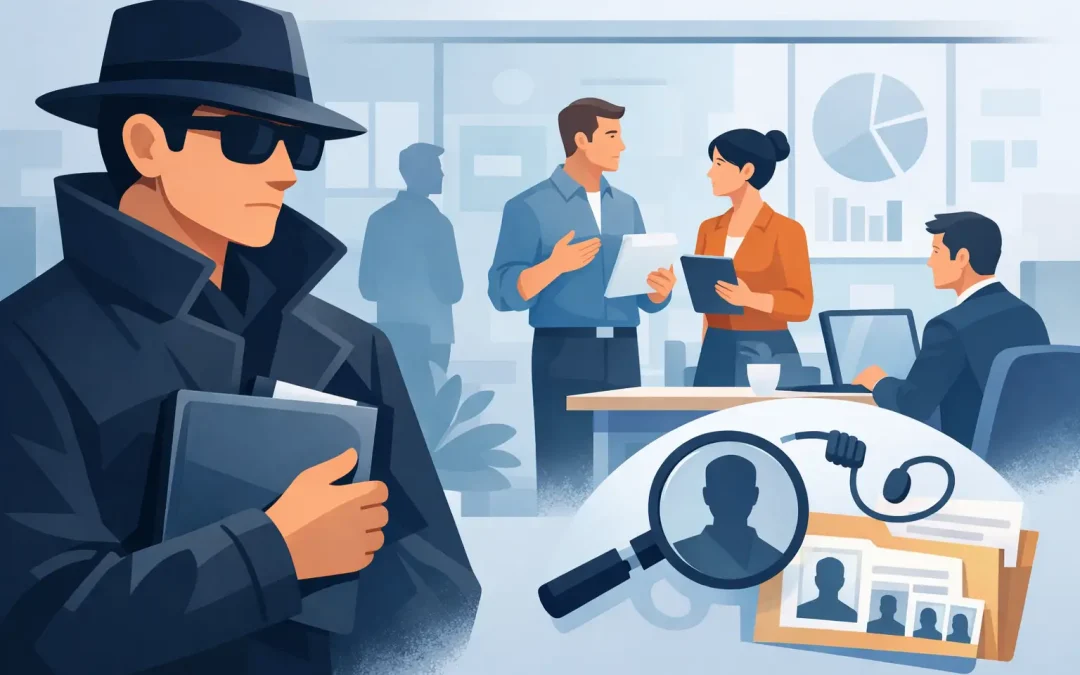
Undercover Agents: Strike Fast, Expose the Truth!
At West Coast Detectives International, we’ve deployed elite undercover agents into companies to crush illegal activities for 104 years — and the results are unstoppable!
When I took over WCDI in 1977, we ran a powerhouse male and female undercover unit that hit the ground running. Across our history, we’ve successfully executed tens of thousands of cases, each one treated as a high-stakes mission. No cookie-cutter solutions here — we build a custom, laser-focused action plan tailored exactly to your situation and hit it hard from day one.
Laws have tightened across every state, so precision and speed are everything. That’s why our approach is sharper than ever. Here’s how we deliver maximum impact with every undercover placement:
- Deep intel dive — We lock in every fact about your internal threats and vulnerabilities.
- Strategic positioning — We determine the exact department and role where the undercover agent will deliver the fastest results.
- Perfect cover — We craft the agent’s work history, skills, and profile so they blend in seamlessly and get hired fast.
- Environment match — We analyze your workforce demographics (male/female ratios, culture, dynamics) to ensure the agent fits like a glove and starts gathering actionable intelligence immediately.
This is a complete, battle-tested blueprint for executing airtight undercover operations that get results — fast, discreet, and devastatingly effective.
Ready to take back control and shut down the threats inside your organization? Contact West Coast Detectives International today — prevention is still the ultimate weapon!
When a company begins seeing inventory loss, unexplained data exposure, payroll manipulation, bribery indicators, or coordinated HR complaints that do not align with known facts, leadership is often dealing with more than a routine internal dispute. In that context, the procedure on placing undercover agents in a company with internal problems is not a casual management tactic. It is a controlled investigative measure used only when conventional audits, interviews, access reviews, and compliance checks have failed to produce reliable answers.
When undercover placement is justified
An undercover deployment sits at the serious end of the response spectrum. It is generally considered when the suspected misconduct is ongoing, materially harmful, and difficult to detect through overt means. That may include internal theft rings, kickback schemes, workplace violence concerns, sabotage, organized harassment, falsified timekeeping, procurement fraud, or collusion between employees and outside actors.
The threshold matters. A company should not pursue covert placement simply because morale is poor or because one executive wants confirmation of a hunch. The trigger should be a defined risk picture supported by indicators, prior findings, and a business need that can withstand legal and regulatory scrutiny. If the issue can be resolved through internal controls, forensic accounting, digital review, or targeted interviews, that route is usually cleaner and less disruptive.
The procedure on placing undercover agents in a company with internal problems starts with legal authority
Before any operational planning begins, counsel must establish what is lawful in the relevant jurisdiction. Employment law, privacy law, labor issues, consent rules for recordings, and industry regulations all affect what can be done and how evidence may later be used. A multinational company may also face conflicting standards across states or countries, which changes the design of the assignment.
This stage is where experienced investigative firms separate disciplined operations from reckless ones. The goal is not merely to gather information. The goal is to gather facts in a manner that preserves admissibility, protects the client from counterclaims, and avoids creating more liability than the original misconduct.
Scope should be documented in writing. That means identifying the suspected conduct, the specific facilities or business units involved, the time frame, and the intelligence requirements. Leadership should know exactly what questions the operation is meant to answer. If the mission is vague, the deployment becomes vulnerable to mission creep.
Defining the objective before placing an operative
A proper undercover assignment is built around narrowly framed objectives. Is the company trying to identify the individuals stealing from a warehouse, understand how fraudulent invoices are being approved, confirm whether a supervisor is facilitating harassment, or determine whether proprietary information is being sold to a competitor? Each objective requires a different placement strategy.
That distinction is operationally significant. An agent inserted into a shipping environment needs a different background legend, skill set, reporting cadence, and risk posture than one placed in an administrative office, sales team, or executive support function. The more precisely the problem is defined, the lower the operational noise and the stronger the resulting evidence.
It is also essential to decide what success looks like. Sometimes success means identifying the principal actors and preserving documentary proof. In other situations, success means understanding a pattern well enough to support restructuring, discipline, or referral to law enforcement. Not every assignment ends in a dramatic confrontation. Many end with clear intelligence that allows the company to act decisively and quietly.
Selecting the right operative and cover
The agent must fit the environment. That sounds obvious, but it is where poorly run operations often fail. A manufacturing floor, a luxury hospitality setting, a logistics hub, and a finance department all have different social dynamics, hiring practices, and behavioral rhythms. The operative needs the right profile to enter naturally and remain credible under routine scrutiny.
Cover development must be realistic and limited to what is necessary. Employment history, references where lawful and appropriate, skills, appearance, and communication style all have to align with the role. Overbuilt legends tend to collapse under ordinary workplace conversation. Strong cover is simple, consistent, and durable.
Equally important is the operative’s discipline. The role is to observe, assess, and report factual intelligence, not to provoke misconduct. Any operation that drifts toward entrapment, retaliation, or unnecessary interference creates legal and ethical exposure. In a professional setting, undercover work is about documenting what exists, not manufacturing a case.
The operational plan inside a troubled company
Once legal review, scope, and cover are established, the placement plan should address access, supervision, reporting channels, emergency protocols, and evidence handling. This is the true backbone of the procedure on placing undercover agents in a company with internal problems, because execution failures usually happen in management of the operation rather than in the entry itself.
The client should designate a very limited control group. Ideally, that includes one executive sponsor, counsel, and the lead investigator. Broad internal awareness defeats the purpose and increases the risk of leaks, rumors, retaliation, and contamination of witness behavior. Need-to-know discipline is nonnegotiable.
Reporting intervals must also be established from the start. Some environments require daily intelligence notes because risk is moving quickly. Others are better served by event-driven reporting with weekly analytic summaries. Raw observations should be separated from conclusions. That protects the integrity of the file and helps decision-makers distinguish between what was seen, what was heard, and what is inferred.
Evidence protocols must be equally strict. If documents, digital artifacts, photographs, or physical items are expected, chain of custody procedures should be in place before the assignment begins. A useful fact discovered the wrong way may still become a legal problem.
Managing risk to the company and the operative
Undercover placements carry risk even when properly run. The company may face internal fallout if the operation becomes known. The operative may encounter hostility, unsafe conditions, or pressure to participate in questionable conduct. There is also reputational risk if leadership appears to be spying indiscriminately rather than investigating a legitimate threat.
For that reason, risk control must remain active throughout the assignment. Supervisors should periodically review whether the original grounds for the operation still exist and whether the benefits continue to outweigh the exposure. If the target conduct stops, if enough evidence has been collected, or if conditions become unsafe, the assignment should be closed without delay.
There is also a judgment issue around duration. Longer placements can reveal patterns and chains of command, but they also increase exposure and the chance of compromise. A short, well-targeted operation is often more effective than a prolonged one that gathers volume without clarity.
What companies often misunderstand
Many decision-makers assume an undercover agent will quickly produce a complete picture of wrongdoing. That is rarely how serious investigations work. Covert placement is one source of intelligence, not a substitute for digital forensics, accounting review, access-control analysis, or witness development. The strongest findings usually come from combining covert observations with documentary and technical evidence.
Another common mistake is using undercover placement to solve what is fundamentally a leadership or governance problem. If the root issue is weak supervision, poor controls, or a toxic reporting structure, an operative may identify symptoms without curing the vulnerability. Good investigations do more than identify bad actors. They expose the conditions that allowed the misconduct to persist.
This is where a seasoned investigative partner adds value. Firms with real field experience know that the assignment does not end when the facts are collected. The client needs a clear reporting package, defensible findings, and practical advice on containment, interviews, termination sequencing, referral options, and future prevention. West Coast Detectives International has long approached sensitive matters with that wider operational view.
After the placement: action must be controlled
When the undercover phase closes, the transition to action needs to be deliberate. Leadership should resist the urge to move immediately unless there is an immediate safety issue. Findings should first be reviewed with counsel and compared against other available evidence. The company then decides whether to proceed with internal discipline, civil recovery, policy revision, criminal referral, or a combination of these measures.
Careful sequencing matters. If multiple employees are involved, confronting one person too early can warn others and destroy evidence. If the issue touches a vendor, contractor, or executive, stakeholder management becomes even more delicate. The response should protect people, preserve records, and maintain business continuity.
A final investigative report should be factual, restrained, and precise. It should identify the objective, the methods used within legal limits, the observations made, the corroborating evidence, and any limitations. Overstatement weakens credibility. Precision strengthens it.
For companies facing real internal disruption, covert placement is not a first move and never a theatrical one. It is a disciplined option reserved for situations where facts are being concealed, losses are mounting, and leadership needs ground-truth intelligence before the problem spreads further. The right procedure protects more than evidence. It protects the company’s ability to act with confidence when trust inside the organization has already started to break.

by plittle@westcoastdetectives.us | Jun 21, 2026 | Blog
What Tools Ensure Safe Executive Travel?
At West Coast Detectives International, we know that true executive protection demands speed, precision, and total readiness! The only way to deliver ironclad security is through superior, real-time intelligence on every client exposure, travel threat, and destination risk. That level of mastery doesn’t happen overnight — it’s forged through 104 years of relentless preparation, global networks, and battle-tested tools that turn potential dangers into prevented disasters.
Technology gives us incredible power — advanced tracking, real-time alerts, encrypted comms, and surveillance systems that deliver lightning-fast data. But here’s the game-changer: HUMINT integration is the final, critical step. Our human intelligence assets verify every byte of technical intel, uncover hidden threats that tech alone can’t see, and deliver the on-the-ground truth that keeps executives steps ahead of danger.
We move with urgency and zero compromise. A last-minute client request will never force us to cut corners or skip vital steps just to meet a tight schedule. If the preparation window is too short to build a bulletproof plan, we have the courage to say “no” — because your life and our agents’ lives are on the line. Gaps in protection are simply not an option.
Preparation IS prevention — and at West Coast Detectives, it’s the unstoppable force that ensures every executive travel mission is safe, seamless, and successful.
Below, discover the hard-won tools, tactics, and strategies we’ve perfected over 104 years of protecting those who lead from the front. Stay ahead. Stay secure. Let’s move!
A missed connection is inconvenient. A compromised itinerary, exposed principal, or avoidable ground incident is a security failure. That is the real frame for how to plan secure executive travel when the traveler is a CEO, public figure, legal stakeholder, or family office principal with elevated visibility and real-world threat exposure.
Secure executive travel is not a luxury upgrade to ordinary trip planning. It is a disciplined process that combines intelligence, logistics, protective operations, and discretion. The objective is not to create a visible security spectacle. The objective is to reduce vulnerability, preserve mobility, and maintain decision-making control before, during, and after the trip.
How to Plan Secure Executive Travel Starts With Threat Reality
The first error many organizations make is planning around destination amenities instead of threat conditions. Security begins with a realistic assessment of who may pose a threat, what methods are plausible, and where exposure is most likely to occur. For one principal, the concern may be activist disruption, stalking, or reputational targeting. For another, it may be kidnapping risk, organized crime, civil unrest, terrorism, or insider compromise.
That means secure executive travel planning should begin with a current threat picture, not a generic travel checklist. The traveler’s profile matters. A founder involved in a public merger, an entertainment figure in a contentious dispute, and a government advisor visiting a politically unstable capital do not require the same posture. Their visibility, adversaries, and acceptable risk thresholds differ.
A serious plan also considers the purpose of travel. Investor roadshows, litigation support, NGO field visits, board meetings, and family travel each create different patterns of predictability. Predictability is often the enemy. The more fixed the route, lodging, and timing, the easier it is for a hostile actor to observe and exploit movement.
Build the Plan Around the Principal, Not the Calendar
A secure travel plan should be principal-led and mission-specific. The question is not simply where the executive is going. The real question is what the executive must accomplish, what must remain confidential, and what can be changed if conditions deteriorate.
That distinction matters because over-securing a low-profile trip can disrupt business objectives, while under-securing a sensitive trip can create lasting damage. There is always a trade-off between convenience, visibility, cost, and control. Experienced planners know how to calibrate that balance instead of applying the same package to every traveler.
The principal’s public profile, digital footprint, family considerations, medical needs, and appetite for protective measures should be discussed directly and confidentially. A principal who resists visible protection may still accept discreet advance work, intelligence monitoring, vetted transportation, and low-signature close protection. Good planning respects executive temperament without surrendering operational judgment.
Advance Work Is Where Most Risk Is Prevented
Most successful protective travel programs are won before the plane departs. Advance work should verify airports, terminals, hotels, residences, meeting venues, route options, hospital capability, local emergency response, and the reliability of drivers and support personnel. In higher-risk environments, local political conditions, protest schedules, crime trends, and hostile surveillance indicators should also be reviewed.
This is where a seasoned intelligence and protection firm adds value. Public information alone is not enough in many jurisdictions. Human-source insight, local contacts, and field verification often reveal what booking platforms and open-source advisories miss. A hotel may look suitable on paper yet have weak access control, compromised staff vetting, or exposure points at entrances and service corridors.
Advance work should also identify choke points. These include airport arrivals, curbside transfers, hotel lobbies, elevators, and recurring routes to repeated meetings. Executives are most vulnerable in transition spaces where timing is visible and movement is constrained.
Transportation Is a Security Function
Executives are often targeted in transit because transit creates routine and reduces options. That is why transportation planning should be treated as a protective operation, not an administrative task.
Aircraft decisions, arrival timing, terminal procedures, and ground transport should all be reviewed through a security lens. Depending on the environment, private aviation may reduce exposure, but it is not automatically safer. Smaller airports can offer privacy, yet they may also have lighter perimeter control and fewer emergency resources. Commercial air may be acceptable in lower-risk situations if booking confidentiality, arrival management, and landside movement are handled properly.
On the ground, vehicle selection should fit the threat profile. In some cities, a low-profile sedan with a vetted driver is smarter than a conspicuous convoy. In others, armored transport and a second vehicle are justified. The right answer depends on local crime patterns, attack methods, and the executive’s visibility. What should never be improvised is driver vetting. A polished vehicle means little if the driver has not been properly screened or briefed.
Route planning deserves the same discipline. Primary and alternate routes should be built in advance, with attention to congestion points, construction, predictable stoppages, and areas known for criminal activity or demonstration activity. Real-time route changes should be available, but not made casually. Security works best when flexibility is structured, not random.
Hotels and Venues Require More Than a Reservation
A respected brand name does not guarantee a secure environment. How to plan secure executive travel properly includes examining who can access the principal, how staff information is handled, and whether arrivals and departures can be managed discreetly.
Room selection matters. So does elevator access, floor layout, emergency egress, and adjacency to public or service areas. In some cases, a private residence or secured floor may be preferable to a flagship hotel. In others, a major hotel offers better surveillance coverage and faster emergency response. Again, it depends on location and threat level.
Meeting venues should be assessed for access control, public exposure, protest proximity, and evacuation options. If the executive is speaking publicly, appearing in court, attending negotiations, or entering a controversial site, protective planning should extend beyond the venue walls. Demonstrations, media presence, and online chatter can quickly change the risk picture.
Information Control Is Part of Physical Security
Many executive travel failures begin as information leaks. A visible luggage tag, casual assistant email, social media post, or loosely shared calendar can expose timing and location. Once movement data spreads, physical protection becomes harder and more expensive.
Travel details should be compartmented. Those who need the full itinerary should have it. Those who do not, should not. Reservations should be made with privacy in mind, and public-facing staff should be trained not to confirm the executive’s presence. Family members and entourage can also create exposure if they are not briefed on basic travel discipline.
Digital hygiene matters as well. Device security, secure communications, location-sharing settings, and Wi-Fi use should be addressed before departure. For some principals, the larger threat is not direct attack but data compromise, meeting interception, or reputational exploitation.
Protective Coverage Should Match the Operating Environment
Not every trip requires a large close-protection footprint. Some require discreet executive protection officers, some need an advance specialist and vetted local support, and some require a layered posture with intelligence monitoring, countersurveillance awareness, secure transport, and crisis response capability.
The mistake is assuming protection is either fully visible or unnecessary. There is a broad middle ground. Effective coverage can be quiet, controlled, and minimally disruptive while still providing meaningful risk reduction.
For international travel, local legal conditions also matter. Firearms laws, licensing requirements, private security rules, and police coordination differ widely. Protective planning must account for those realities early. Waiting until arrival to sort out authorities, permits, or emergency contacts is poor tradecraft.
This is one reason firms such as West Coast Detectives International are engaged for higher-stakes assignments. The value is not just manpower. It is the integration of intelligence, local vetting, travel risk analysis, and operational judgment under confidential command.
Build a Response Plan Before You Need One
Even strong planning cannot remove all uncertainty. Flights divert. Protests move. A medical issue develops. A journalist appears unexpectedly. A route is blocked. The question is whether the team has already planned for disruption.
Every secure executive travel plan should include escalation protocols. Who makes decisions if the schedule must change? Where is the fallback lodging? What hospital is acceptable? Who is the local legal contact? What threshold triggers extraction, relocation, or increased protection?
These are not dramatic scenarios reserved for war zones. They are practical planning requirements for any principal whose exposure creates consequences beyond inconvenience. A delayed executive can miss a meeting. An exposed executive can trigger legal, financial, and reputational fallout that lasts much longer.
The best plans also include a quiet post-travel review. Not a bureaucratic exercise, but a factual assessment of what worked, what was exposed, and what should change on the next movement. Patterns emerge over time, and patterns are where prevention improves.
Security planning for executive travel is ultimately about disciplined foresight. When the trip matters, discretion, preparation, and informed protective judgment are what keep business moving without handing advantage to chance.

by plittle@westcoastdetectives.us | Jun 20, 2026 | Blog, Publisher Opinion
Reflections on Current Events Through the Lens of History and Prophecy
For more than fifty years I have served in the intelligence field, beginning in the mid-1970s with operational work in Israel and Southern Lebanon. There I studied the early patterns of terrorist training and regional threats that would later define much of global security. Parallel to that career, I have been a serious student of Scripture, devoting substantial time to research on biblical prophecy and the end times.
From this dual vantage point—decades of on-the-ground intelligence analysis combined with careful study of the prophetic Scriptures—I was not surprised, though I remain deeply disappointed, by President Trump’s recent decisions and actions concerning Iran. That disappointment was only reinforced by the public statements of the Vice President, which revealed a striking lack of understanding regarding Israel’s unique and central place in the purposes and plans of God.
My assessment, informed by both historical patterns and prophetic insight, leads me to conclude that we are closer to the close of this age than many recognize. The pivotal historical and prophetic marker was the rebirth of the modern State of Israel in 1948. That singular event, following nearly two millennia of dispersion, set the stage for the next major prophesied development: the war described in Ezekiel chapter 38.
In that ancient oracle, a coalition of nations—historically identified with Russia, Iran (Persia), Turkey, and allied powers—launches a coordinated assault against a regathered Israel in the latter days. The text is clear that no other nation comes to Israel’s aid. Instead, the God of Israel intervenes directly and supernaturally on behalf of His people.
As I have shared in recent analyses, the 2026 mid-term elections may provide meaningful indicators of America’s trajectory and, by extension, where we stand in God’s prophetic timetable. When the Ezekiel 38 conflict occurs, Scripture indicates that the United States and other major powers will stand aside.
Watching the recent military campaign against Iran’s nuclear infrastructure and command centers, I have kept Ezekiel 38 firmly in view. The degradation of Iran’s independent military and nuclear capabilities has effectively removed its ability to threaten Israel on its own. This development shifts the dynamics toward the larger, multi-national coalition scenario the prophet described. It is significant that, in the immediate aftermath of the recent Memorandum of Understanding, Russia and Iran moved quickly to formalize a new strategic partnership—precisely the kind of realignment the prophetic text anticipates.
I never expected to witness elements of a Republican administration stepping back from robust support for Israel. That posture had long been associated, in my observation, with more radical elements on the political left. Should such trends continue—particularly under any future leadership that echoes the Vice President’s current statements—the implications for both American foreign policy and alignment with biblical prophecy would be profound.
For those who diligently study Bible prophecy, the ultimate outcome is not in doubt. We need not be governed by fear. At the same time, Scripture makes clear that difficult and turbulent days lie ahead before Christ’s followers are taken to be with Him. Our calling in this hour is one of vigilance, prayer, steadfast faith, and personal preparation.
I encourage every serious student of history, geopolitics, and Scripture to conduct their own thorough investigation. Examine the primary sources—both the biblical texts and the documented record of international relations—and draw your own conclusions with clarity and conviction.
May the Lord bless you and keep you secure in these pivotal times.
Phil Little President & CEO, West Coast Detectives International Host, Private Investigator Experience Podcast
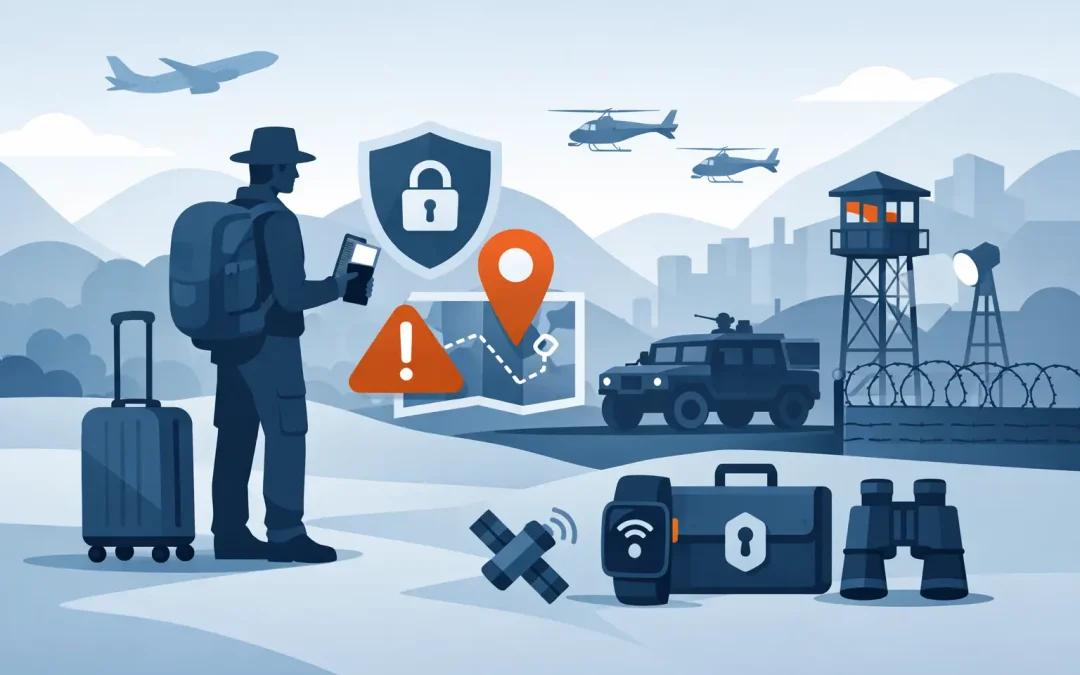
by plittle@westcoastdetectives.us | Jun 19, 2026 | Blog
Travel Security Planning for High-Risk Principals: Don’t Leave Safety to Chance!
At West Coast Detectives International, we treat every high-risk journey like the mission it is—because your life and success are on the line! We don’t cut corners, we don’t roll the dice, and we never leave anything to chance.
The only way to build a bulletproof travel plan is with rock-solid, real-time intelligence. Knowledge isn’t just power here—it’s protection, it’s prevention, and it’s the difference between arriving safely and becoming a statistic. We move fast, but we move smart.
We get it—sometimes the call comes in hot at the last minute. Business doesn’t wait. But if our team determines there simply isn’t enough time to gather the critical intelligence and build a truly safe plan, we’ll tell you straight: “Let’s push this trip back until it’s done right.”
If you choose to push forward anyway, we respectfully decline. Why? Because we refuse to put your life at risk—or accept responsibility for shortcuts we know could end badly. Your safety is non-negotiable.
Executives are used to setting aggressive deadlines and making things happen. We respect that drive! But when it comes to protecting life—especially on international travel—you cannot compress the time needed to collect intelligence you don’t control. Period.
Here’s the smart move: The very first call you make when even thinking about a high-stakes trip should be to a top-tier firm like West Coast Detectives International. Get the expert insight you need before you lock in flights, hotels, or meetings.
For 104 years, we’ve been mastering the art and science of safe global travel. We’ve learned the hard lessons so you don’t have to.
Ready to move? Call us today. Let’s lock in your safe travel plan and get you where you need to be—secure, confident, and unstoppable.
Travel smart. Travel safe. Travel with West Coast Detectives International. ?
A trip can become a security incident long before wheels-up. It often starts with a public itinerary, a routine social media post, an unvetted driver, or a hotel choice made for convenience rather than control. For executives, NGO personnel, public figures, and families with elevated exposure, a travel security planning guide is not a luxury document. It is part of operational readiness.
Most travel disruptions are not dramatic. They are preventable failures in planning, communication, local knowledge, or response authority. The objective is not to eliminate all risk. That is rarely possible. The objective is to reduce avoidable exposure, preserve decision-making under pressure, and ensure that if conditions change, your team already knows what happens next.
What a travel security planning guide should actually do
A sound travel security planning guide does more than list basic safety tips. It should establish how risk will be assessed, who owns decisions, what local conditions matter, and how the traveler will move, communicate, and respond if the environment deteriorates.
That means separating low-level inconvenience from genuine threat. A delayed flight is a logistics problem. A coordinated protest near a hotel, targeted criminal surveillance, civil unrest, kidnap exposure, or a compromised driver network is a security problem. Too many travel plans treat these issues as if they belong in the same category. They do not.
The planning standard should rise with the profile of the traveler, the purpose of the trip, and the destination environment. A senior executive visiting a stable financial center may require discreet movement protocols and information protection. A legal team entering a corruption-sensitive jurisdiction may need advance due diligence on local contacts, transportation, and meeting venues. A family office principal traveling with children may need privacy controls that matter more than overt protection.
Start with threat, not itinerary
Most weak planning begins with reservations. Strong planning begins with exposure. Before booking flights or confirming meetings, define what could realistically affect the traveler.
Threat analysis should consider the destination’s crime profile, political volatility, protest activity, terrorism concerns, corruption, transport reliability, medical infrastructure, cyber vulnerability, and the visibility of the traveler. Visibility matters because risk is not evenly distributed. A recognizable executive, a witness in active litigation, an entertainer, or a principal involved in a sensitive transaction carries a different threat profile than a private individual on personal leave.
Context also matters. A trip tied to layoffs, labor disputes, litigation, sanctions, or controversial projects can increase attention around the traveler even in a location that appears commercially routine. This is where intelligence-led planning becomes decisive. The environment on paper is only part of the picture. The actual risk may sit in local sentiment, criminal targeting patterns, or known surveillance around airports, hotels, or business districts.
Build the plan around movement and control
Security failures often occur in transit. Airports, hotel arrivals, curbside pickups, and last-minute schedule changes create moments of confusion. Those are the moments hostile actors and opportunistic criminals exploit.
Travel movement should be planned with control points in mind. Who is meeting the traveler on arrival? How has that individual or company been vetted? What vehicle will be used, and is it appropriate to blend in or stand out? Is there a secondary route if the primary route is blocked? Has anyone assessed whether the hotel creates exposure through public access, poor perimeter control, or staff leakage?
There is no universal answer on posture. In some cities, visible security can deter interference. In others, it can increase attention and reduce flexibility. The right posture depends on local conditions and the principal’s profile. Quiet competence usually performs better than theatrical security.
Lodging deserves the same level of review as transport. The best hotel for comfort is not always the best hotel for protection. Separate considerations include room location, access control, evacuation options, staff discretion, underground parking, elevator patterns, and the ease with which an outsider can watch entrances and exits. A property known for celebrity traffic may offer prestige but create intelligence leakage.
Communication must be structured, not casual
A traveler should never be left to improvise communications during a problem. Communication plans need structure: primary contacts, escalation paths, scheduled check-ins, emergency authorities, and fallback methods if local networks fail.
This is especially important for teams traveling across time zones or into jurisdictions where telecommunications may be monitored, disrupted, or unreliable. Sensitive discussions should not be left to hotel Wi-Fi and personal habits. Devices, messaging practices, location sharing, and document access all require planning proportional to the sensitivity of the trip.
For high-risk travel, communication discipline also prevents false alarms and delayed response. If a principal misses a check-in, who verifies first? Who has authority to activate local support? At what point does the issue move from travel delay to welfare concern? Ambiguity wastes time, and in security work, time is usually the first asset lost.
People are often the soft point
Travel security is frequently compromised by trusted people who were never properly assessed. Drivers, fixers, interpreters, hotel staff, local partners, domestic employees at a destination residence, and even meeting hosts can create exposure through negligence, divided loyalty, or direct compromise.
That does not mean treating every local contact as a threat. It means applying due diligence before dependence is created. Credentials should be verified. Ownership and political ties should be understood. Reputation in the local environment should be checked through more than online searches. In many regions, the difference between a reliable support asset and a liability is not visible in formal paperwork.
This is where experienced investigative and HUMINT-based support has a practical edge. Open-source review can identify broad concerns. It rarely tells you how a driver behaves under pressure, whether a translator talks freely after hours, or whether a recommended vendor is connected to a local criminal or political network. Those details tend to emerge through informed ground assessment.
Prepare for disruption before it happens
A serious plan accounts for the fact that things change quickly. Civil demonstrations move. Borders tighten. A medical issue develops in a location with weak care standards. A principal is doxxed online during travel. A private meeting becomes public. Security planning must account for disruption without making the trip unworkable.
That requires predesignated decision points. If unrest develops within a defined radius, does the itinerary continue, shift, or stop? If airport access is compromised, what is the alternate departure method? If a traveler is followed, where do they go and who takes over? If a family member becomes ill abroad, which hospital is acceptable and who coordinates movement?
Contingency planning should be simple enough to execute under stress. Overbuilt plans often fail because they depend on too many assumptions. The better standard is clear authority, local support, and practical options. A traveler does not need a binder full of theory. They need a plan that works at 11:40 p.m. in a bad district with limited communications and incomplete information.
The human factor cannot be ignored
Well-protected travelers still make poor decisions when tired, rushed, overconfident, or socially pressured. Security planning should account for behavior, not just logistics.
That includes discretion at restaurants and bars, handling of badges and credentials, control of luggage and devices, room-entry awareness, and the discipline to avoid telegraphing future movements. It also includes resisting the common tendency to relax after a smooth first day. Repetition breeds complacency. Adversaries often watch for patterns before acting.
For families and principals not accustomed to protective travel, the tone of preparation matters. Overly dramatic briefings can cause people to tune out. Understated, factual guidance tends to produce better compliance. The goal is calm awareness, not anxiety.
Why professional planning changes the outcome
There is a difference between travel advice and travel security management. Advice tells a traveler to be careful. Management assigns responsibility, validates assumptions, prepares local assets, and creates a response structure that can function when the situation is fluid.
For low-risk travel, internal administrative planning may be sufficient. For elevated-risk movements, that approach often leaves gaps between booking, intelligence, transport, and incident response. Those gaps are where exposure grows.
Firms such as West Coast Detectives International approach travel planning as an operational discipline rather than a checklist exercise. That distinction matters when a trip involves executive visibility, litigation sensitivity, hostile environments, kidnap concerns, reputational threats, or complex international movement. Security is strongest when intelligence, logistics, protective judgment, and ground truth are aligned before departure.
The right plan is rarely the most visible one. It is the one that quietly narrows uncertainty, protects options, and allows the traveler to conduct business without becoming the story. Before any high-stakes trip, ask a harder question than whether the itinerary works. Ask whether the plan would still hold if the environment turned against you by nightfall.
by plittle@westcoastdetectives.us | Jun 17, 2026 | Blog
Why and When to Hire a Private Investigator – Act FAST Before Problems Explode!
At West Coast Detectives International, I hear it all the time: “I wish I’d called you a year ago!”
Business losses piling up. Suspicious activity at home. A partner acting strange. An employee you just can’t trust.
Millions of people right now are sitting on problems, hoping they’ll magically disappear. But here’s the truth: delaying only makes it worse — and way more expensive!
Human nature wants to wait and “see what happens.” Don’t do it. The longer you wait, the harder and costlier it becomes for even the best investigators to get results.
Time is not on your side.
I also hear the horror stories: people who hired a PI, dropped a big retainer, and then couldn’t get calls returned or solid results. That’s why you’ve got to choose wisely and quickly.
At West Coast Detectives International, our 104-year legacy proves we treat every case — big or small — with total urgency, rock-solid integrity, and relentless communication. We don’t just take your money and disappear. We deliver facts, real solutions, and peace of mind.
Bottom line: If something feels off in your business, your home, or your life — don’t wait. The right private investigator can save you time, money, and massive stress.
Following are key things to consider when hiring a private investigator — so you pick a proven winner the first time!
A threat does not become less serious because it is inconvenient to discuss. A partner’s unexplained financial activity, a hostile former associate, a disputed corporate relationship, or a questionable overseas contact can all carry legal, reputational, and personal consequences. In those moments, private investigator services are not about curiosity. They are about establishing facts, preserving options, and protecting people before a problem hardens into a crisis.
What private investigator services actually cover
Many people still associate investigators with routine surveillance or domestic casework. That work exists, but serious private investigator services extend much further. The real function is risk reduction through lawful fact-finding, discreet fieldwork, source development, analysis, and reporting that can stand up to scrutiny.
For a private client, that may mean addressing stalking, harassment, infidelity concerns, family security issues, or verifying whether someone in their circle is misrepresenting who they are. For a corporation, it may involve due diligence ahead of a transaction, internal misconduct inquiries, executive threat assessment, fraud-related investigation, or intelligence support before entering a new market. For legal teams, it often means locating witnesses, testing claims, identifying inconsistencies, or gathering background material that sharpens strategy.
The common thread is not the type of client. It is the need for reliable information gathered with discretion and professional judgment.
Why high-stakes clients use private investigator services
In lower-risk situations, public records and internal reviews may be enough. In higher-risk matters, they rarely tell the full story. Records can be outdated, manipulated, incomplete, or silent on the question that actually matters: what is happening now, who is involved, and how likely is the risk to escalate?
This is where experienced investigators provide value. They do not simply collect data. They evaluate credibility, reconcile contradictions, identify patterns, and understand how a small anomaly can point to a larger exposure. A travel itinerary may appear routine until it intersects with a known threat environment. A business partner may appear legitimate on paper while their operational footprint tells a different story. A harassment complaint may sound isolated until surveillance, witness work, and digital review reveal persistence and proximity.
The strongest investigative work is both tactical and strategic. It answers the immediate question while also helping the client decide what to do next.
The difference between information and intelligence
Anyone can assemble fragments. Professional investigators are engaged to produce something more useful: verified, contextualized, actionable findings.
That distinction matters. Raw information can create false confidence. Intelligence requires validation, sourcing discipline, and awareness of how evidence may be interpreted by counsel, executives, family offices, or security teams. It also requires restraint. Not every lead is meaningful, and not every fact should trigger a reaction before it is checked.
For clients operating under reputational pressure, restraint is part of the service.
The cases where discretion is not optional
Some assignments are sensitive because they involve money. Others are sensitive because they involve safety, public standing, or geopolitical complexity. In those environments, discretion is not a courtesy. It is an operational requirement.
Consider pre-transaction due diligence involving a foreign counterparty, concerns about executive targeting during international travel, or a personal matter involving a high-visibility individual. A careless inquiry can alert the wrong people, damage a negotiation, provoke retaliation, or generate unnecessary exposure. The method matters as much as the answer.
This is why sophisticated firms build assignments around need-to-know handling, lawful evidence collection, controlled reporting, and field awareness. In some cases, speed is the priority. In others, patience is what protects the client. There is no honest one-size-fits-all model.
Domestic issues can carry enterprise-level risk
Clients sometimes underestimate personal matters because they begin close to home. A stalking case may look private until it affects an executive’s movement patterns, family routines, staff safety, or public appearances. A contentious domestic dispute can evolve into reputational leverage. An unvetted romantic or business relationship can become an access point to finances, travel plans, or confidential information.
The line between personal exposure and organizational exposure is often thin. That is one reason senior decision-makers and prominent individuals turn to investigators who understand both protection and inquiry.
What to look for in a serious investigative firm
Not all investigative providers operate at the same level. Some are suited to narrow local assignments. Others are built for layered matters that involve travel risk, hostile actors, complex due diligence, litigation support, or international components. Choosing the right partner starts with understanding the environment you are operating in.
Experience matters, but the type of experience matters more. A firm that has handled sensitive protective assignments, worked in complex jurisdictions, supported government or NGO stakeholders, and understands threat management will approach a case differently from a vendor built around standard surveillance volume. Operational maturity shows up in planning, legal awareness, source handling, reporting discipline, and the ability to adapt without losing control of the mission.
Clients should also pay attention to whether the firm asks the right questions at the outset. A capable investigator will want to know the objective, timeline, decision points, legal sensitivities, and what outcome would actually help the client. If the conversation focuses only on tactics and price, something is missing.
Global reach is useful only if it is credible
Many firms claim international capability. That claim means little without real infrastructure, vetted field assets, and practical knowledge of how investigations unfold across borders. Language barriers, local customs, legal restrictions, corruption risks, and hostile environments can all undermine an assignment if the team is not prepared.
A credible global investigative operation combines local access with central oversight. It knows when to rely on HUMINT, when to use technical tools, when to coordinate with legal counsel or security personnel, and when not to force an inquiry that could compromise the client. In international work, judgment is often the most valuable asset in the room.
The role of technology – and its limits
Modern investigations benefit from advanced tools, digital research capabilities, database access, and analytical platforms. These can accelerate timelines and expose patterns that would otherwise stay hidden. But technology is an aid, not a substitute for field sense.
A digital footprint can suggest a relationship, but it may not prove intent. Records can indicate ownership, but not control. Online activity can imply location, but not context. Experienced investigators know when a desktop lead is enough and when it must be tested through interviews, surveillance, local inquiries, or corroboration from trusted sources.
This is particularly true in matters involving deception. People who present risk often work deliberately to create a misleading digital and paper trail. That is why serious investigative work still depends on human judgment, source evaluation, and disciplined verification.
When speed helps – and when it hurts
Clients often arrive under pressure. They need answers before travel, before a board decision, before litigation, before a public event, or before a threat advances. Fast response can be critical. Early action can preserve evidence, identify vulnerabilities, and prevent a manageable problem from becoming an operational emergency.
But speed alone is not a strategy. A rushed inquiry can contaminate a witness pool, trigger countermeasures, or create facts that are hard to walk back. The right pace depends on the objective. If the immediate need is safety, action may come first and fuller investigation second. If the matter concerns deception, fraud, or hidden associations, patience may be what produces defensible results.
The best investigative teams know how to move quickly without becoming careless.
Why trust is central to private investigator services
At this level, clients are not purchasing a commodity. They are confiding exposure. They may be sharing names, travel plans, vulnerabilities, legal concerns, internal disputes, or family issues that cannot be mishandled. Trust is earned through discretion, factual reporting, and the discipline to separate evidence from assumption.
That is also why presentation matters. Findings should be clear, sober, and useful. No theatrics. No inflated claims. No blurring of confirmed facts with speculation. Whether the client is an executive, attorney, family office, or individual facing a personal threat, they need reporting they can act on with confidence.
For organizations such as West Coast Detectives International, the standard is not whether an investigator can gather information. It is whether that information is developed lawfully, tested carefully, and delivered in a form that supports real decisions under pressure.
Private investigator services are most valuable when the stakes are high and the facts are not yet clear. If you are facing uncertainty with legal, financial, reputational, or personal security consequences, the right investigative approach does more than answer questions. It restores room to maneuver, which is often the first step toward regaining control.