by plittle@westcoastdetectives.us | Aug 14, 2026 | Blog
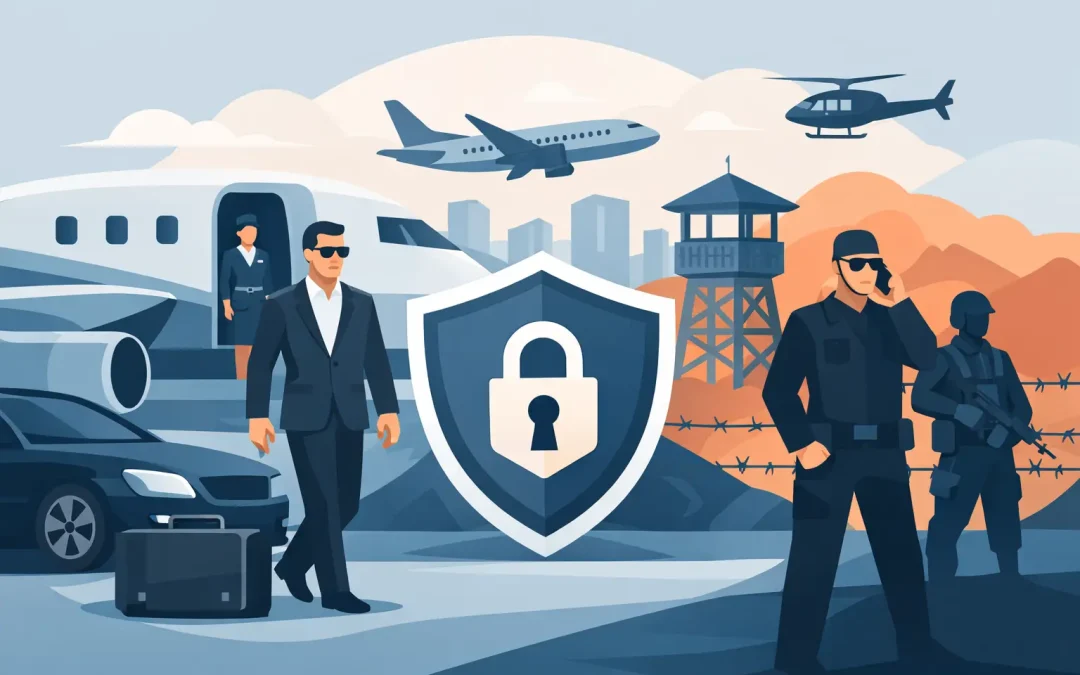
A principal does not become vulnerable only when a threat is visible. Exposure often begins earlier: a publicly shared itinerary, a predictable transfer route, an unvetted driver, an avoidable social-media post, or a meeting location selected for convenience rather than control. This VIP travel security guide is designed for executives, public figures, legal stakeholders, and families whose travel creates a higher-than-normal security, reputational, or operational profile.
The objective is not to turn every trip into a security operation. It is to apply proportionate protection based on credible facts. A board meeting in a stable financial center requires a different posture than a site visit near civil unrest, a high-profile appearance, or travel through an area with kidnapping, terrorism, stalking, or hostile-surveillance concerns.
Begin With a Threat-Led Travel Assessment
Effective protection starts before reservations are finalized. A travel assessment should establish who may pose a risk, what they could realistically do, where exposure is most likely to occur, and what consequences would follow. The answer is rarely found in a generic country-risk rating alone.
A senior executive may face activist attention tied to a corporate transaction. An entertainment figure may have a persistent stalker whose travel patterns are known. A witness, litigant, or family office principal may attract targeted scrutiny because of a dispute, wealth profile, or public association. Each circumstance changes the protective plan.
The assessment should account for the destination’s political climate, crime patterns, terrorism indicators, emergency medical capacity, transportation reliability, local law-enforcement capability, and communications environment. It should also examine the principal’s visibility, travel companions, public schedule, personal habits, and digital footprint. A city can be broadly safe while a specific hotel, district, venue, or ground route presents an unacceptable exposure.
Intelligence Must Be Current, Not Decorative
Country briefings and travel alerts are useful starting points, but they do not replace local verification. Conditions can shift rapidly after a demonstration, arrest, border closure, weather event, labor action, or credible threat report. For elevated travel, intelligence should be current enough to affect decisions about arrival times, routes, venues, and protective staffing.
Human-source reporting has particular value when official information is delayed, incomplete, or shaped by political considerations. The most useful intelligence is actionable: whether a road is operating, whether a venue can be secured, whether a public event is likely to draw confrontation, and which local resources can be trusted if plans change.
Secure the Itinerary Before It Becomes Public
Most protective failures are not dramatic. They are administrative. Too many people receive the full itinerary, travel details are forwarded through unsecured channels, and schedule changes are announced casually. That creates an unnecessary map of a principal’s movements.
Distribute information on a need-to-know basis. The executive assistant may require the full schedule; a meeting host may only need an arrival window. Drivers, hotel personnel, event organizers, and local partners should receive only the details necessary to perform their role. Use verified contact methods and establish a process for confirming last-minute changes, especially changes involving airport pickup, accommodations, or meeting locations.
Avoid publishing travel in real time. This applies to principals, family members, assistants, and corporate communications teams. A photograph from an airport lounge can reveal a terminal, travel direction, companion, and approximate timeline. A location-tagged image from a hotel can compromise the remainder of the trip.
It is also wise to maintain flexibility. Reserve alternate flights where the risk justifies it, identify a secondary hotel, and avoid schedules so rigid that the principal must travel at known times along known routes. Flexibility is not waste. It is an operational option when intelligence changes.
Protect the Most Exposed Moments of Travel
Airports, curbside areas, hotel entrances, conferences, restaurants, and vehicle transfers are predictable points of exposure. They bring together crowds, congestion, cameras, and limited control over the surrounding environment. A sound plan gives these transitions more attention than the time spent inside a secure office.
Airport movement should be coordinated in advance, with verified transportation and a clear handoff between responsible parties. The principal should not be left searching for a driver, negotiating transportation at the curb, or communicating travel details to unknown intermediaries. Where available and appropriate, private aviation facilities, meet-and-assist arrangements, or controlled arrival procedures can reduce exposure. They are not always necessary, and their value depends on the destination and threat profile.
Ground transportation deserves equal scrutiny. Use professionally vetted drivers and vehicles, confirm identities through a separate channel, and avoid displaying the principal’s name on signage. Route selection should consider traffic, chokepoints, civil disturbances, crime concentrations, construction, and the availability of alternate exits. The shortest route is not always the safest route.
At hotels, select properties based on more than brand reputation. Review perimeter access, lobby control, elevator procedures, room-floor layout, emergency exits, medical support, and the ability to discreetly manage arrivals. A room should not be selected solely for its view or convenience. Consider its access points, proximity to stairwells, adjoining rooms, and distance from public gathering areas.
Build a Protective Detail Around the Actual Risk
Executive protection is not a uniformed presence standing nearby. At its best, it is advance work, observation, communications discipline, protective movement, and rapid judgment delivered without disrupting the principal’s purpose for traveling.
The appropriate posture may range from a discreet advance and secure transportation plan to a close-protection team supported by local intelligence and a protective operations center. A public keynote, contentious negotiation, politically sensitive visit, or travel with family members may justify a larger footprint. A routine business trip in a low-risk environment may require only vetted logistics, monitoring, and an emergency-response protocol.
The trade-off is clear. Too little protection leaves predictable gaps. Too much visible security can draw attention, impede business, or create friction in environments where discretion matters. The correct solution is tailored, not standardized.
Protective personnel should be selected for judgment as much as physical capability. They need the ability to recognize hostile surveillance, manage crowds without escalation, coordinate with local authorities when necessary, and make decisions that preserve both safety and dignity. In international settings, language ability, cultural fluency, and trusted in-country relationships are often decisive.
Establish Communications and Medical Contingencies
A traveler can have excellent transportation and security coverage yet still be exposed if nobody knows how to respond when communications fail. Before departure, establish primary and backup contact methods, check-in expectations, escalation thresholds, and a 24-hour point of contact authorized to make decisions.
Devices should be protected with strong access controls, current software, and an agreed response if a phone or laptop is lost, searched, or compromised. For sensitive travel, a clean device with only necessary data may be more prudent than carrying a principal’s full corporate or personal digital life across a border.
Medical planning should be specific. Confirm the nearest capable hospitals, identify relevant allergies and medications, carry required documentation, and understand evacuation options. In some regions, the appropriate response to a serious medical event is stabilization followed by transfer, not reliance on the nearest facility. The same principle applies to security incidents: know where the principal can go, who can assist, and who has authority to authorize movement.
A VIP Travel Security Guide Requires Rehearsal
A plan that exists only in a briefing document will fail under pressure. Key participants should understand their responsibilities before wheels-up: who verifies transportation, who monitors developments, who communicates with the principal, and who activates emergency support.
Rehearsal does not need to be theatrical. A short pre-departure discussion can test the essentials. What happens if the driver does not arrive? If a protest blocks the route? If a family member becomes separated? If the principal receives a threatening message? If an event is canceled and the crowd does not disperse?
For high-consequence travel, a professional security partner can integrate intelligence, advance work, vetted local assets, and protective coverage into one accountable plan. West Coast Detectives International approaches these assignments as a prevention mission, combining factual reporting with field-ready protective judgment.
The best travel security is often invisible. It gives the principal room to conduct business, meet people, and move with confidence because the team has already identified the pressure points, preserved alternatives, and prepared for the moment when an ordinary itinerary stops being ordinary.

by plittle@westcoastdetectives.us | Aug 12, 2026 | Blog
A principal’s exposure can change before a protection detail receives a single call. A hostile post can identify a travel route. A compromised calendar can reveal a family event. A business dispute can become personal after an executive’s name appears in a filing. The future of executive protection belongs to organizations that recognize this reality early and turn fragmented warning signs into a disciplined protective decision.
Protection is no longer defined by the visible presence of a close-protection agent beside a client. For senior leaders, public figures, legal stakeholders, and families facing elevated risk, the assignment increasingly begins with intelligence collection, threat assessment, and careful advance work. The objective remains constant: protect life, preserve freedom of movement, and reduce disruption. The methods, however, are changing.
The Future of Executive Protection Starts Before Movement
Traditional executive protection has always depended on preparation. Competent teams conduct advances, assess venues, establish communication procedures, examine routes, and maintain contingency plans. Those disciplines are not being replaced. They are becoming more demanding because the threat environment now moves faster than a physical surveillance team can.
A modern protection program must account for the connection between physical, digital, reputational, and travel-related risk. An executive may be secure inside a controlled office but exposed through public flight data, social media activity, an employee’s careless post, or an online grievance that has gained attention. A protective team that treats these as separate matters will often receive the critical information too late.
This does not mean every client needs a permanent, highly visible detail. The appropriate posture depends on the person’s public profile, industry, current disputes, travel pattern, family circumstances, and credible threat indicators. For some, a discreet residential review, travel-risk briefing, and on-call response capability may be appropriate. For others, an integrated full-time program with intelligence support is justified. Sound protection is proportional, not theatrical.
Threat Management Will Become More Predictive
The most valuable protective intelligence is not a dramatic warning. It is a factual picture of what is changing: who is focused on the client, what narratives are forming, where hostile intent may become actionable, and which foreseeable events could raise exposure.
That requires trained analysts and field investigators who can distinguish between noise and relevance. Open-source material can reveal useful indicators, but it is not self-validating. Anonymous accounts, altered images, false claims, and coordinated harassment can distort the picture. Human source reporting, local knowledge, investigative verification, and careful assessment remain essential.
The practical result is a shift from reacting to incidents toward managing a threat lifecycle. A concerning communication may prompt a review. Repeated behavior may justify monitoring, documentation, and liaison with counsel or law enforcement. Credible escalation may require changes to routines, travel arrangements, residential security, or the protection posture itself. The decision must rest on evidence, not anxiety or speculation.
Technology Will Support Judgment, Not Replace It
Technology is expanding what executive protection teams can see and manage. Secure communications, travel monitoring, geospatial alerts, access-control data, vehicle tracking, and digital-risk reporting can improve situational awareness. Artificial intelligence may help analysts identify patterns across large volumes of information, translate material, or prioritize items for review.
Yet technology also creates vulnerabilities. Consumer-grade tracking tools, poorly managed mobile devices, exposed cloud accounts, and insecure messaging channels can reveal precisely the routines a protection program is meant to safeguard. Any use of technology must therefore include cybersecurity discipline, clear data-handling rules, access controls, and a realistic understanding of what a platform can and cannot establish.
A threat-detection system may flag language of concern, for example, but it cannot reliably determine intent, capability, proximity, or the credibility of a source without professional review. Nor can an algorithm conduct a sensitive interview, read the atmosphere at a location, or build the trust required to obtain meaningful local information. The future will favor teams that use technology as an operational aid while preserving accountable human judgment.
Cyber and Physical Protection Are Now One Conversation
For many principals, the first stage of an attack is informational. Doxxing, account compromise, impersonation, extortion, stalking through connected devices, and disclosure of family details can create physical consequences. A protection plan that focuses only on entrances, vehicles, and bodyguards leaves a major gap.
This is especially relevant during leadership transitions, litigation, layoffs, mergers, controversial public decisions, and international travel. These events can attract opportunistic actors as well as organized adversaries. Cybersecurity personnel, legal counsel, corporate communications teams, travel managers, and protection professionals need a common reporting path. When information is compartmentalized without reason, warning signs are missed.
The same principle applies to a principal’s household. Family members and domestic staff do not need to become security specialists, but they should understand practical boundaries around location sharing, unsolicited contact, deliveries, visitors, and reporting unusual behavior. Protection is strengthened when the people closest to the principal know how to recognize and relay concerns without creating unnecessary alarm.
Global Travel Will Demand Local Intelligence
International travel has always required more than booking a secure vehicle and selecting a hotel. Political unrest, terrorism concerns, organized crime, civil disturbance, kidnapping risk, medical limitations, border issues, and sudden transportation disruptions can alter an itinerary with little notice. A country that appears stable at a national level may contain substantial regional risk.
The future of executive protection will place greater value on current, ground-level intelligence rather than generic country ratings. A decision-maker needs to know what is occurring near the airport, hotel, meeting site, and proposed routes at the time of travel. They need reliable local support, viable alternatives, and an extraction or relocation plan when conditions deteriorate.
Global capability also requires restraint. A firm should not promise identical operations in every jurisdiction. Licensing rules, local law, cultural conditions, armed-protection restrictions, and the availability of vetted resources vary considerably. Effective international protection relies on established relationships, verified local assets, and planning that respects the operating environment.
The Protective Agent’s Role Is Becoming More Specialized
The best executive protection professionals have never been selected solely for physical presence. They are calm under pressure, observant, discreet, articulate, and capable of making sound decisions when information is incomplete. Those qualities will become even more valuable.
Tomorrow’s agent must understand protective intelligence, digital hygiene, emergency medicine, travel logistics, and the business context surrounding the principal. They must be comfortable working with corporate security, investigators, attorneys, and crisis-management teams. They must also know when not to intervene. An overly aggressive or conspicuous posture can damage a client’s reputation, unsettle employees, and create friction in sensitive business settings.
Discretion is not passivity. It is the ability to maintain security without making the principal’s life needlessly smaller. That balance often separates a competent detail from a trusted one.
Protection Programs Must Be Built for Change
A static plan is quickly overtaken by events. Programs should be reviewed after major travel, public incidents, changes in role, litigation, security breaches, or shifts in the principal’s family or business circumstances. Exercises matter as well. A plan that has never been tested under time pressure is an assumption, not a capability.
At West Coast Detectives International, the standard is not simply to place personnel near a client. It is to develop factual intelligence, evaluate risk with discipline, and prepare a protective response that can operate across complex environments. That approach reflects a basic truth: executive protection is most effective when it is informed, tailored, and ready before a problem becomes a crisis.
The coming years will bring better tools, faster information flows, and more connected risks. The clients best served will be those who treat protection not as a visible expense reserved for emergencies, but as a confidential decision-support function that preserves safety, continuity, and the freedom to lead.

by plittle@westcoastdetectives.us | Aug 10, 2026 | Blog
A polished presentation, an introduction through a trusted intermediary, and a clean online profile can create a dangerous sense of certainty. In serious business, security, and personal matters, the better question is not whether someone appears credible. It is when is due diligence necessary to establish what can actually be verified before a decision becomes difficult, expensive, or irreversible.
Due diligence is necessary whenever the consequences of being wrong exceed the cost of finding the facts. That calculation is not limited to mergers, acquisitions, or investment transactions. It applies to executive hires, overseas partners, sensitive travel, new vendors, litigation decisions, real estate transactions, personal relationships involving substantial assets, and any situation where another party will gain access to people, money, information, facilities, or reputation.
When Is Due Diligence Necessary in High-Stakes Decisions?
The need for diligence rises with exposure. A low-value, reversible purchase generally requires little more than ordinary commercial judgment. A relationship that creates financial dependence, grants system access, puts an executive in an unfamiliar environment, or attaches a recognized name to an outside organization requires more.
The most common mistake is treating due diligence as a box to check after a decision has already been made emotionally or commercially. By that point, the assignment is often no longer preventive. It becomes damage control: tracing missing assets, managing a threat, responding to reputational allegations, or unwinding a relationship that should have been examined earlier.
Due diligence is particularly warranted where there is a material imbalance between what is being represented and what can be independently confirmed. An unfamiliar company may claim international capabilities, government relationships, proprietary technology, or a substantial client base. An individual may offer impressive credentials while leaving an unclear employment history, business footprint, or litigation record. These are not automatic indicators of wrongdoing. They are indicators that verification should precede reliance.
The decision cannot be easily reversed
Some commitments cannot be undone cleanly. Hiring a senior executive, entering a joint venture, appointing a fiduciary, acquiring a company, or allowing a new party into a family office can expose confidential information and create legal, operational, and reputational obligations long before a contract is terminated.
When the decision is difficult to reverse, diligence should begin before signatures, announcements, onboarding, or introductions to protected personnel. The work should examine not only the subject’s stated qualifications, but also undisclosed conflicts, adverse history, financial pressures, litigation patterns, associations, and the credibility of claimed operations.
The subject will receive trust, access, or influence
Access changes the risk profile. A vendor handling payment information, a consultant with access to strategic plans, a household employee entering a private residence, or a business partner able to influence procurement all have opportunities that a distant counterparty does not.
For organizations, this is not simply an issue of fraud prevention. It is also a matter of insider risk, data exposure, coercion, sabotage, and reputational contagion. For prominent individuals and families, the concern may include stalking, unwanted disclosure, extortion, or the exploitation of predictable routines.
The transaction crosses borders or unfamiliar jurisdictions
International activity creates additional blind spots. Corporate registration records may be incomplete, inconsistent, or held through nominee structures. Names can be transliterated differently. Litigation may be difficult to locate. Local reputation, political connections, labor practices, and security conditions may not appear in a conventional desktop review.
A counterparty may be legitimate but commercially unsuitable because its ownership, associations, or operating practices create sanctions, corruption, regulatory, or reputational exposure. In these cases, local, lawfully obtained human-source reporting can provide essential context that databases alone cannot deliver.
There are warning signs, but no clear explanation
A single inconsistency does not prove misconduct. People change careers, companies restructure, and online information is often incomplete. The concern begins when discrepancies accumulate or reasonable questions receive evasive answers.
Common triggers include a reluctance to identify beneficial owners, unexplained wealth, frequent changes in corporate names, litigation that is minimized or omitted, references that cannot be independently confirmed, pressure to move quickly, and claims of influence that rely entirely on personal introductions. The proper response is not accusation. It is a measured factual inquiry proportionate to the decision at hand.
Due Diligence Should Match the Risk
Not every matter calls for a deep investigation. Overreaching wastes resources and can create privacy, employment, and legal concerns. Underreaching creates the equally serious problem of false confidence. The right scope depends on the value of the decision, the nature of access involved, the jurisdiction, the subject’s role, and the consequences if adverse information emerges later.
A basic review may confirm identity, corporate standing, public litigation, professional credentials, media reporting, and obvious conflicts. A more advanced assignment may examine beneficial ownership, business relationships, asset indicators, political exposure, local reputation, undisclosed disputes, source credibility, security vulnerabilities, and associations relevant to the client’s specific risk.
For example, an ordinary supplier may require standard commercial screening. A supplier providing sensitive technology, accessing a secure site, operating in a high-risk region, or interacting with public officials warrants a more searching assessment. The same principle applies to people. A routine hire and a candidate for an executive, financial, protective, or trusted household role should not be assessed by the same standard.
Where Routine Screening Falls Short
Automated checks and public-record searches have value, but they are limited by the quality, age, and availability of the records they search. They rarely explain why a company repeatedly changes directors, whether a supposedly dormant entity is actively trading through affiliates, or how a person is regarded by credible contacts in the market where they operate.
Public information can also be manipulated. A well-managed online presence may suppress adverse stories, while a legitimate person may have little digital footprint at all. The absence of obvious negative information should therefore be treated as one data point, not a clean bill of health.
Complex matters require analysis, not merely collection. Investigators must distinguish verified fact from allegation, identify gaps in the record, corroborate sensitive claims, and report uncertainty plainly. A report that offers dramatic conclusions without sourcing, context, or a clear explanation of limitations may create more risk than it resolves.
Timing Matters as Much as Scope
The strongest time to commission due diligence is before commitment, when the client still has options. That may mean before issuing a term sheet, naming an executive, entering a strategic alliance, opening a new market, approving a major payment, or sending a principal into an unfamiliar security environment.
There are also moments when a previously acceptable relationship should be reassessed. A new investor, a change in ownership, an unexpected regulatory inquiry, unusual payment requests, employee misconduct allegations, public controversy, or a shift in geopolitical conditions can alter the original risk calculation. Due diligence is not always a one-time event. In long-term relationships, it is often a decision point triggered by change.
For travel and protective assignments, advance intelligence is especially valuable. A destination may be generally safe yet unsuitable for a particular traveler because of visibility, local disputes, business interests, event attendance, or known hostile actors. A credible assessment considers the person, itinerary, environment, and threat picture together rather than relying on broad country-level advice.
Conducting Diligence Without Creating New Exposure
Sensitive inquiries must be managed discreetly and lawfully. Careless outreach can alert a subject, damage a legitimate relationship, compromise confidential negotiations, or create employment-law concerns. The investigation should have a defined purpose, appropriate authorization, need-to-know handling, and a reporting structure that protects privileged or sensitive material where applicable.
Clients should also decide in advance what findings would change the decision. Is a past civil dispute disqualifying, or does it require clarification? Is a politically exposed relationship manageable with enhanced controls, or incompatible with the engagement? Defining these thresholds early helps ensure that diligence produces an actionable recommendation rather than a stack of unprioritized information.
West Coast Detectives International approaches high-consequence matters with this discipline: factual reporting, discreet field capability, and a scope designed around the client’s actual exposure rather than a generic checklist.
The practical test is straightforward. If a decision gives another person or entity meaningful access to your capital, people, information, facilities, movement, or name, pause long enough to establish the facts. The cost of a careful inquiry is usually known. The cost of misplaced trust rarely is.

by plittle@westcoastdetectives.us | Aug 8, 2026 | Blog
A major transaction, overseas expansion, executive appointment, or emerging threat can fail long before the first public sign of trouble. The warning often exists in fragments: an undisclosed business relationship, an unreliable local partner, a pattern of litigation, hostile online attention, or changes on the ground that do not appear in standard reporting. This corporate intelligence gathering guide explains how decision-makers can convert those fragments into factual, lawful, and usable intelligence.
For corporate leaders, counsel, security directors, and family office principals, intelligence is not a collection of interesting information. It is disciplined reporting that reduces uncertainty before an exposure becomes costly, public, or dangerous. The objective is not to know everything. It is to know what materially affects the decision at hand, where the risks sit, and what action is justified.
Start With the Decision, Not the Data
Corporate intelligence work loses value when the assignment begins with a broad request to “find out everything.” That approach produces volume, not clarity. A proper intelligence requirement begins with the pending decision.
Is the organization considering a joint venture? The relevant questions may concern beneficial ownership, political exposure, litigation history, regulatory standing, reputation among local counterparties, and the integrity of the proposed principals. Is an executive traveling to a politically unstable region? The priority shifts toward current threat conditions, route vulnerabilities, protest activity, hostile surveillance concerns, and reliable local support.
Define the decision-maker, the decision deadline, the jurisdictions involved, and the consequences of being wrong. Then establish the critical questions that must be answered. This focuses collection resources on material facts rather than background noise.
A useful intelligence requirement also distinguishes between facts, assessments, and unknowns. Facts can be documented. Assessments explain what the known facts may mean. Unknowns identify where confidence is limited and where further inquiry may be warranted. Senior leaders should expect to see all three clearly separated in reporting.
The Corporate Intelligence Gathering Guide: Core Principles
Effective intelligence gathering rests on a simple discipline: collect lawfully, validate independently, protect sensitive information, and report without exaggeration. The process is often more important than the volume of sources.
First, establish the legal and ethical boundaries of the assignment. Privacy laws, employment rules, data protection requirements, local investigative regulations, and contractual duties vary significantly by jurisdiction. A method that is permissible in one location may create legal exposure in another. Intelligence collection must be designed with counsel and relevant compliance stakeholders where appropriate.
Second, use source evaluation rather than source accumulation. A polished database entry, social media profile, or news article may be useful, but none should be treated as conclusive on its own. Consider the source’s access to the information, likely motivation, date of the information, record of reliability, and whether the claim can be corroborated.
Third, maintain a clear chain of reporting. A client should be able to understand where a conclusion came from, how strongly it is supported, and what limitations apply. This is particularly important when intelligence may inform board decisions, legal strategy, regulatory submissions, security planning, or an internal investigation.
Finally, apply strict need-to-know handling. Intelligence reports frequently contain sensitive personal, commercial, and security information. Distribution should be controlled, records should be retained appropriately, and communications should not expose sources, methods, or protected client interests.
Build Collection From Multiple Disciplines
Open-source research is a necessary starting point, not the finished product. Corporate registries, court filings, sanctions lists, regulatory notices, financial disclosures, property records, archived media, trade publications, and litigation databases can establish a preliminary picture. They can identify names, entities, addresses, corporate changes, adverse reporting, and patterns requiring further examination.
However, public records may be incomplete, delayed, intentionally obscured, or unavailable in the jurisdiction that matters most. Complex structures can conceal beneficial ownership. A clean media profile can reflect careful reputation management rather than a clean operating history. A lack of adverse results is not proof that no risk exists.
This is where appropriately managed human intelligence can add context. Experienced, lawfully deployed local sources may clarify whether a company actually operates from its stated address, whether a prospective partner has a credible local reputation, whether labor or community tensions are building near a facility, or whether an individual’s claimed relationships are genuine.
Human reporting requires judgment. It should never rest on rumor, personal grudges, or a single untested source. The strongest field reporting identifies what was directly observed, what was reported by a source, why the source may have knowledge, and what corroborates or contradicts the account. It also recognizes that conditions can change quickly, especially in unstable markets or contested business environments.
Verify Identity, Ownership, and Influence
Many corporate exposures begin with a mistaken assumption about who controls an entity or influences a decision. Formal ownership is only one part of the picture. The operational reality may include family members, nominees, former officials, political patrons, financiers, consultants, or intermediaries whose role is not visible in standard records.
Due diligence should examine corporate formation and directorships, related entities, historical business associations, litigation, regulatory actions, insolvencies, and adverse media. It should also test the consistency of a subject’s biography, credentials, claimed assets, and commercial footprint.
Political exposure deserves particular care. A politically exposed person is not automatically an unacceptable counterparty. The material question is whether the relationship creates legal, corruption, reputational, sanctions, or operational risk that the organization cannot manage. The same principle applies to allegations of misconduct. Reporting should identify verified facts, credible allegations, denials where available, and the practical risk to the client without presenting inference as proof.
The standard is defensibility. If a board, regulator, investor, or court later asks why a decision was made, the organization should be able to demonstrate that it relied on a proportionate, lawful, and carefully evaluated intelligence process.
Turn Reporting Into an Operational Decision
An intelligence report should not leave the client with a stack of facts and no direction. The final product must explain material findings in terms of exposure, likelihood, consequence, and recommended controls.
For a transaction, the recommendation may be to proceed with enhanced contractual protections, obtain representations concerning beneficial ownership, require additional compliance review, delay closing pending verification, or disengage entirely. For travel or executive protection, it may mean changing routes, adjusting schedules, using advance work, reducing public visibility, or activating local protective support.
Recommendations should be proportionate. Not every adverse item warrants termination, and not every unknown can be resolved before a commercial deadline. Leaders often need to make decisions under imperfect conditions. Good intelligence defines the uncertainty honestly and offers practical options rather than pretending certainty exists.
Reporting cadence also matters. A one-time due diligence report may be sufficient for a limited acquisition, but long-term partnerships, sensitive markets, executive threat matters, and evolving disputes require monitoring. The risk profile of an otherwise acceptable counterparty can change after a sanctions action, leadership transition, public allegation, cyber incident, or regional security event.
Know When Internal Research Is Not Enough
Internal teams are well positioned to conduct preliminary screening, preserve institutional knowledge, and identify compliance concerns. Yet certain assignments require independence, discreet field capability, specialized language skills, or access to experienced investigators who understand the local environment.
This is particularly true when there is suspected fraud, hostile activity, executive threat exposure, undisclosed conflicts, cross-border asset concerns, or a need to verify facts in locations where records are limited. The wrong response is to push inexperienced staff into sensitive inquiries that may alert a subject, compromise evidence, create safety issues, or breach local rules.
A qualified external intelligence provider should be able to explain its legal operating boundaries, investigative methodology, reporting standards, information-security practices, and ability to work across jurisdictions. West Coast Detectives International approaches such assignments with the discretion, field awareness, and factual discipline required when the stakes extend beyond routine screening.
Make Intelligence a Standing Capability
The strongest organizations do not treat intelligence as an emergency purchase after a crisis begins. They build it into transaction planning, executive protection, travel preparation, vendor management, crisis response, and strategic expansion.
That does not mean investigating every employee, supplier, or market at the same depth. The appropriate level of inquiry depends on the value of the decision, the jurisdiction, the exposure of the individuals involved, and the consequences of failure. A low-risk domestic vendor does not require the same scrutiny as a high-value cross-border partnership involving government-linked actors.
The practical discipline is to ask the right question early, before commitments narrow the available choices. When material facts are verified, uncertainty is stated plainly, and reporting is designed for action, intelligence becomes more than a defensive exercise. It gives leadership the confidence to move forward carefully, pause when necessary, and protect the people and interests entrusted to them.

by plittle@westcoastdetectives.us | Aug 6, 2026 | Blog
Effective High-Profile Security for People at Risk
In the old days, when someone faced real risk, the default move was simple: send in big bodyguards. Clients often demanded exactly that. Those days are gone. Events and technology have rewritten the playbook and the stakes have never been higher.
At West Coast Detectives International, nearly every case we take begins the same way: Intelligence. Then more intelligence. I have learned one hard truth over decades in this work the only reliable way to prevent tragedy is to understand every detail of the threat a client is facing. Guesswork and muscle alone no longer cut it.
Some clients arrive impatient. They want action now. We calmly explain that thorough preparation is what actually keeps them safe. Most listen and move forward with us. A few refuse and demand immediate action anyway. We politely decline those cases. More than once, those same clients later called back after hiring someone who simply “acted.” The resulting messes were costly and avoidable.
Turning down a case is one of the hardest decisions anyone in private security ever makes. As a young investigator and agency owner, I learned the hard way that sometimes saying no is the only way to protect both the client and the integrity of the work.
If a true professional cautions you against action without intelligence, listen. There will be moments when danger is already at the door and immediate physical protection is required. In those situations the team still builds intelligence while the protective layer goes up. Preparation and action are not opposites they reinforce each other.
Here are some of the approaches we use.
A principal steps from a vehicle into a public venue, boards an international flight, or posts a routine photograph online. Each action can reveal a pattern, create an approach opportunity, or expose a family member to unwanted attention. High profile client security is not a visible show of force. It is the disciplined work of reducing those opportunities while allowing the client to lead a functioning personal and professional life.
For executives, public figures, litigants, philanthropists, family offices, and individuals facing personal disputes, the threat is rarely limited to a single dramatic event. It may emerge through a persistent stalker, a disgruntled former employee, a hostile business counterpart, an opportunistic criminal, online fixation, or a travel itinerary that has become too predictable. Effective protection begins with facts, not assumptions.
High Profile Client Security Begins With Exposure
Prominence alone does not define risk. A CEO may have a limited public profile but face serious exposure because of a restructuring, labor dispute, controversial acquisition, or international operations. A recognizable entertainer may encounter frequent unsolicited contact yet have a lower immediate threat level than an executive involved in high value litigation. The security posture must reflect the person, the circumstances, and the available intelligence.
A professional assessment examines more than public visibility. It considers known adversaries, prior incidents, family routines, residences, workplace access, social media behavior, travel patterns, major events, legal matters, and the client’s tolerance for disruption. The objective is to distinguish background noise from credible concern.
This distinction matters. Overreaction can needlessly restrict a principal’s movement, strain family relationships, and create the very visibility the client hoped to avoid. Underreaction can leave a predictable gap in coverage at the moment it is exploited. The proper response is proportionate, informed, and regularly reviewed.
Intelligence Must Drive Protection
Protective personnel are most effective when they have a current picture of the operating environment. That requires intelligence gathering, verification, and analysis before an assignment begins and throughout its duration. A name mentioned in a threatening message, for example, is not merely a name to be logged. It may require background research, location confirmation, behavioral assessment, relationship mapping, and a determination of access or intent.
Open-source material can provide useful indicators, but it is not sufficient on its own. Public posts may be misleading, outdated, or deliberately manufactured. High-stakes matters often require lawful, discreet field inquiries and vetted human intelligence sources capable of confirming what is actually occurring on the ground.
This is where an investigative mindset changes the quality of protection. Security teams should not simply observe and react. They should identify emerging risks, test assumptions, document relevant facts, and give the client clear decision-grade reporting. When law enforcement, counsel, corporate leadership, or insurers must become involved, accurate records and defensible findings are essential.
Threat Assessment Is a Living Process
A threat assessment should never be treated as a report that sits in a file. Circumstances change quickly. A court filing can intensify a personal grievance. A public announcement can increase hostile attention. A trip abroad can introduce political unrest, kidnapping exposure, surveillance concerns, or local criminal risks that were absent a week earlier.
The working assessment must be updated as new information becomes available. That means regular communication between the principal, protective lead, investigators, corporate security contacts, legal counsel, and family office personnel where appropriate. Sensitive information should be shared on a need-to-know basis, but it must reach those responsible for making immediate protective decisions.
Discretion Is an Operational Requirement
For many clients, visible protection creates a separate problem. It may attract media interest, concern employees, interfere with negotiations, or signal vulnerability to an adversary. The answer is not to reduce protection blindly. It is to select a posture appropriate to the environment.
At times, a low-profile advance team, discreet residential measures, route planning, and close coordination with venue security provide the best outcome. In other circumstances, a clearly identifiable executive protection detail is justified because deterrence is part of the mission. The decision depends on the threat, the principal’s public role, and the practical demands of the engagement.
Discretion also applies to conduct. Protective personnel must understand professional boundaries, confidentiality obligations, and the importance of fitting into a client’s environment without becoming part of the story. Loud behavior, careless conversations, unnecessary displays of authority, and poor digital hygiene can compromise an otherwise sound operation.
Travel Requires Advance Work, Not Airport Coverage
International and domestic travel can compress several risks into a short period: unfamiliar terrain, variable emergency services, public schedules, compromised transportation, hotel exposure, demonstrations, and sudden medical or political developments. A principal who is well protected at home may become highly exposed when moving through an unfamiliar city.
Travel security planning should begin before tickets are finalized. It should evaluate destination conditions, airport procedures, ground transportation, lodging, meeting locations, local medical capability, communications, and evacuation options. Advance work also identifies whether a proposed itinerary is too predictable or whether a public appearance requires additional screening and coordination.
The level of support depends on the mission. A routine business trip to a stable location may call for discreet logistics and reliable local contacts. A trip involving civil unrest, terrorism concerns, contentious negotiations, or remote travel may require a dedicated protective detail, advance reconnaissance, hardened transport, and a tested contingency plan. A one-size-fits-all travel protocol is not serious risk management.
Residential and Family Security Cannot Be an Afterthought
The principal is often not the most vulnerable person in the household. Spouses, children, older relatives, and domestic staff may have more predictable routines and less security awareness. Their exposure can be exploited to gather information, gain access, apply pressure, or create a crisis.
Residential security should balance sensible physical measures with the household’s ability to live normally. Access control, visitor procedures, staff vetting, camera placement, alarm response, package handling, and emergency communications all deserve careful consideration. Equally important are the habits that cannot be bought: avoiding routine oversharing, verifying unexpected visitors, protecting school and activity schedules, and knowing what to do when something feels wrong.
Family members should receive practical guidance without being burdened by unnecessary fear. A well run briefing explains the relevant risk, establishes clear reporting channels, and gives each person an understandable role in an emergency. The aim is calm preparedness, not a household organized around anxiety.
Technology Helps, but It Does Not Replace Judgment
Location alerts, access systems, encrypted communications, digital monitoring, and camera networks can strengthen a protective program. They can also create false confidence. Technology must be configured correctly, monitored responsibly, and supported by trained people who can interpret what they see.
Digital exposure deserves particular attention. Public calendars, geotagged images, breached credentials, impersonation accounts, and data broker records can reveal more than a physical tail ever could. In some cases, the right first move is not additional manpower. It is reducing the information available to someone looking for access.
There are legal and privacy limits to every monitoring strategy. Corporate policies, local laws, consent requirements, and the rights of employees or household staff must be considered from the outset. Experienced advisers treat compliance as part of operational readiness, not an obstacle to be addressed later.
Selecting the Right Security Partner
High-profile protection is not a commodity purchase. A low hourly rate may conceal weak vetting, poor supervision, limited investigative capacity, or no meaningful international support. The consequences of those gaps are not theoretical when a client is managing a credible threat, a sensitive dispute, or a high-visibility event.
Decision-makers should ask who conducts the threat assessment, who leads the operation, how intelligence is verified, what reporting will be provided, and how the provider handles cross-border assignments. They should also understand escalation procedures, licensing requirements, insurance, confidentiality standards, and the experience of the actual personnel assigned to the matter.
West Coast Detectives International approaches protective assignments as intelligence-led missions, drawing on investigative experience, global resources, and counter-terrorism awareness where the situation demands it. The purpose is not to impose a standard package. It is to establish a defensible protective posture based on the client’s real exposure.
A serious security plan should give a principal more freedom, not less. When risk is understood, routines are managed, and trusted professionals are prepared to act, clients can focus on the meeting, family occasion, journey, or decision that matters with fewer avoidable vulnerabilities left behind.

by plittle@westcoastdetectives.us | Aug 4, 2026 | Blog
Document every stalking case like a life depends on it—because it does.
In law enforcement and private investigations, the difference between winning and losing often comes down to one thing: the details you capture. At West Coast Detectives International, we treat documentation as the frontline of prevention. Write everything down completely so anyone reading your report can instantly understand exactly what happened no gaps, no assumptions, no lingering questions.
Leave a question hanging and it can come back to hurt someone. Our philosophy is simple and non-negotiable: when you raise a question, answer it with a clear solution. That mindset drives everything we do.We train every investigator seasoned law-enforcement veterans included to go beyond the bare facts. Capture the surrounding details that put the reader on the scene. Clients regularly tell us, “I felt like I was right there watching it unfold.” In cases where a life is under threat, that level of clarity is not optional. Cutting corners is not an option.
Here are the practical standards we enforce every day at West Coast Detectives International.
A stalking case can turn on details that seem minor at the time: a vehicle appearing outside a workplace for six minutes, a message sent after a blocked number was used, a package left where it could not have arrived by accident. Knowing how to document stalking evidence creates a factual record that law enforcement, counsel, security professionals, and a court can assess without relying solely on memory.
The objective is not to investigate the person yourself or prove every motive. It is to preserve what occurred, when it occurred, who observed it, and how it affected your safety. A calm, contemporaneous record is generally more credible and more useful than a large collection of unorganized screenshots gathered weeks later.
If there is an immediate threat, unwanted physical contact, forced entry, a weapon, or a person waiting near you, call 911 or local emergency services. Documentation matters, but it must never take priority over getting to a safe location.
Start a Stalking Incident Log Immediately
Maintain one central incident log in a format you can access securely. A simple document, notebook kept in a safe place, or secure digital file can work. What matters is consistency. Make an entry as soon as practical after each incident, while the sequence, language used, and surrounding circumstances are still clear.
For every entry, record the date, exact or approximate time, location, and a factual description of what happened. Identify the person involved if known, but do not speculate. Write, “A dark SUV with partial plate 7KM was parked across from the office from approximately 8:10 to 8:25 a.m.,” rather than, “He was surveilling me.” The first statement can be verified. The second may be true, but it is a conclusion that investigators must establish from the pattern and supporting evidence.
Include the names and contact information of witnesses, any report number issued by police, and the evidence associated with that event. Note the impact as well: missed work, a changed route, a security alert, anxiety requiring medical care, or a canceled trip. In many cases, the pattern of conduct and its effect on the target are as significant as any single contact.
Preserve the Original Record
Do not edit an old entry to make it read better. If you remember something later, create a new, dated note stating what was added and why. This protects the integrity of the record. A clean chronology helps demonstrate that information was recorded in real time rather than reconstructed to fit a later narrative.
For high-risk individuals or corporate executives, an assistant, chief of staff, security lead, or trusted family member may maintain a parallel operational log. The affected person should still preserve their own firsthand account where possible. Separate accounts can corroborate timing and response actions.
Preserve Digital Evidence Without Altering It
Digital contact is often central to stalking matters. Save texts, emails, social media messages, voicemails, call logs, direct messages, account notices, and posts that reference you, your family, your workplace, or your movements.
Take screenshots that show the full context: sender identifier, date and time, message content, and the relevant platform. One cropped image of a threatening sentence may be less useful than a sequence showing repeated contact after a request to stop. If the platform allows an export or download of account data, preserve that material as well.
Keep original files whenever possible. Forwarding an email can alter some metadata, and reposting content can remove context. Save a copy to a secure location, then retain the original device and account in their existing state. Record the device used, account name, and date the material was preserved.
Do not delete messages, even if they are distressing. If repeated viewing is harmful, ask a trusted person, attorney, or security professional to help preserve and organize the material. Also avoid responding merely to create more evidence. A response can escalate the situation, muddy a no-contact boundary, or be selectively presented by the other party. Whether to send one clear written request for no further contact depends on the circumstances and should be considered with legal or law enforcement guidance.
Photograph Physical Evidence and the Scene
Physical evidence can include letters, gifts, damaged property, unwanted items left at a residence or office, handwritten notes, or signs that someone has been present near a protected location. Photograph items where they were found before moving them, if it is safe to do so. Take both wide shots that establish the setting and closer images that capture detail.
Use ordinary photos and video in a lawful manner. Do not trespass, enter the suspected person’s property, confront them, follow them, or attempt to place a tracking device on a vehicle or person. Those actions can create legal exposure and significantly increase danger.
Handle physical material as little as possible. Place letters, notes, and packaging in separate clean envelopes or bags, label them with the date, time, location, and person who found them, and store them securely. If law enforcement takes possession, record the officer’s name, agency, date, and any property or case number.
Security camera footage requires special attention because many systems overwrite recordings quickly. Preserve relevant footage as soon as possible, including several minutes before and after the incident. If a neighboring business, building manager, parking facility, or hotel may have footage, make a prompt written request for preservation through the appropriate channel. An attorney or investigator may be able to assist, but access rules vary.
Build a Timeline That Shows the Pattern
Stalking rarely appears persuasive when reviewed as isolated events. A timeline shows escalation, repetition, proximity, and the connection between online conduct, physical appearances, third-party contact, and attempted access to personal or professional spaces.
Arrange incidents in chronological order. Include dates when the person was told not to contact you, dates of police reports, changes in workplace or residential security, and any protective order terms. Cross-reference each incident to the corresponding screenshot, photo, voicemail, report, or witness statement.
A useful timeline also distinguishes known facts from concerns requiring further assessment. For example, “Vehicle observed near residence on three dates” is a fact if documented. “Vehicle is linked to the suspect” should be marked as unconfirmed unless law enforcement or a qualified investigator has established that connection. This discipline gives the record greater credibility.
Report Through the Right Channels
Report criminal conduct, threats, violations of protective orders, or repeated unwanted contact to local law enforcement. Ask for an incident or case number every time you make a report, even if an officer cannot take immediate action. Repeated reports may establish the pattern needed for a stronger intervention.
Your options may also include a protective order, workplace reporting, school or university security, property management, corporate security, human resources, or counsel. The appropriate route depends on the relationship, jurisdiction, threat level, and whether the conduct crosses state or national borders.
For executives, public figures, and clients with elevated exposure, documentation should be integrated into a broader threat-management plan. That may include residential and travel security measures, protective intelligence review, staff notification protocols, legal coordination, and discreet monitoring of relevant threats. Evidence gathering alone cannot solve a protection problem if predictable access points remain open.
Protect the Evidence, and Protect Yourself
Use strong passwords and multi-factor authentication for email, cloud storage, social media, and mobile accounts. Review location-sharing settings, shared family accounts, vehicle apps, smart-home access, and connected devices. A former partner, employee, or associate may retain access through legitimate credentials rather than sophisticated technical means.
Tell a limited circle of trusted people what is happening and establish a check-in plan. Provide workplace or building security with a photograph and clear instructions if appropriate. Avoid posting real-time locations, travel details, or routine changes online. If you believe a device or account has been compromised, preserve what you can before resetting or replacing it, then seek qualified technical and legal advice.
The strongest record is factual, timely, complete, and safely preserved. It gives decision-makers something far more durable than a vague account of fear: a disciplined account of conduct, escalation, and risk. Keep documenting, keep the record secure, and let trained professionals handle the work that should never rest on your shoulders alone.
Page 1 of 1312345...10...»Last »