
by plittle@westcoastdetectives.us | Jun 23, 2026 | Blog
Undercover Agents: Strike Fast, Expose the Truth!
At West Coast Detectives International, we’ve deployed elite undercover agents into companies to crush illegal activities for 104 years — and the results are unstoppable!
When I took over WCDI in 1977, we ran a powerhouse male and female undercover unit that hit the ground running. Across our history, we’ve successfully executed tens of thousands of cases, each one treated as a high-stakes mission. No cookie-cutter solutions here — we build a custom, laser-focused action plan tailored exactly to your situation and hit it hard from day one.
Laws have tightened across every state, so precision and speed are everything. That’s why our approach is sharper than ever. Here’s how we deliver maximum impact with every undercover placement:
- Deep intel dive — We lock in every fact about your internal threats and vulnerabilities.
- Strategic positioning — We determine the exact department and role where the undercover agent will deliver the fastest results.
- Perfect cover — We craft the agent’s work history, skills, and profile so they blend in seamlessly and get hired fast.
- Environment match — We analyze your workforce demographics (male/female ratios, culture, dynamics) to ensure the agent fits like a glove and starts gathering actionable intelligence immediately.
This is a complete, battle-tested blueprint for executing airtight undercover operations that get results — fast, discreet, and devastatingly effective.
Ready to take back control and shut down the threats inside your organization? Contact West Coast Detectives International today — prevention is still the ultimate weapon!
When a company begins seeing inventory loss, unexplained data exposure, payroll manipulation, bribery indicators, or coordinated HR complaints that do not align with known facts, leadership is often dealing with more than a routine internal dispute. In that context, the procedure on placing undercover agents in a company with internal problems is not a casual management tactic. It is a controlled investigative measure used only when conventional audits, interviews, access reviews, and compliance checks have failed to produce reliable answers.
When undercover placement is justified
An undercover deployment sits at the serious end of the response spectrum. It is generally considered when the suspected misconduct is ongoing, materially harmful, and difficult to detect through overt means. That may include internal theft rings, kickback schemes, workplace violence concerns, sabotage, organized harassment, falsified timekeeping, procurement fraud, or collusion between employees and outside actors.
The threshold matters. A company should not pursue covert placement simply because morale is poor or because one executive wants confirmation of a hunch. The trigger should be a defined risk picture supported by indicators, prior findings, and a business need that can withstand legal and regulatory scrutiny. If the issue can be resolved through internal controls, forensic accounting, digital review, or targeted interviews, that route is usually cleaner and less disruptive.
The procedure on placing undercover agents in a company with internal problems starts with legal authority
Before any operational planning begins, counsel must establish what is lawful in the relevant jurisdiction. Employment law, privacy law, labor issues, consent rules for recordings, and industry regulations all affect what can be done and how evidence may later be used. A multinational company may also face conflicting standards across states or countries, which changes the design of the assignment.
This stage is where experienced investigative firms separate disciplined operations from reckless ones. The goal is not merely to gather information. The goal is to gather facts in a manner that preserves admissibility, protects the client from counterclaims, and avoids creating more liability than the original misconduct.
Scope should be documented in writing. That means identifying the suspected conduct, the specific facilities or business units involved, the time frame, and the intelligence requirements. Leadership should know exactly what questions the operation is meant to answer. If the mission is vague, the deployment becomes vulnerable to mission creep.
Defining the objective before placing an operative
A proper undercover assignment is built around narrowly framed objectives. Is the company trying to identify the individuals stealing from a warehouse, understand how fraudulent invoices are being approved, confirm whether a supervisor is facilitating harassment, or determine whether proprietary information is being sold to a competitor? Each objective requires a different placement strategy.
That distinction is operationally significant. An agent inserted into a shipping environment needs a different background legend, skill set, reporting cadence, and risk posture than one placed in an administrative office, sales team, or executive support function. The more precisely the problem is defined, the lower the operational noise and the stronger the resulting evidence.
It is also essential to decide what success looks like. Sometimes success means identifying the principal actors and preserving documentary proof. In other situations, success means understanding a pattern well enough to support restructuring, discipline, or referral to law enforcement. Not every assignment ends in a dramatic confrontation. Many end with clear intelligence that allows the company to act decisively and quietly.
Selecting the right operative and cover
The agent must fit the environment. That sounds obvious, but it is where poorly run operations often fail. A manufacturing floor, a luxury hospitality setting, a logistics hub, and a finance department all have different social dynamics, hiring practices, and behavioral rhythms. The operative needs the right profile to enter naturally and remain credible under routine scrutiny.
Cover development must be realistic and limited to what is necessary. Employment history, references where lawful and appropriate, skills, appearance, and communication style all have to align with the role. Overbuilt legends tend to collapse under ordinary workplace conversation. Strong cover is simple, consistent, and durable.
Equally important is the operative’s discipline. The role is to observe, assess, and report factual intelligence, not to provoke misconduct. Any operation that drifts toward entrapment, retaliation, or unnecessary interference creates legal and ethical exposure. In a professional setting, undercover work is about documenting what exists, not manufacturing a case.
The operational plan inside a troubled company
Once legal review, scope, and cover are established, the placement plan should address access, supervision, reporting channels, emergency protocols, and evidence handling. This is the true backbone of the procedure on placing undercover agents in a company with internal problems, because execution failures usually happen in management of the operation rather than in the entry itself.
The client should designate a very limited control group. Ideally, that includes one executive sponsor, counsel, and the lead investigator. Broad internal awareness defeats the purpose and increases the risk of leaks, rumors, retaliation, and contamination of witness behavior. Need-to-know discipline is nonnegotiable.
Reporting intervals must also be established from the start. Some environments require daily intelligence notes because risk is moving quickly. Others are better served by event-driven reporting with weekly analytic summaries. Raw observations should be separated from conclusions. That protects the integrity of the file and helps decision-makers distinguish between what was seen, what was heard, and what is inferred.
Evidence protocols must be equally strict. If documents, digital artifacts, photographs, or physical items are expected, chain of custody procedures should be in place before the assignment begins. A useful fact discovered the wrong way may still become a legal problem.
Managing risk to the company and the operative
Undercover placements carry risk even when properly run. The company may face internal fallout if the operation becomes known. The operative may encounter hostility, unsafe conditions, or pressure to participate in questionable conduct. There is also reputational risk if leadership appears to be spying indiscriminately rather than investigating a legitimate threat.
For that reason, risk control must remain active throughout the assignment. Supervisors should periodically review whether the original grounds for the operation still exist and whether the benefits continue to outweigh the exposure. If the target conduct stops, if enough evidence has been collected, or if conditions become unsafe, the assignment should be closed without delay.
There is also a judgment issue around duration. Longer placements can reveal patterns and chains of command, but they also increase exposure and the chance of compromise. A short, well-targeted operation is often more effective than a prolonged one that gathers volume without clarity.
What companies often misunderstand
Many decision-makers assume an undercover agent will quickly produce a complete picture of wrongdoing. That is rarely how serious investigations work. Covert placement is one source of intelligence, not a substitute for digital forensics, accounting review, access-control analysis, or witness development. The strongest findings usually come from combining covert observations with documentary and technical evidence.
Another common mistake is using undercover placement to solve what is fundamentally a leadership or governance problem. If the root issue is weak supervision, poor controls, or a toxic reporting structure, an operative may identify symptoms without curing the vulnerability. Good investigations do more than identify bad actors. They expose the conditions that allowed the misconduct to persist.
This is where a seasoned investigative partner adds value. Firms with real field experience know that the assignment does not end when the facts are collected. The client needs a clear reporting package, defensible findings, and practical advice on containment, interviews, termination sequencing, referral options, and future prevention. West Coast Detectives International has long approached sensitive matters with that wider operational view.
After the placement: action must be controlled
When the undercover phase closes, the transition to action needs to be deliberate. Leadership should resist the urge to move immediately unless there is an immediate safety issue. Findings should first be reviewed with counsel and compared against other available evidence. The company then decides whether to proceed with internal discipline, civil recovery, policy revision, criminal referral, or a combination of these measures.
Careful sequencing matters. If multiple employees are involved, confronting one person too early can warn others and destroy evidence. If the issue touches a vendor, contractor, or executive, stakeholder management becomes even more delicate. The response should protect people, preserve records, and maintain business continuity.
A final investigative report should be factual, restrained, and precise. It should identify the objective, the methods used within legal limits, the observations made, the corroborating evidence, and any limitations. Overstatement weakens credibility. Precision strengthens it.
For companies facing real internal disruption, covert placement is not a first move and never a theatrical one. It is a disciplined option reserved for situations where facts are being concealed, losses are mounting, and leadership needs ground-truth intelligence before the problem spreads further. The right procedure protects more than evidence. It protects the company’s ability to act with confidence when trust inside the organization has already started to break.

by plittle@westcoastdetectives.us | Jun 21, 2026 | Blog
What Tools Ensure Safe Executive Travel?
At West Coast Detectives International, we know that true executive protection demands speed, precision, and total readiness! The only way to deliver ironclad security is through superior, real-time intelligence on every client exposure, travel threat, and destination risk. That level of mastery doesn’t happen overnight — it’s forged through 104 years of relentless preparation, global networks, and battle-tested tools that turn potential dangers into prevented disasters.
Technology gives us incredible power — advanced tracking, real-time alerts, encrypted comms, and surveillance systems that deliver lightning-fast data. But here’s the game-changer: HUMINT integration is the final, critical step. Our human intelligence assets verify every byte of technical intel, uncover hidden threats that tech alone can’t see, and deliver the on-the-ground truth that keeps executives steps ahead of danger.
We move with urgency and zero compromise. A last-minute client request will never force us to cut corners or skip vital steps just to meet a tight schedule. If the preparation window is too short to build a bulletproof plan, we have the courage to say “no” — because your life and our agents’ lives are on the line. Gaps in protection are simply not an option.
Preparation IS prevention — and at West Coast Detectives, it’s the unstoppable force that ensures every executive travel mission is safe, seamless, and successful.
Below, discover the hard-won tools, tactics, and strategies we’ve perfected over 104 years of protecting those who lead from the front. Stay ahead. Stay secure. Let’s move!
A missed connection is inconvenient. A compromised itinerary, exposed principal, or avoidable ground incident is a security failure. That is the real frame for how to plan secure executive travel when the traveler is a CEO, public figure, legal stakeholder, or family office principal with elevated visibility and real-world threat exposure.
Secure executive travel is not a luxury upgrade to ordinary trip planning. It is a disciplined process that combines intelligence, logistics, protective operations, and discretion. The objective is not to create a visible security spectacle. The objective is to reduce vulnerability, preserve mobility, and maintain decision-making control before, during, and after the trip.
How to Plan Secure Executive Travel Starts With Threat Reality
The first error many organizations make is planning around destination amenities instead of threat conditions. Security begins with a realistic assessment of who may pose a threat, what methods are plausible, and where exposure is most likely to occur. For one principal, the concern may be activist disruption, stalking, or reputational targeting. For another, it may be kidnapping risk, organized crime, civil unrest, terrorism, or insider compromise.
That means secure executive travel planning should begin with a current threat picture, not a generic travel checklist. The traveler’s profile matters. A founder involved in a public merger, an entertainment figure in a contentious dispute, and a government advisor visiting a politically unstable capital do not require the same posture. Their visibility, adversaries, and acceptable risk thresholds differ.
A serious plan also considers the purpose of travel. Investor roadshows, litigation support, NGO field visits, board meetings, and family travel each create different patterns of predictability. Predictability is often the enemy. The more fixed the route, lodging, and timing, the easier it is for a hostile actor to observe and exploit movement.
Build the Plan Around the Principal, Not the Calendar
A secure travel plan should be principal-led and mission-specific. The question is not simply where the executive is going. The real question is what the executive must accomplish, what must remain confidential, and what can be changed if conditions deteriorate.
That distinction matters because over-securing a low-profile trip can disrupt business objectives, while under-securing a sensitive trip can create lasting damage. There is always a trade-off between convenience, visibility, cost, and control. Experienced planners know how to calibrate that balance instead of applying the same package to every traveler.
The principal’s public profile, digital footprint, family considerations, medical needs, and appetite for protective measures should be discussed directly and confidentially. A principal who resists visible protection may still accept discreet advance work, intelligence monitoring, vetted transportation, and low-signature close protection. Good planning respects executive temperament without surrendering operational judgment.
Advance Work Is Where Most Risk Is Prevented
Most successful protective travel programs are won before the plane departs. Advance work should verify airports, terminals, hotels, residences, meeting venues, route options, hospital capability, local emergency response, and the reliability of drivers and support personnel. In higher-risk environments, local political conditions, protest schedules, crime trends, and hostile surveillance indicators should also be reviewed.
This is where a seasoned intelligence and protection firm adds value. Public information alone is not enough in many jurisdictions. Human-source insight, local contacts, and field verification often reveal what booking platforms and open-source advisories miss. A hotel may look suitable on paper yet have weak access control, compromised staff vetting, or exposure points at entrances and service corridors.
Advance work should also identify choke points. These include airport arrivals, curbside transfers, hotel lobbies, elevators, and recurring routes to repeated meetings. Executives are most vulnerable in transition spaces where timing is visible and movement is constrained.
Transportation Is a Security Function
Executives are often targeted in transit because transit creates routine and reduces options. That is why transportation planning should be treated as a protective operation, not an administrative task.
Aircraft decisions, arrival timing, terminal procedures, and ground transport should all be reviewed through a security lens. Depending on the environment, private aviation may reduce exposure, but it is not automatically safer. Smaller airports can offer privacy, yet they may also have lighter perimeter control and fewer emergency resources. Commercial air may be acceptable in lower-risk situations if booking confidentiality, arrival management, and landside movement are handled properly.
On the ground, vehicle selection should fit the threat profile. In some cities, a low-profile sedan with a vetted driver is smarter than a conspicuous convoy. In others, armored transport and a second vehicle are justified. The right answer depends on local crime patterns, attack methods, and the executive’s visibility. What should never be improvised is driver vetting. A polished vehicle means little if the driver has not been properly screened or briefed.
Route planning deserves the same discipline. Primary and alternate routes should be built in advance, with attention to congestion points, construction, predictable stoppages, and areas known for criminal activity or demonstration activity. Real-time route changes should be available, but not made casually. Security works best when flexibility is structured, not random.
Hotels and Venues Require More Than a Reservation
A respected brand name does not guarantee a secure environment. How to plan secure executive travel properly includes examining who can access the principal, how staff information is handled, and whether arrivals and departures can be managed discreetly.
Room selection matters. So does elevator access, floor layout, emergency egress, and adjacency to public or service areas. In some cases, a private residence or secured floor may be preferable to a flagship hotel. In others, a major hotel offers better surveillance coverage and faster emergency response. Again, it depends on location and threat level.
Meeting venues should be assessed for access control, public exposure, protest proximity, and evacuation options. If the executive is speaking publicly, appearing in court, attending negotiations, or entering a controversial site, protective planning should extend beyond the venue walls. Demonstrations, media presence, and online chatter can quickly change the risk picture.
Information Control Is Part of Physical Security
Many executive travel failures begin as information leaks. A visible luggage tag, casual assistant email, social media post, or loosely shared calendar can expose timing and location. Once movement data spreads, physical protection becomes harder and more expensive.
Travel details should be compartmented. Those who need the full itinerary should have it. Those who do not, should not. Reservations should be made with privacy in mind, and public-facing staff should be trained not to confirm the executive’s presence. Family members and entourage can also create exposure if they are not briefed on basic travel discipline.
Digital hygiene matters as well. Device security, secure communications, location-sharing settings, and Wi-Fi use should be addressed before departure. For some principals, the larger threat is not direct attack but data compromise, meeting interception, or reputational exploitation.
Protective Coverage Should Match the Operating Environment
Not every trip requires a large close-protection footprint. Some require discreet executive protection officers, some need an advance specialist and vetted local support, and some require a layered posture with intelligence monitoring, countersurveillance awareness, secure transport, and crisis response capability.
The mistake is assuming protection is either fully visible or unnecessary. There is a broad middle ground. Effective coverage can be quiet, controlled, and minimally disruptive while still providing meaningful risk reduction.
For international travel, local legal conditions also matter. Firearms laws, licensing requirements, private security rules, and police coordination differ widely. Protective planning must account for those realities early. Waiting until arrival to sort out authorities, permits, or emergency contacts is poor tradecraft.
This is one reason firms such as West Coast Detectives International are engaged for higher-stakes assignments. The value is not just manpower. It is the integration of intelligence, local vetting, travel risk analysis, and operational judgment under confidential command.
Build a Response Plan Before You Need One
Even strong planning cannot remove all uncertainty. Flights divert. Protests move. A medical issue develops. A journalist appears unexpectedly. A route is blocked. The question is whether the team has already planned for disruption.
Every secure executive travel plan should include escalation protocols. Who makes decisions if the schedule must change? Where is the fallback lodging? What hospital is acceptable? Who is the local legal contact? What threshold triggers extraction, relocation, or increased protection?
These are not dramatic scenarios reserved for war zones. They are practical planning requirements for any principal whose exposure creates consequences beyond inconvenience. A delayed executive can miss a meeting. An exposed executive can trigger legal, financial, and reputational fallout that lasts much longer.
The best plans also include a quiet post-travel review. Not a bureaucratic exercise, but a factual assessment of what worked, what was exposed, and what should change on the next movement. Patterns emerge over time, and patterns are where prevention improves.
Security planning for executive travel is ultimately about disciplined foresight. When the trip matters, discretion, preparation, and informed protective judgment are what keep business moving without handing advantage to chance.

by plittle@westcoastdetectives.us | Jun 20, 2026 | Blog, Publisher Opinion
Reflections on Current Events Through the Lens of History and Prophecy
For more than fifty years I have served in the intelligence field, beginning in the mid-1970s with operational work in Israel and Southern Lebanon. There I studied the early patterns of terrorist training and regional threats that would later define much of global security. Parallel to that career, I have been a serious student of Scripture, devoting substantial time to research on biblical prophecy and the end times.
From this dual vantage point—decades of on-the-ground intelligence analysis combined with careful study of the prophetic Scriptures—I was not surprised, though I remain deeply disappointed, by President Trump’s recent decisions and actions concerning Iran. That disappointment was only reinforced by the public statements of the Vice President, which revealed a striking lack of understanding regarding Israel’s unique and central place in the purposes and plans of God.
My assessment, informed by both historical patterns and prophetic insight, leads me to conclude that we are closer to the close of this age than many recognize. The pivotal historical and prophetic marker was the rebirth of the modern State of Israel in 1948. That singular event, following nearly two millennia of dispersion, set the stage for the next major prophesied development: the war described in Ezekiel chapter 38.
In that ancient oracle, a coalition of nations—historically identified with Russia, Iran (Persia), Turkey, and allied powers—launches a coordinated assault against a regathered Israel in the latter days. The text is clear that no other nation comes to Israel’s aid. Instead, the God of Israel intervenes directly and supernaturally on behalf of His people.
As I have shared in recent analyses, the 2026 mid-term elections may provide meaningful indicators of America’s trajectory and, by extension, where we stand in God’s prophetic timetable. When the Ezekiel 38 conflict occurs, Scripture indicates that the United States and other major powers will stand aside.
Watching the recent military campaign against Iran’s nuclear infrastructure and command centers, I have kept Ezekiel 38 firmly in view. The degradation of Iran’s independent military and nuclear capabilities has effectively removed its ability to threaten Israel on its own. This development shifts the dynamics toward the larger, multi-national coalition scenario the prophet described. It is significant that, in the immediate aftermath of the recent Memorandum of Understanding, Russia and Iran moved quickly to formalize a new strategic partnership—precisely the kind of realignment the prophetic text anticipates.
I never expected to witness elements of a Republican administration stepping back from robust support for Israel. That posture had long been associated, in my observation, with more radical elements on the political left. Should such trends continue—particularly under any future leadership that echoes the Vice President’s current statements—the implications for both American foreign policy and alignment with biblical prophecy would be profound.
For those who diligently study Bible prophecy, the ultimate outcome is not in doubt. We need not be governed by fear. At the same time, Scripture makes clear that difficult and turbulent days lie ahead before Christ’s followers are taken to be with Him. Our calling in this hour is one of vigilance, prayer, steadfast faith, and personal preparation.
I encourage every serious student of history, geopolitics, and Scripture to conduct their own thorough investigation. Examine the primary sources—both the biblical texts and the documented record of international relations—and draw your own conclusions with clarity and conviction.
May the Lord bless you and keep you secure in these pivotal times.
Phil Little President & CEO, West Coast Detectives International Host, Private Investigator Experience Podcast
by plittle@westcoastdetectives.us | Jun 19, 2026 | Blog
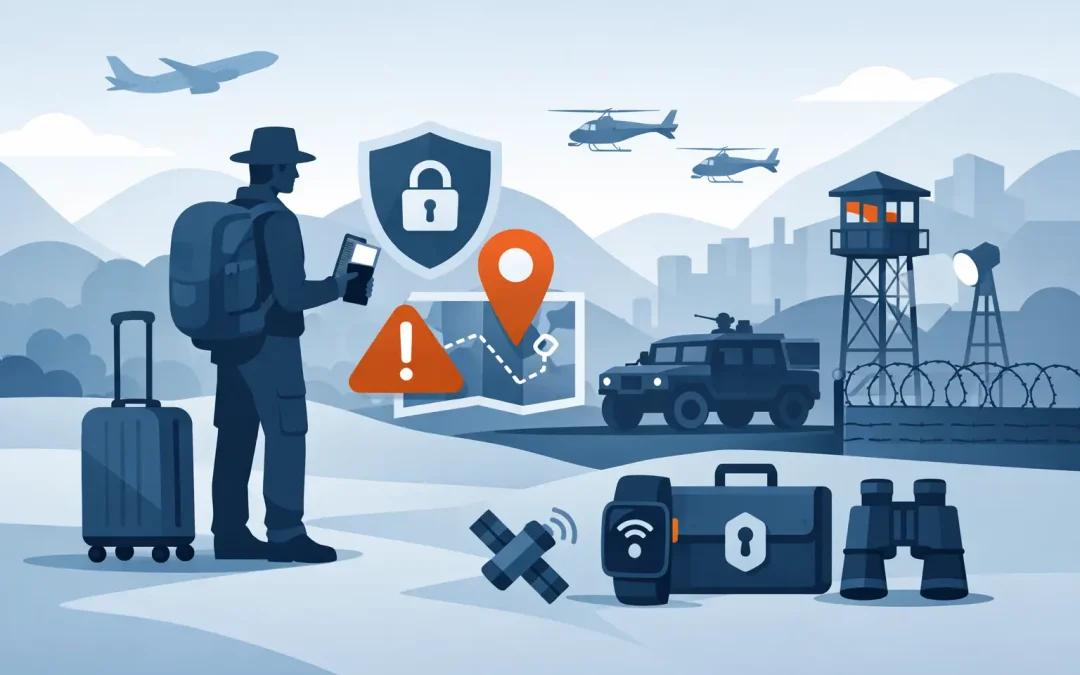
Travel Security Planning for High-Risk Principals: Don’t Leave Safety to Chance!
At West Coast Detectives International, we treat every high-risk journey like the mission it is—because your life and success are on the line! We don’t cut corners, we don’t roll the dice, and we never leave anything to chance.
The only way to build a bulletproof travel plan is with rock-solid, real-time intelligence. Knowledge isn’t just power here—it’s protection, it’s prevention, and it’s the difference between arriving safely and becoming a statistic. We move fast, but we move smart.
We get it—sometimes the call comes in hot at the last minute. Business doesn’t wait. But if our team determines there simply isn’t enough time to gather the critical intelligence and build a truly safe plan, we’ll tell you straight: “Let’s push this trip back until it’s done right.”
If you choose to push forward anyway, we respectfully decline. Why? Because we refuse to put your life at risk—or accept responsibility for shortcuts we know could end badly. Your safety is non-negotiable.
Executives are used to setting aggressive deadlines and making things happen. We respect that drive! But when it comes to protecting life—especially on international travel—you cannot compress the time needed to collect intelligence you don’t control. Period.
Here’s the smart move: The very first call you make when even thinking about a high-stakes trip should be to a top-tier firm like West Coast Detectives International. Get the expert insight you need before you lock in flights, hotels, or meetings.
For 104 years, we’ve been mastering the art and science of safe global travel. We’ve learned the hard lessons so you don’t have to.
Ready to move? Call us today. Let’s lock in your safe travel plan and get you where you need to be—secure, confident, and unstoppable.
Travel smart. Travel safe. Travel with West Coast Detectives International. ?
A trip can become a security incident long before wheels-up. It often starts with a public itinerary, a routine social media post, an unvetted driver, or a hotel choice made for convenience rather than control. For executives, NGO personnel, public figures, and families with elevated exposure, a travel security planning guide is not a luxury document. It is part of operational readiness.
Most travel disruptions are not dramatic. They are preventable failures in planning, communication, local knowledge, or response authority. The objective is not to eliminate all risk. That is rarely possible. The objective is to reduce avoidable exposure, preserve decision-making under pressure, and ensure that if conditions change, your team already knows what happens next.
What a travel security planning guide should actually do
A sound travel security planning guide does more than list basic safety tips. It should establish how risk will be assessed, who owns decisions, what local conditions matter, and how the traveler will move, communicate, and respond if the environment deteriorates.
That means separating low-level inconvenience from genuine threat. A delayed flight is a logistics problem. A coordinated protest near a hotel, targeted criminal surveillance, civil unrest, kidnap exposure, or a compromised driver network is a security problem. Too many travel plans treat these issues as if they belong in the same category. They do not.
The planning standard should rise with the profile of the traveler, the purpose of the trip, and the destination environment. A senior executive visiting a stable financial center may require discreet movement protocols and information protection. A legal team entering a corruption-sensitive jurisdiction may need advance due diligence on local contacts, transportation, and meeting venues. A family office principal traveling with children may need privacy controls that matter more than overt protection.
Start with threat, not itinerary
Most weak planning begins with reservations. Strong planning begins with exposure. Before booking flights or confirming meetings, define what could realistically affect the traveler.
Threat analysis should consider the destination’s crime profile, political volatility, protest activity, terrorism concerns, corruption, transport reliability, medical infrastructure, cyber vulnerability, and the visibility of the traveler. Visibility matters because risk is not evenly distributed. A recognizable executive, a witness in active litigation, an entertainer, or a principal involved in a sensitive transaction carries a different threat profile than a private individual on personal leave.
Context also matters. A trip tied to layoffs, labor disputes, litigation, sanctions, or controversial projects can increase attention around the traveler even in a location that appears commercially routine. This is where intelligence-led planning becomes decisive. The environment on paper is only part of the picture. The actual risk may sit in local sentiment, criminal targeting patterns, or known surveillance around airports, hotels, or business districts.
Build the plan around movement and control
Security failures often occur in transit. Airports, hotel arrivals, curbside pickups, and last-minute schedule changes create moments of confusion. Those are the moments hostile actors and opportunistic criminals exploit.
Travel movement should be planned with control points in mind. Who is meeting the traveler on arrival? How has that individual or company been vetted? What vehicle will be used, and is it appropriate to blend in or stand out? Is there a secondary route if the primary route is blocked? Has anyone assessed whether the hotel creates exposure through public access, poor perimeter control, or staff leakage?
There is no universal answer on posture. In some cities, visible security can deter interference. In others, it can increase attention and reduce flexibility. The right posture depends on local conditions and the principal’s profile. Quiet competence usually performs better than theatrical security.
Lodging deserves the same level of review as transport. The best hotel for comfort is not always the best hotel for protection. Separate considerations include room location, access control, evacuation options, staff discretion, underground parking, elevator patterns, and the ease with which an outsider can watch entrances and exits. A property known for celebrity traffic may offer prestige but create intelligence leakage.
Communication must be structured, not casual
A traveler should never be left to improvise communications during a problem. Communication plans need structure: primary contacts, escalation paths, scheduled check-ins, emergency authorities, and fallback methods if local networks fail.
This is especially important for teams traveling across time zones or into jurisdictions where telecommunications may be monitored, disrupted, or unreliable. Sensitive discussions should not be left to hotel Wi-Fi and personal habits. Devices, messaging practices, location sharing, and document access all require planning proportional to the sensitivity of the trip.
For high-risk travel, communication discipline also prevents false alarms and delayed response. If a principal misses a check-in, who verifies first? Who has authority to activate local support? At what point does the issue move from travel delay to welfare concern? Ambiguity wastes time, and in security work, time is usually the first asset lost.
People are often the soft point
Travel security is frequently compromised by trusted people who were never properly assessed. Drivers, fixers, interpreters, hotel staff, local partners, domestic employees at a destination residence, and even meeting hosts can create exposure through negligence, divided loyalty, or direct compromise.
That does not mean treating every local contact as a threat. It means applying due diligence before dependence is created. Credentials should be verified. Ownership and political ties should be understood. Reputation in the local environment should be checked through more than online searches. In many regions, the difference between a reliable support asset and a liability is not visible in formal paperwork.
This is where experienced investigative and HUMINT-based support has a practical edge. Open-source review can identify broad concerns. It rarely tells you how a driver behaves under pressure, whether a translator talks freely after hours, or whether a recommended vendor is connected to a local criminal or political network. Those details tend to emerge through informed ground assessment.
Prepare for disruption before it happens
A serious plan accounts for the fact that things change quickly. Civil demonstrations move. Borders tighten. A medical issue develops in a location with weak care standards. A principal is doxxed online during travel. A private meeting becomes public. Security planning must account for disruption without making the trip unworkable.
That requires predesignated decision points. If unrest develops within a defined radius, does the itinerary continue, shift, or stop? If airport access is compromised, what is the alternate departure method? If a traveler is followed, where do they go and who takes over? If a family member becomes ill abroad, which hospital is acceptable and who coordinates movement?
Contingency planning should be simple enough to execute under stress. Overbuilt plans often fail because they depend on too many assumptions. The better standard is clear authority, local support, and practical options. A traveler does not need a binder full of theory. They need a plan that works at 11:40 p.m. in a bad district with limited communications and incomplete information.
The human factor cannot be ignored
Well-protected travelers still make poor decisions when tired, rushed, overconfident, or socially pressured. Security planning should account for behavior, not just logistics.
That includes discretion at restaurants and bars, handling of badges and credentials, control of luggage and devices, room-entry awareness, and the discipline to avoid telegraphing future movements. It also includes resisting the common tendency to relax after a smooth first day. Repetition breeds complacency. Adversaries often watch for patterns before acting.
For families and principals not accustomed to protective travel, the tone of preparation matters. Overly dramatic briefings can cause people to tune out. Understated, factual guidance tends to produce better compliance. The goal is calm awareness, not anxiety.
Why professional planning changes the outcome
There is a difference between travel advice and travel security management. Advice tells a traveler to be careful. Management assigns responsibility, validates assumptions, prepares local assets, and creates a response structure that can function when the situation is fluid.
For low-risk travel, internal administrative planning may be sufficient. For elevated-risk movements, that approach often leaves gaps between booking, intelligence, transport, and incident response. Those gaps are where exposure grows.
Firms such as West Coast Detectives International approach travel planning as an operational discipline rather than a checklist exercise. That distinction matters when a trip involves executive visibility, litigation sensitivity, hostile environments, kidnap concerns, reputational threats, or complex international movement. Security is strongest when intelligence, logistics, protective judgment, and ground truth are aligned before departure.
The right plan is rarely the most visible one. It is the one that quietly narrows uncertainty, protects options, and allows the traveler to conduct business without becoming the story. Before any high-stakes trip, ask a harder question than whether the itinerary works. Ask whether the plan would still hold if the environment turned against you by nightfall.

by plittle@westcoastdetectives.us | Jun 17, 2026 | Blog
Why and When to Hire a Private Investigator – Act FAST Before Problems Explode!
At West Coast Detectives International, I hear it all the time: “I wish I’d called you a year ago!”
Business losses piling up. Suspicious activity at home. A partner acting strange. An employee you just can’t trust.
Millions of people right now are sitting on problems, hoping they’ll magically disappear. But here’s the truth: delaying only makes it worse — and way more expensive!
Human nature wants to wait and “see what happens.” Don’t do it. The longer you wait, the harder and costlier it becomes for even the best investigators to get results.
Time is not on your side.
I also hear the horror stories: people who hired a PI, dropped a big retainer, and then couldn’t get calls returned or solid results. That’s why you’ve got to choose wisely and quickly.
At West Coast Detectives International, our 104-year legacy proves we treat every case — big or small — with total urgency, rock-solid integrity, and relentless communication. We don’t just take your money and disappear. We deliver facts, real solutions, and peace of mind.
Bottom line: If something feels off in your business, your home, or your life — don’t wait. The right private investigator can save you time, money, and massive stress.
Following are key things to consider when hiring a private investigator — so you pick a proven winner the first time!
A threat does not become less serious because it is inconvenient to discuss. A partner’s unexplained financial activity, a hostile former associate, a disputed corporate relationship, or a questionable overseas contact can all carry legal, reputational, and personal consequences. In those moments, private investigator services are not about curiosity. They are about establishing facts, preserving options, and protecting people before a problem hardens into a crisis.
What private investigator services actually cover
Many people still associate investigators with routine surveillance or domestic casework. That work exists, but serious private investigator services extend much further. The real function is risk reduction through lawful fact-finding, discreet fieldwork, source development, analysis, and reporting that can stand up to scrutiny.
For a private client, that may mean addressing stalking, harassment, infidelity concerns, family security issues, or verifying whether someone in their circle is misrepresenting who they are. For a corporation, it may involve due diligence ahead of a transaction, internal misconduct inquiries, executive threat assessment, fraud-related investigation, or intelligence support before entering a new market. For legal teams, it often means locating witnesses, testing claims, identifying inconsistencies, or gathering background material that sharpens strategy.
The common thread is not the type of client. It is the need for reliable information gathered with discretion and professional judgment.
Why high-stakes clients use private investigator services
In lower-risk situations, public records and internal reviews may be enough. In higher-risk matters, they rarely tell the full story. Records can be outdated, manipulated, incomplete, or silent on the question that actually matters: what is happening now, who is involved, and how likely is the risk to escalate?
This is where experienced investigators provide value. They do not simply collect data. They evaluate credibility, reconcile contradictions, identify patterns, and understand how a small anomaly can point to a larger exposure. A travel itinerary may appear routine until it intersects with a known threat environment. A business partner may appear legitimate on paper while their operational footprint tells a different story. A harassment complaint may sound isolated until surveillance, witness work, and digital review reveal persistence and proximity.
The strongest investigative work is both tactical and strategic. It answers the immediate question while also helping the client decide what to do next.
The difference between information and intelligence
Anyone can assemble fragments. Professional investigators are engaged to produce something more useful: verified, contextualized, actionable findings.
That distinction matters. Raw information can create false confidence. Intelligence requires validation, sourcing discipline, and awareness of how evidence may be interpreted by counsel, executives, family offices, or security teams. It also requires restraint. Not every lead is meaningful, and not every fact should trigger a reaction before it is checked.
For clients operating under reputational pressure, restraint is part of the service.
The cases where discretion is not optional
Some assignments are sensitive because they involve money. Others are sensitive because they involve safety, public standing, or geopolitical complexity. In those environments, discretion is not a courtesy. It is an operational requirement.
Consider pre-transaction due diligence involving a foreign counterparty, concerns about executive targeting during international travel, or a personal matter involving a high-visibility individual. A careless inquiry can alert the wrong people, damage a negotiation, provoke retaliation, or generate unnecessary exposure. The method matters as much as the answer.
This is why sophisticated firms build assignments around need-to-know handling, lawful evidence collection, controlled reporting, and field awareness. In some cases, speed is the priority. In others, patience is what protects the client. There is no honest one-size-fits-all model.
Domestic issues can carry enterprise-level risk
Clients sometimes underestimate personal matters because they begin close to home. A stalking case may look private until it affects an executive’s movement patterns, family routines, staff safety, or public appearances. A contentious domestic dispute can evolve into reputational leverage. An unvetted romantic or business relationship can become an access point to finances, travel plans, or confidential information.
The line between personal exposure and organizational exposure is often thin. That is one reason senior decision-makers and prominent individuals turn to investigators who understand both protection and inquiry.
What to look for in a serious investigative firm
Not all investigative providers operate at the same level. Some are suited to narrow local assignments. Others are built for layered matters that involve travel risk, hostile actors, complex due diligence, litigation support, or international components. Choosing the right partner starts with understanding the environment you are operating in.
Experience matters, but the type of experience matters more. A firm that has handled sensitive protective assignments, worked in complex jurisdictions, supported government or NGO stakeholders, and understands threat management will approach a case differently from a vendor built around standard surveillance volume. Operational maturity shows up in planning, legal awareness, source handling, reporting discipline, and the ability to adapt without losing control of the mission.
Clients should also pay attention to whether the firm asks the right questions at the outset. A capable investigator will want to know the objective, timeline, decision points, legal sensitivities, and what outcome would actually help the client. If the conversation focuses only on tactics and price, something is missing.
Global reach is useful only if it is credible
Many firms claim international capability. That claim means little without real infrastructure, vetted field assets, and practical knowledge of how investigations unfold across borders. Language barriers, local customs, legal restrictions, corruption risks, and hostile environments can all undermine an assignment if the team is not prepared.
A credible global investigative operation combines local access with central oversight. It knows when to rely on HUMINT, when to use technical tools, when to coordinate with legal counsel or security personnel, and when not to force an inquiry that could compromise the client. In international work, judgment is often the most valuable asset in the room.
The role of technology – and its limits
Modern investigations benefit from advanced tools, digital research capabilities, database access, and analytical platforms. These can accelerate timelines and expose patterns that would otherwise stay hidden. But technology is an aid, not a substitute for field sense.
A digital footprint can suggest a relationship, but it may not prove intent. Records can indicate ownership, but not control. Online activity can imply location, but not context. Experienced investigators know when a desktop lead is enough and when it must be tested through interviews, surveillance, local inquiries, or corroboration from trusted sources.
This is particularly true in matters involving deception. People who present risk often work deliberately to create a misleading digital and paper trail. That is why serious investigative work still depends on human judgment, source evaluation, and disciplined verification.
When speed helps – and when it hurts
Clients often arrive under pressure. They need answers before travel, before a board decision, before litigation, before a public event, or before a threat advances. Fast response can be critical. Early action can preserve evidence, identify vulnerabilities, and prevent a manageable problem from becoming an operational emergency.
But speed alone is not a strategy. A rushed inquiry can contaminate a witness pool, trigger countermeasures, or create facts that are hard to walk back. The right pace depends on the objective. If the immediate need is safety, action may come first and fuller investigation second. If the matter concerns deception, fraud, or hidden associations, patience may be what produces defensible results.
The best investigative teams know how to move quickly without becoming careless.
Why trust is central to private investigator services
At this level, clients are not purchasing a commodity. They are confiding exposure. They may be sharing names, travel plans, vulnerabilities, legal concerns, internal disputes, or family issues that cannot be mishandled. Trust is earned through discretion, factual reporting, and the discipline to separate evidence from assumption.
That is also why presentation matters. Findings should be clear, sober, and useful. No theatrics. No inflated claims. No blurring of confirmed facts with speculation. Whether the client is an executive, attorney, family office, or individual facing a personal threat, they need reporting they can act on with confidence.
For organizations such as West Coast Detectives International, the standard is not whether an investigator can gather information. It is whether that information is developed lawfully, tested carefully, and delivered in a form that supports real decisions under pressure.
Private investigator services are most valuable when the stakes are high and the facts are not yet clear. If you are facing uncertainty with legal, financial, reputational, or personal security consequences, the right investigative approach does more than answer questions. It restores room to maneuver, which is often the first step toward regaining control.