
by plittle@westcoastdetectives.us | Aug 2, 2026 | Blog
A promising partner can arrive with polished financials, recognizable references, and a persuasive growth story. None of that establishes who controls the company, where its capital comes from, or what liabilities may surface after your name, assets, or personnel are attached to the deal. Knowing how to verify business partners means testing the facts beneath the presentation before exposure becomes difficult to reverse.
For a routine domestic vendor relationship, basic corporate records and credit checks may be proportionate. For an acquisition, international joint venture, executive appointment, distribution agreement, or relationship involving regulated markets, public figures, government touchpoints, or travel to high-risk regions, verification must go further. The objective is not to find a reason to reject every opportunity. It is to make a decision with a clear understanding of the people, incentives, risks, and undisclosed facts involved.
How to Verify Business Partners Before Money Moves
Verification works best when it begins before contracts are signed, funds are transferred, or sensitive information is shared. Once a counterpart has access to intellectual property, customer data, supply chains, or executive travel details, the cost of a weak initial review rises sharply.
Start by defining the decision at hand. A minority investment calls for a different inquiry than selecting a logistics provider. If a prospective partner will handle payments, represent your organization abroad, gain access to facilities, or introduce you to political or commercial intermediaries, your review should be more demanding. The scope should follow the exposure, not the speed of the transaction.
Ask for core documentation early: formation records, business registrations, ownership information, tax identifiers where appropriate, key contracts, banking references, licenses, and details of directors and senior officers. A legitimate organization should expect reasonable diligence. Resistance, unexplained delays, or shifting answers do not prove misconduct, but they are operational signals that deserve attention.
Establish the Corporate Identity and Control Structure
A company name is not an identity. Similar names, recently formed entities, shell companies, nominee directors, and layered holding structures can obscure who is actually making decisions and benefiting from the relationship.
Confirm the legal entity’s exact name, jurisdiction, registration number, operating address, and status. Determine whether it is active, dissolved, recently renamed, or involved in frequent changes of directors or ownership. Then map the chain of control to the ultimate beneficial owners, not merely the individuals listed on a website or introductory deck.
This work is especially important across borders. Some jurisdictions provide limited public information, while others allow corporate records to be searched but do not reveal the practical controller behind an intermediary entity. In those cases, a paper trail alone may be insufficient. Experienced investigators compare corporate filings with litigation records, professional histories, local reporting, former associations, and credible human-source intelligence to identify inconsistencies.
Ownership is not the only issue. You also need to know whether a partner is financially and operationally real. Confirm that the stated offices, facilities, personnel, and commercial footprint exist. A prestigious address can be a serviced office. A sophisticated website can conceal a company with no meaningful capacity to perform.
Screen for Legal, Financial, and Reputational Exposure
Public-record research should establish whether the company and its principals have a history that conflicts with their representations. The review should include civil litigation, criminal allegations where lawfully available, insolvencies, regulatory actions, licensing issues, liens, judgments, procurement disputes, and adverse media.
Sanctions and watchlist screening are essential when a transaction has international reach, a government connection, or a complex ownership chain. Screen the entity, its directors, beneficial owners, major intermediaries, and closely linked companies. A match requires careful resolution. Treating a common name as proof is careless; dismissing a possible match without examining identifiers is equally dangerous.
Reputational research requires judgment. Online accusations, anonymous complaints, and sensational reporting may be inaccurate or commercially motivated. Look instead for patterns: repeated disputes with different parties, unexplained litigation, allegations that align with official actions, or a consistent gap between claimed credentials and verifiable experience.
Financial warning signs should be evaluated in context. A young company may have thin credit history without being deceptive. But unexplained pressure for advance payment, reluctance to identify banking relationships, sudden changes to payment instructions, chronic late-payment allegations, or a mismatch between claimed revenue and visible operations warrant scrutiny. Fraud frequently exploits urgency and ambiguity.
Verify the People Behind the Proposal
The business relationship will be carried by people, not corporate documents. Verify the backgrounds of founders, directors, executives, authorized signatories, and the individuals who will control the day-to-day engagement.
Confirm employment history, qualifications, board roles, professional licenses, and claimed commercial successes. Review whether a principal has been associated with failed entities, misconduct allegations, undisclosed conflicts of interest, or competitors with a stake in the proposed arrangement. Pay particular attention to individuals who appear to operate through relatives, associates, or a sequence of short-lived companies.
References should be independently validated. Do not rely solely on contacts supplied by the prospective partner. Locate former clients, industry participants, suppliers, and other informed parties through your own research. Ask specific questions: Did the company perform as promised? Who actually led the work? Were payments timely? Did the relationship end cleanly? Vague praise is less useful than concrete examples.
When the stakes are high, discreet source inquiries can reveal information absent from databases: a concealed business dispute, local political influence, a questionable intermediary, or a reputation for making commitments the organization cannot fulfill. Such work must be lawful, proportionate, and handled with strict confidentiality.
Test the Commercial Story Against Reality
A capable due diligence process does not stop after finding no obvious derogatory information. It tests the central claims that justify the partnership.
If a distributor says it has national reach, verify its customer network, warehouse capacity, sales team, and permissions to operate. If an investment partner claims access to capital, establish the source of funds and authority to deploy them. If a technology provider claims proprietary capability, examine its personnel, prior deployments, intellectual property position, and ability to support the product after launch.
The most valuable questions are often practical. Who will sign the agreement? Who will receive payment? Who has access to data or sites? Which third parties are involved? What happens if the local principal is unavailable? A credible partner can answer these questions consistently and provide evidence. A weak partner often responds with generalities, substitutes a new contact, or changes the structure when asked for verification.
Match the Investigation to the Risk
Not every partnership requires a full investigative deployment. Over investigating a low value, low access vendor can consume time without improving the decision. Under investigating a strategic relationship can expose an organization to financial loss, sanctions concerns, reputational damage, insider threats, or personal security risk.
A proportionate review usually considers five areas:
- Legal identity, ownership, and authority to act
- Financial condition, payment behavior, and source of funds
- Litigation, regulatory, sanctions, and adverse information exposure
- Background, reputation, and conflicts involving key individuals
- Operational capability and the reality of the commercial claims
Escalate the review when any of the following factors are present: opaque ownership, cross-border payments, politically exposed persons, sensitive industries, unusual intermediaries, requests for confidentiality beyond normal commercial practice, or access to protected information and facilities. The same applies when your executives will travel, meet, or negotiate in a location where local intelligence and security conditions are uncertain.
Preserve Evidence and Build Protective Terms
Verification should produce a defensible record, not just a verbal assurance that a partner “checked out.” Keep a clear file of documents reviewed, sources consulted, findings, unresolved questions, and the rationale for the final decision. This record helps leadership, counsel, compliance teams, and insurers understand what was known at the time.
Use the findings to shape the agreement. Depending on the risk, protective measures may include staged payments, audit rights, beneficial ownership disclosures, compliance representations, termination rights, restrictions on subcontracting, information-security controls, and approval requirements for changes in ownership or banking instructions. Due diligence is most useful when it changes how the relationship is managed.
For complex or sensitive engagements, independent investigative support can provide the field verification and discretion that ordinary database searches cannot. West Coast Detectives International approaches these assignments as decision-support missions: establish the facts, identify material exposure, and report findings that leadership can act on.
Before committing capital, access, or reputation to a new partner, pause long enough to confirm that the opportunity is attached to a real, accountable, and capable organization. The right relationship can strengthen an enterprise. The wrong one can create a problem that no contract can fully contain.

by plittle@westcoastdetectives.us | Jul 31, 2026 | Blog
A credible threat rarely begins with a dramatic incident. It begins with a pattern: an unwanted message that becomes persistent, a former associate who starts appearing at predictable locations, hostile online commentary paired with personal details, or an employee grievance that shifts from anger to fixation. The best threat management practices treat these signals as intelligence requirements, not inconveniences to be addressed after harm occurs.
For executives, public-facing individuals, legal teams, and organizations with sensitive operations, the objective is not to eliminate every risk. That is neither realistic nor operationally sound. The objective is to identify credible threats early, understand capability and intent, reduce exposure, and make proportionate decisions before a situation becomes a crisis.
Threat Management Is a Discipline, Not a Reaction
Threat management is the structured assessment and mitigation of risks posed by people, groups, events, and environments. It combines protective planning, investigative work, intelligence analysis, and careful communication. A guard at a doorway or a security alert on a phone may be useful components, but neither is a threat management program by itself.
The distinction matters because threats are dynamic. A person who poses little immediate concern may become more dangerous after a court ruling, termination, media event, family dispute, financial loss, or perceived public humiliation. Conversely, an alarming statement may be bluster from someone with no access, capability, or sustained interest. Good judgment requires facts, context, and ongoing reassessment.
The most effective programs establish clear ownership. Someone must be responsible for receiving reports, preserving information, initiating an assessment, and coordinating protective, legal, human resources, and communications decisions. When responsibility is scattered across departments, warning signs are often recognized but never connected.
Best Threat Management Practices Start With Reporting
People cannot manage information they never receive. Employees, household staff, assistants, drivers, venue personnel, and close family members should know what to report, where to report it, and why prompt reporting matters. The standard should not be whether an incident appears serious in isolation. It should be whether it may contribute to a developing pattern.
Reports should capture dates, locations, exact language, screenshots, witnesses, vehicle details, account names, and any perceived change in behavior. Preserve original material whenever possible. A rushed rewrite of a threatening message can remove the very details an investigator needs to assess intent or attribution.
Reporting channels must also be discreet. A high-profile executive may not use a general corporate hotline for a personal stalking concern. A family office may need a direct point of contact who can receive sensitive information without broadcasting it across a large team. Confidentiality is not merely a courtesy. It encourages early reporting and protects the integrity of an assessment.
Separate Concern From Credibility
Every concern deserves respectful attention. Not every concern warrants the same response. An assessment should examine behavior, not rely solely on labels or intuition. Relevant questions include whether the subject has made threats, demonstrated fixation, researched routines, attempted contact, traveled toward the protected person, acquired weapons, breached boundaries, or expressed grievance-based thinking.
Access is equally significant. A person with hostile intent but no knowledge of schedules, residences, travel plans, or workplace procedures presents a different risk from someone with proximity or insider knowledge. Prior violence, restraining-order violations, substance misuse, financial distress, and triggering events may also affect the assessment, but none should be treated as a simple prediction of violence.
A professional assessment avoids two common errors: dismissing a threat because it feels unusual, and escalating a matter because it feels frightening. Both can produce costly decisions. The proper response follows verified facts and a reasoned view of likelihood, impact, and immediacy.
Build a Protective Picture Before Changing the Plan
Protective measures work best when they are based on a clear picture of exposure. Map the principal’s normal routines, residences, offices, travel routes, public appearances, family considerations, digital footprint, and known points of access. The purpose is not to make life unlivable. It is to identify where predictability, poor information control, or weak procedures create unnecessary opportunity.
For a corporate client, this may include executive travel, visitor management, workplace access, board meetings, labor disputes, and public-facing facilities. For a prominent individual, the review may extend to children’s schools, domestic staff, residences, online posts, events, and service providers. Each assignment requires its own boundaries and sensitivity.
Measures should be layered rather than theatrical. Depending on the risk, a plan may combine schedule discipline, advance work, secure transportation, trained protective personnel, access controls, residential security reviews, staff briefings, and coordination with local authorities. Visible protection can deter some actors, but it may be impractical or counterproductive in others. Discretion, profile, jurisdiction, and the client’s normal responsibilities all matter.
Treat Travel as a Moving Threat Environment
Travel changes the threat equation. It introduces unfamiliar routes, uneven emergency services, local political tensions, public exposure, and reliance on third parties. A traveler who is well protected at headquarters can become vulnerable the moment an itinerary is shared too widely or an arrival routine becomes predictable.
Before significant travel, assess the destination, transit points, hotel environment, event profile, medical options, ground transportation, local crime conditions, and any threat connected to the traveler or organization. A current intelligence picture is more useful than a generic country rating. Conditions can change quickly after civil unrest, a major arrest, an election, a public controversy, or a terrorism-related incident.
The traveler also needs a practical communications plan. This includes check-in procedures, emergency contacts, alternate movement options, and a decision-maker who can authorize changes without delay. A plan that exists only in a briefing document will fail when a driver does not arrive, a route is compromised, or an event becomes unsafe.
Integrate Digital and Physical Intelligence
Modern threat activity often crosses channels. A subject may begin with social media posts, use public records to identify an address, contact associates through email, and then appear in person. Digital monitoring should therefore inform physical protection, while field observations should guide online inquiry.
The goal is lawful, focused intelligence collection. Review publicly available indicators, impersonation attempts, data exposure, doxxing activity, hostile communities, and credible communications relevant to the protected person or organization. Avoid indiscriminate monitoring that creates noise, privacy concerns, and unmanageable volumes of irrelevant information.
Digital hygiene also reduces opportunity. Limit unnecessary publication of real-time locations, family details, travel schedules, badges, and internal events. Verify unusual payment requests and account changes through an independent channel. Many intrusions begin with social engineering, and a compromised assistant or vendor can expose information that no perimeter system would reveal.
Rehearse Decisions, Not Just Emergencies
A threat plan is tested by decisions made under pressure. Teams should rehearse realistic scenarios: an unwanted visitor at a residence, a threatening communication before a public appearance, a suspicious package, an online doxxing campaign, an employee with escalating grievances, or a travel disruption in a high risk location.
The exercise should establish who verifies the facts, who contacts law enforcement, who speaks to the principal, who communicates with the family, and who documents the decision. It should also identify thresholds for changing a route, postponing an event, increasing protection, seeking legal remedies, or initiating an evacuation.
After every material incident, conduct a disciplined review. Determine what was known, when it was known, what action was taken, and whether procedures need adjustment. The purpose is not to assign blame. It is to preserve institutional memory and improve the next decision.
Use Specialists When the Stakes Exceed Internal Capacity
Internal security teams are often skilled at routine operations, but complex matters may require investigators with access to local sources, protective specialists, digital expertise, legal coordination, or experience in terrorism-related risk. The need is especially acute when a threat crosses borders, involves an unknown subject, affects a public figure, or carries reputational and legal consequences.
West Coast Detectives International approaches these assignments through factual investigation, threat assessment, and tailored protective planning supported by experienced global resources. For clients facing serious exposure, the value is not a generic security presence. It is a defensible understanding of what is happening and a plan that can be executed with discretion.
The right time to seek experienced help is often before the threat meets a dramatic threshold. A well-documented concern, assessed early and handled with measured discipline, gives leaders more options and gives those under protection more room to continue living and working with confidence.

by plittle@westcoastdetectives.us | Jul 29, 2026 | Blog
ct now. Know exactly who you’re dealing with—before it’s too late.
In today’s fast-moving world, detailed knowledge of the people you hire, partner with, or trust is not optional. It’s mission-critical.
As the leader of West Coast Detectives International, I demand this standard for our firm and for every client we protect.
Quick internet checks and a checked box are not vetting. That shortcut has already driven clients to our door in crisis mode—after a hiring mistake triggered major damage, lost money, and lasting headaches.
Our motto is simple and non-negotiable: Prevent. Prevent. Prevent.
Prevention stops costly disasters cold. It beats scrambling after the fact every single time.
Here’s what 104 years of hard-won experience has taught us:
A vendor can look qualified on paper and still expose your organization to fraud, sanctions violations, data loss, supply disruption, or reputational damage. That is why knowing how to conduct vendor due diligence is not a procurement formality. It is a disciplined intelligence process designed to establish who you are dealing with, what risks they present, and whether those risks can be controlled.
For a routine office supplier, the review may be limited. For a vendor with access to financial systems, sensitive data, executive travel arrangements, government work, physical facilities, or operations in high-risk jurisdictions, the standard must be much higher. The right level of scrutiny depends on the assignment.
Start With the Risk, Not the Questionnaire
A generic questionnaire treats every vendor as if the consequences of failure are the same. They are not. Before requesting records or commissioning research, define the vendor’s role and the exposure it creates.
Ask what the vendor will be permitted to access, where it operates, whether it will interact with public officials or subcontractors, and how difficult it would be to replace if it failed. Also consider whether its work could affect the safety of personnel, continuity of operations, protected information, or a high-profile client’s reputation.
A useful risk assessment considers five areas: financial exposure, information access, operational criticality, geographic risk, and reputational sensitivity. A catering company serving a single meeting presents a different profile from a travel security provider moving executives through politically unstable regions. The second assignment calls for deeper verification, direct source inquiries where lawful and appropriate, and continuing oversight after onboarding.
Risk tiering also prevents wasted effort. Not every vendor requires field inquiries or a full beneficial ownership investigation. But high-risk vendors should never be cleared merely because they completed a questionnaire and supplied favorable references.
How to Conduct Vendor Due Diligence in Stages
The most reliable reviews are structured in stages. Each stage should either confirm the vendor’s representations or identify areas that require escalation.
Confirm identity, legal existence, and ownership
Begin with the basics, but verify them independently. Confirm the entity’s legal name, registration status, business addresses, tax identification where relevant, directors, officers, and beneficial owners. Establish whether the contracting entity is the actual operating company or a recently formed intermediary with little independent capacity.
Ownership matters because hidden control can create conflicts of interest, sanctions exposure, political exposure, or fraud risk. Complex holding structures are not inherently improper, particularly in multinational business. They do, however, require a credible explanation and documentary support.
Pay close attention to unexplained changes in ownership, frequent changes of address, nominee directors, related-party transactions, or a company whose claimed scale is inconsistent with its public footprint. These indicators do not prove misconduct. They identify questions that should be answered before a contract is signed.
Assess financial stability and operating capacity
A vendor’s financial health affects more than payment risk. A distressed supplier may cut corners, lose key staff, fail to maintain insurance, substitute unvetted subcontractors, or become vulnerable to improper influence.
Review available financial statements, credit information, litigation records, insolvency filings, insurance coverage, banking references when appropriate, and evidence of current operating capacity. Then compare the evidence to the proposed scope of work. Can the vendor realistically staff the contract, maintain required equipment, and absorb a disruption?
For critical vendors, speak with informed references and examine performance on similar assignments. A polished proposal is not evidence of execution. Seek confirmation of delivery history, quality controls, incident response, and the vendor’s conduct when conditions became difficult.
Investigate integrity, compliance, and adverse history
Screen the company, its principals, and material affiliates against applicable sanctions, watchlists, enforcement actions, and debarment records. Review credible adverse media, civil litigation, regulatory findings, allegations of bribery or corruption, labor disputes, environmental violations, fraud claims, and links to organized criminal activity or extremist financing.
Context is essential. A single lawsuit may be ordinary commercial friction. Repeated disputes involving nonpayment, misrepresentation, safety failures, or corrupt conduct can reveal a pattern. Likewise, a media allegation should not be treated as fact without assessing its sourcing, corroboration, date, jurisdiction, and the subject’s response.
This is where superficial online searching fails. High-quality due diligence distinguishes verified facts from rumor, identifies gaps in the public record, and examines local conditions that may not appear in English-language databases. In sensitive jurisdictions, lawful human-source inquiry and local investigative capability may be necessary to understand a vendor’s real reputation and relationships.
Test security and information-handling controls
If a vendor will handle personal information, confidential business material, client itineraries, payment data, or protected systems, security due diligence must be operational rather than ceremonial.
Determine what data the vendor receives, where it is stored, who can access it, and whether subcontractors or offshore support teams are involved. Review access controls, encryption practices, incident reporting procedures, employee screening, device management, retention policies, and the vendor’s ability to contain a breach.
Do not assume that a certification or policy document resolves the issue. Ask how controls are applied in practice. A vendor may have an acceptable written policy while relying on shared accounts, weak offboarding procedures, or unmonitored third parties. For high-consequence engagements, technical validation or an onsite assessment may be warranted.
Examine third parties and geographic exposure
Many vendors are only as reliable as the subcontractors, agents, logistics partners, and local representatives they use. This is particularly significant in international operations, construction, protective services, supply chain work, and engagements involving government touchpoints.
Require disclosure of material subcontractors and determine whether the vendor conducts its own screening. Examine countries of operation for sanctions restrictions, corruption risk, political instability, terrorism exposure, weak rule of law, and transportation or communications vulnerabilities.
A vendor can be legitimate and still be unsuitable for a particular assignment. For example, a firm may have strong technical capability but lack the local network, crisis procedures, or secure movement protocols needed for work in a volatile environment. Suitability is tied to mission conditions, not just corporate credentials.
Verify Claims Through Independent Sources
Vendor due diligence is weakened when the vendor controls all the evidence. Documents supplied by the vendor are useful, but they should be checked against independent records, credible reporting, regulatory sources, litigation databases, direct reference calls, and, where proportionate, discreet field verification.
The goal is not to manufacture suspicion. It is to resolve discrepancies. If an executive biography lists extensive experience but records show only a recently created entity, ask why. If the stated headquarters appears to be a virtual office, determine where management and operations are actually based. If references are uniformly enthusiastic but cannot describe the scope of work, treat that as incomplete confirmation rather than reassurance.
Keep an evidence trail. Record sources, dates, findings, unresolved questions, and the reasoning behind the final risk decision. This protects the organization if the decision is later reviewed by auditors, counsel, regulators, insurers, or senior leadership.
Make a Decision That Matches the Evidence
Due diligence should result in a clear decision: approve, approve with conditions, defer pending further inquiry, or decline. A vague statement that a vendor has been “reviewed” is not a defensible outcome.
Conditional approval is often appropriate. Conditions may include stronger contract language, audit rights, cybersecurity requirements, insurance thresholds, restrictions on subcontracting, enhanced reporting, background screening of assigned personnel, or a requirement to disclose ownership changes. The appropriate controls depend on the identified risk and the vendor’s willingness to remediate it.
Some findings warrant immediate escalation. Undisclosed beneficial owners, sanctions concerns, material falsification, serious criminal allegations supported by credible evidence, or resistance to basic verification should be referred to legal, compliance, security, and executive decision-makers. Do not allow commercial urgency to override a credible red flag without documented authority.
Treat Due Diligence as Continuous
A vendor cleared last year may not be suitable today. Ownership changes, financial distress, cyber incidents, regulatory action, conflict, and changes in local threat conditions can alter the risk picture quickly.
Set review intervals based on risk tier. Critical vendors may require periodic screening, performance reviews, updated insurance and ownership confirmations, and event-driven reassessment when a breach, adverse report, merger, leadership change, or geographic escalation occurs. Lower-risk vendors can be reviewed less frequently, provided the organization retains the ability to investigate when circumstances change.
For sensitive domestic or international assignments, West Coast Detectives International applies investigative discipline to the facts that matter most: identity, capability, integrity, local conditions, and the practical risk behind the vendor’s public presentation. A defensible vendor decision is rarely based on one document or one database. It is built by asking the right questions early, verifying what can be verified, and refusing to confuse speed with certainty.
by plittle@westcoastdetectives.us | Jul 27, 2026 | Blog
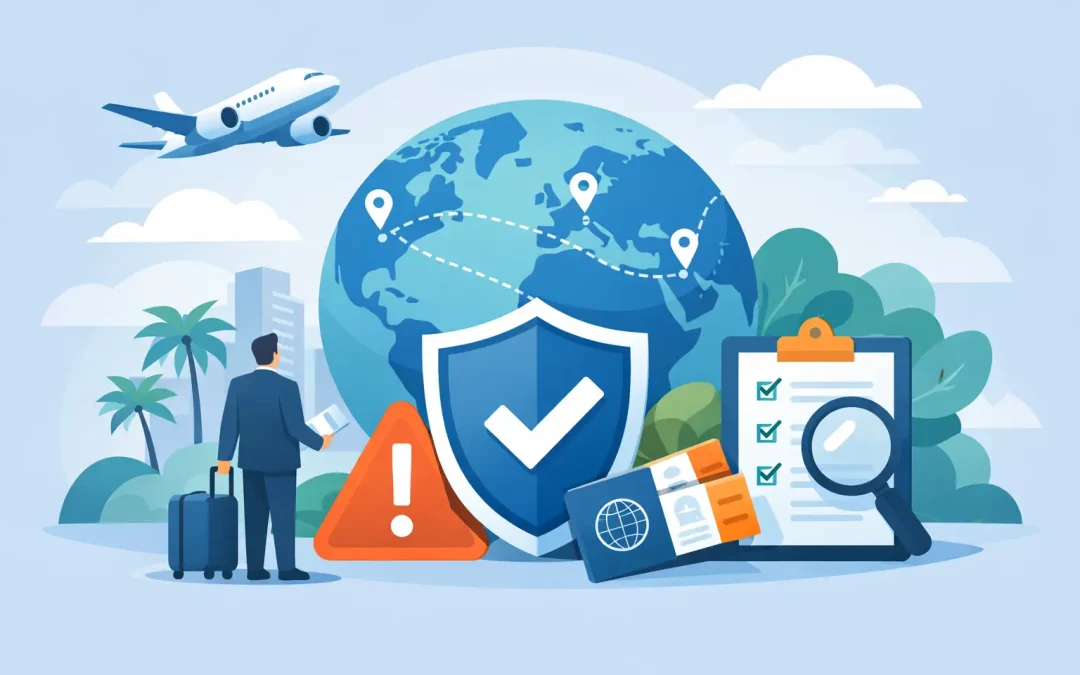
A senior executive lands in an unfamiliar capital, clears the airport, and follows a driver whose identity was confirmed only by text message. The itinerary looks ordinary. The exposure is not. Airport transfers, predictable routines, public meetings, online visibility, and weak local reporting can create risk long before a traveler recognizes it.
The best travel risk mitigation practices treat travel as an operational security matter, not an administrative task. They combine current intelligence, disciplined preparation, reliable local support, and clear decision-making when conditions change. For organizations, public figures, legal teams, and families facing elevated exposure, this standard is not excessive. It is responsible.
Start With a Threat-Led Travel Assessment
Travel risk is not determined by a country label alone. A destination may be broadly stable while a particular district, event venue, route, or business relationship creates a concentrated problem. Conversely, a destination with a concerning public reputation may be manageable for a well-prepared traveler with proper support.
The assessment should identify who may pose a threat, what they may want, and where the traveler is most exposed. That includes terrorism and civil unrest, kidnapping, crime, stalking, hostile surveillance, medical limitations, cyber compromise, legal detention, and reputational harm. The traveler’s profile matters as much as the destination. A corporate officer involved in a sensitive transaction, an entertainer with a public schedule, or a witness in a legal dispute may attract attention that an ordinary tourist would not.
This work should also examine the purpose of travel. A short airport-to-hotel visit requires a different posture than a multi-city negotiation, site inspection, humanitarian mission, or court-related assignment. The correct question is not, “Is this country safe?” It is, “What conditions could affect this person, on these dates, through these movements, and what controls will reduce that exposure?”
Use Current, Local Intelligence
Public travel advisories are useful starting points, but they are not a complete operational picture. They may not reflect a sudden protest near a hotel, a change in criminal activity along a transfer route, local tensions surrounding an election, or emerging threats aimed at a particular industry.
Current local intelligence provides the context that turns general warnings into practical decisions. It should cover planned routes, transportation providers, hotel surroundings, venue security, medical capability, political developments, communications reliability, and credible indicators of targeted threat. Human reporting is particularly valuable where online information is delayed, distorted, or incomplete.
The goal is factual reporting, not alarmism. Travel should not be canceled merely because a risk exists. It should be modified, postponed, or protected when the risk cannot be managed to an acceptable level.
Build the Travel Plan Around Control Points
A protective plan is strongest when it addresses the moments where control is routinely lost: arrival, transit, lodging, public appearances, and emergency departure. Vague instructions to “stay alert” do little in a rapidly changing environment.
Before departure, establish the traveler’s schedule, essential contacts, approved transportation, accommodations, and communication procedures. Separate the need-to-know itinerary from broader calendars and social posts. A precise schedule can be a security asset internally and a vulnerability when circulated without discipline.
Travelers should know who has authority to change a route, cancel a meeting, authorize protective support, or initiate an extraction. In a crisis, hesitation often comes from uncertainty over decision rights rather than a lack of information. A concise escalation protocol removes that uncertainty.
For higher-risk travel, identify alternates in advance: a secondary hotel, an alternate airport, more than one departure route, medical facilities, and safe locations for temporary relocation. These are not signs of pessimism. They are the practical provisions that preserve options when the primary plan fails.
Secure the Airport Transfer and Ground Movement
Airport transfers deserve special attention because travelers are tired, distracted, carrying luggage, and easily identifiable. Use a vetted driver and vehicle, confirm the driver through a prearranged authentication process, and avoid sharing pickup details through unverified channels. A name on a sign is not proof of legitimacy.
Ground movement should be planned with an understanding of route conditions, traffic choke points, civil disturbances, crime patterns, and surveillance concerns. For an executive or prominent individual, consistent use of the same vehicle, route, and departure time may create an unnecessary pattern. Variation is appropriate when the threat profile warrants it, though constant last-minute changes can also cause confusion. The right balance depends on the intelligence picture.
Protective personnel should be selected for their judgment, local competence, and ability to operate discreetly. Visibility can deter opportunistic threats, but an overt security footprint can attract attention or complicate business engagements. In many assignments, low-profile protection supported by strong advance work is the more effective choice.
Treat Hotels and Meetings as Security Environments
The hotel is not merely a place to sleep. It is where a traveler’s movements become routine, where sensitive conversations occur, and where unauthorized contact is common. Hotel selection should consider access control, nearby roads, emergency exits, neighborhood conditions, room location, and the property’s capacity to respond to a medical or security incident.
Avoid discussing schedules, transactions, litigation, or personal matters in public areas. Do not leave devices, documents, credentials, or travel materials unattended. Confirm unexpected visitors through the front desk or established security contact before opening the door. These fundamentals are simple, but they prevent many avoidable compromises.
Meeting sites require equal attention. Review entrances, exits, attendee access, nearby protest activity, parking, communications coverage, and the ability to leave quickly if needed. For sensitive negotiations or high-profile appearances, an advance assessment can identify gaps that would otherwise become apparent only after the principal arrives.
Protect Digital and Personal Information
Travel expands the attack surface. Hotel Wi-Fi, charging stations, public workspaces, shared transport, and social media all offer opportunities for data loss, location exposure, or impersonation. Travelers should use approved devices, multi-factor authentication, encrypted communications where appropriate, and a virtual private network on untrusted networks.
Limit the data carried across borders to what is necessary for the mission. A device containing confidential client files, transaction information, contact lists, or legal materials can create significant exposure if seized, stolen, or accessed. In some circumstances, clean devices and temporary travel accounts are prudent.
Personal security and digital security are connected. A public post can reveal a hotel, a meeting location, or a live route. Family members, assistants, and colleagues should understand that a traveler’s location is not theirs to share casually. The most damaging disclosures are often unintentional.
Prepare the Traveler to Make Sound Decisions
A travel plan cannot replace individual judgment. The traveler should receive a concise briefing that explains the relevant risks, not a stack of generic warnings. They need to know what suspicious behavior may look like, how to verify a driver or contact, when to disengage from a meeting, and whom to call if they lose communications or feel under observation.
Medical readiness should be part of the briefing. Confirm medications, allergies, insurance or evacuation coverage, local emergency numbers, and the nearest suitable medical facility. In remote locations or jurisdictions with limited care, medical evacuation planning may be as important as physical protection.
There is also a human factor. Exhaustion, alcohol, pressure to accommodate hosts, and the desire not to appear difficult can weaken good security practices. Senior travelers are particularly vulnerable when others assume they are fully protected because of their title. Clear expectations and professional support make it easier to decline an unsafe request without creating unnecessary friction.
Maintain Monitoring and a Response Capability
Departure is not the end of planning. Conditions can shift quickly because of a protest, weather event, border closure, targeted threat, transportation disruption, or medical emergency. Monitoring allows the travel plan to adapt before a disruption becomes a crisis.
An effective program establishes regular check-ins without turning every traveler into a reporting burden. It also provides a reachable point of contact that can verify information, coordinate local assistance, communicate with family or corporate leadership, and make decisions based on verified facts rather than social media speculation.
For complex or high-exposure assignments, West Coast Detectives International approaches travel protection as an intelligence-led mission. The work begins with the client’s actual exposure, then aligns advance planning, vetted local resources, protective measures, and actionable reporting around that reality.
The strongest travel security programs do not make every trip look dramatic. They make disruption less likely, decisions faster, and the traveler harder to exploit. When a situation changes abroad, preparation creates the margin needed to act with composure rather than react under pressure.

by plittle@westcoastdetectives.us | Jul 25, 2026 | Blog
A senior executive lands in a capital city for a two-day meeting. The itinerary appears routine: airport transfer, hotel, boardroom, departure. Yet the real risk picture may include a protest route that changes by the hour, a local kidnapping pattern targeting affluent visitors, compromised hotel Wi-Fi, an online disclosure of the traveler’s location, or a medical evacuation route that no longer functions as planned. Global travel threat trends are no longer confined to conventional travel warnings. They are layered, fast-moving, and often personal.
For corporations, NGOs, government personnel, legal teams, and high-profile individuals, travel security cannot be treated as an administrative task completed when tickets are issued. It is an intelligence and protection function. The objective is not to eliminate every uncertainty. It is to identify material threats early, make sound decisions under changing conditions, and ensure that the traveler has credible support on the ground.
Global Travel Threat Trends Are Becoming More Interconnected
The most significant change in international travel risk is convergence. Political instability can create criminal opportunity. Armed conflict can disrupt commercial aviation, border access, fuel supplies, and medical care well beyond the immediate area of fighting. A public controversy or commercial dispute can become a personal threat when an executive’s identity, schedule, or location is exposed online.
This convergence matters because a destination assessed as broadly safe may still present a serious exposure for a particular traveler. A company representative involved in a sensitive negotiation faces a different risk profile than a tourist. A public figure may attract unwanted attention in a country with low violent crime. A legal professional carrying evidence or attending a contentious proceeding may face surveillance, theft, or coercion risks that ordinary travelers do not.
Risk assessments must therefore move beyond country-level color coding. They should account for the traveler’s profile, purpose of travel, public visibility, affiliations, route, accommodation, local contacts, and ability to leave quickly if circumstances deteriorate.
Political Volatility and Civil Unrest Can Shift Without Warning
Demonstrations, labor actions, election-related unrest, and sudden government restrictions are among the most operationally disruptive travel threats. Many gatherings remain peaceful. The danger lies in assuming that a peaceful event will remain peaceful, or that a protest affecting one district will not interrupt access to an airport, hotel, office, or hospital.
Travelers often encounter the practical consequences before they encounter direct violence. Roads close. Mobile networks slow or fail. Ride services disappear. Curfews are imposed with limited notice. Police activity changes normal traffic patterns, while crowds can make an otherwise secure route unusable.
The appropriate response depends on proximity and purpose. A traveler with no essential business near an affected area should avoid it. A team whose assignment requires movement through a volatile environment needs current route intelligence, vetted transportation, a reliable communications plan, and a clear authority structure for deciding when to pause or depart. Improvisation is rarely a protective strategy.
Conflict Risk Extends Beyond Active War Zones
Conflict-related risk is not limited to destinations formally designated as war zones. Neighboring countries can experience refugee flows, border restrictions, heightened policing, supply shortages, cyber activity, or retaliatory violence. Airspace closures and altered flight paths may affect travel far from the original flashpoint.
For organizations, the concern is continuity as much as physical safety. Can personnel communicate? Is there a functioning medical capability? Are secure ground transfers available? Does the traveler have documents, funds, medications, and an alternate departure option if commercial transport is interrupted? These are operational questions, not theoretical ones.
Criminal Threats Are More Targeted and More Informational
Street crime remains a concern in many locations, but sophisticated travelers increasingly face targeted theft, express kidnapping, fraud, surveillance, and social engineering. Criminal groups do not need to know every detail of a target’s life. A visible watch, a branded vehicle, a public conference appearance, or an unsecured social media post can be sufficient to identify opportunity.
Business travelers are particularly vulnerable when their movements are predictable. Airport arrivals, hotel lobbies, conference venues, upscale restaurants, and nightlife districts are places where criminals can observe behavior and build a profile. The threat may be financial rather than violent: theft of a laptop, device compromise, credential harvesting, or a fraudulent payment request timed to coincide with a traveler’s absence from the office.
Hotel selection deserves more scrutiny than star ratings and convenience. A suitable property should be evaluated for access control, room location, emergency exits, vehicle approach, surrounding environment, and the reliability of its response during an incident. The closest hotel to a meeting may not be the best choice if it limits movement or exposes the traveler’s routine.
Digital Exposure Has Become a Physical Security Issue
The separation between cyber risk and personal security is steadily disappearing. A compromised phone can reveal location data, contacts, travel plans, and commercial information. A spoofed message may redirect a traveler to an unsafe pickup point. Public posts can disclose a real-time itinerary to people who have no legitimate need to know it.
Travelers should assume that unfamiliar networks, charging stations, QR codes, and urgent messages require scrutiny. This does not mean avoiding technology. It means using it with discipline. Corporate devices should be configured for travel, sensitive data should be minimized, multi-factor authentication should not rely solely on an inaccessible phone number, and reporting procedures should be understood before departure.
High-profile travelers require additional care. Publicity schedules, paparazzi interest, litigation, relationship disputes, and persistent unwanted contact can generate risks that do not appear in standard destination reporting. A tailored threat review can determine whether protective presence, controlled transportation, discrete advance work, or itinerary adjustments are warranted.
Medical and Infrastructure Disruption Remain Decisive Factors
A security plan that overlooks medical capability is incomplete. Illness, accidents, and chronic health events can become critical when local emergency care is limited, roads are blocked, or language barriers delay treatment. Environmental conditions such as extreme heat, flooding, severe storms, poor air quality, and infectious disease activity can compound the problem.
Infrastructure failure also changes the risk equation quickly. Power outages affect elevators, access systems, communications, and fuel availability. Flooding can isolate districts and close airports. A strike can suspend public transportation and leave travelers dependent on unvetted alternatives. The question is not whether every disruption can be predicted. It is whether the traveler has practical options when normal systems fail.
What Mission-Ready Travel Planning Looks Like
Effective travel risk planning is proportionate. An executive visiting a stable city for a private meeting does not necessarily require the same protective posture as a team entering a politically sensitive region. Excessive security can draw attention, impede business, and waste resources. Insufficient preparation can leave an organization without choices when conditions change.
A defensible plan normally addresses five areas:
- A current assessment of destination, traveler, and assignment-specific threats.
- Vetted transportation, accommodations, local contacts, and alternate routes.
- Communications procedures, including check-ins, emergency contacts, and escalation authority.
- Medical preparation, document security, contingency funds, and evacuation considerations.
- Real-time monitoring that can convert information into a decision before an incident reaches the traveler.
The final point separates static travel advice from protective intelligence. A report prepared a week before departure may establish a baseline, but it cannot account for a sudden demonstration, a developing threat against a facility, or a route closure on the day of movement. Relevant intelligence must be current, verified, and connected to someone empowered to act.
The Value of Local Human Intelligence
Public reporting and automated alerts are useful, but they have limits. They may be delayed, incomplete, or unable to distinguish a broad disruption from a threat affecting a specific hotel, route, neighborhood, or individual. On-the-ground human intelligence provides context: whether an area is actually passable, whether a protest is expanding, whether a local contact is credible, and whether a security concern is routine or exceptional.
This is where experienced investigative and protective resources matter. West Coast Detectives International approaches travel security as a tailored operational assignment, drawing on investigative judgment, international contacts, threat management, and protective planning rather than issuing generic safety advice. The right level of support depends on the assignment, but the standard should remain the same: factual intelligence, clear recommendations, and discretion.
Travel will always involve uncertainty. The responsible course is not to surrender mobility or treat every destination as hostile. It is to recognize that a traveler’s exposure is shaped by more than geography. Before the next departure, ask the question that matters most: if the plan changes at midnight, who has the facts, who can make the decision, and who can get the traveler safely to the next point?
by plittle@westcoastdetectives.us | Jul 23, 2026 | Blog
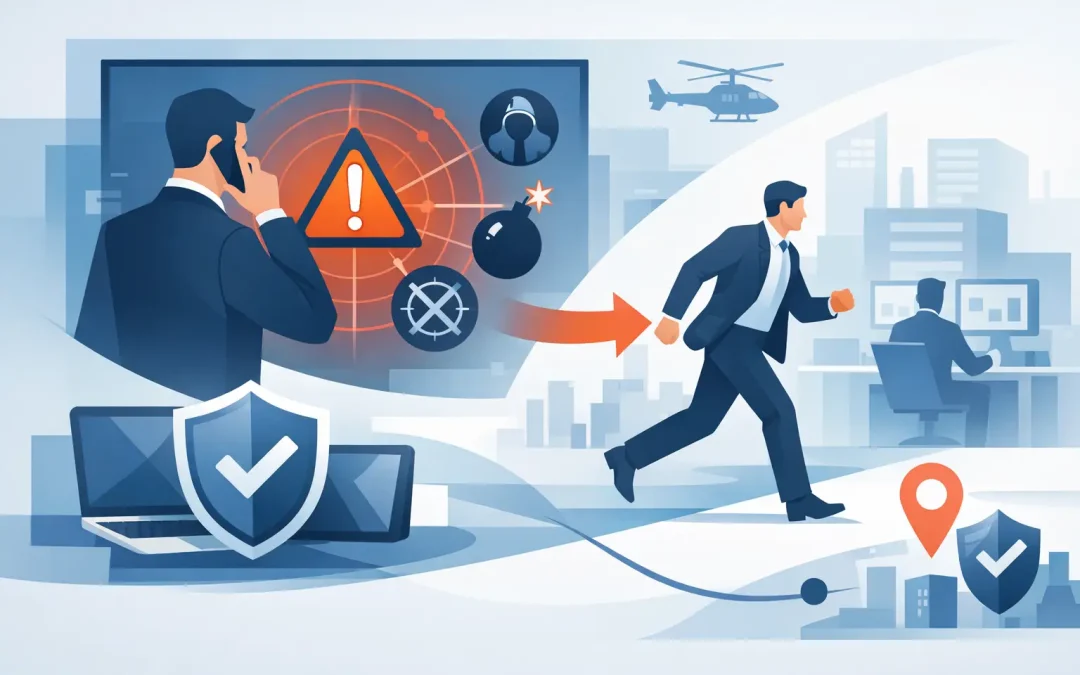
A threat does not need to contain a detailed plan to create real exposure. A direct message naming a location, a former employee who begins appearing near an executive’s residence, or a hostile actor who knows a travel itinerary may each require action. Knowing how to respond to credible threats begins with one principle: do not dismiss the warning, and do not improvise the response.
A credible threat is an operational problem, not merely an unpleasant communication. The objective is to protect people, preserve facts, establish the threat actor’s capability and intent, and make proportionate decisions before a situation escalates. For corporations, public figures, legal teams, and families facing elevated risk, those decisions should be orderly, confidential, and based on evidence.
Establish Whether the Threat Is Credible
Not every hostile statement presents the same level of danger. Anger, criticism, and abusive language are often distressing but may lack a stated target, means, opportunity, or pattern of escalation. A credible threat has indicators that make harm reasonably possible, even if timing and intent remain uncertain.
The most concerning indicators include specificity, access, persistence, and behavioral change. Specificity may involve a named person, address, office, event, route, vehicle, or date. Access may mean the subject has proximity to the target, insider knowledge, financial resources, weapons access, or the ability to travel. Persistence can include repeated unwanted contact across platforms, surveillance-like behavior, impersonation, or efforts to bypass normal boundaries.
Context matters. A vague message from an unknown account warrants documentation and assessment. The same language from a terminated employee, a former intimate partner, a person with a history of violence, or someone who has appeared at a protected location requires a different response. Credibility is not established by one phrase alone. It is assessed through the totality of facts.
Do not require certainty before taking protective measures. Threat assessment is concerned with likelihood, capability, and consequence. If the potential consequence is severe, a prudent response may be warranted even where the available evidence is incomplete.
Take Immediate Protective Action
If there is an immediate danger to life or a person is actively attempting to gain access to a residence, workplace, event, or vehicle, contact 911 or the appropriate local emergency authority at once. Move the threatened person to a secure location if it can be done safely. Do not confront, negotiate with, or attempt to detain the individual.
Where the threat is serious but not immediate, reduce predictable exposure while the facts are being assessed. This may mean changing a meeting location, adjusting a travel plan, limiting public disclosure of movements, notifying reception and building security, or arranging secure transport. The correct measure depends on the target’s visibility, the threat actor’s access, and the environment.
Avoid broadcasting the response. Social media posts, public accusations, and messages sent through mutual contacts can alert the subject, provoke retaliation, or compromise an investigation. A controlled response protects both the individual at risk and the integrity of any later legal or investigative action.
For organizations, activate a small need-to-know team. It should normally include the person responsible for security, a senior decision-maker, legal counsel when appropriate, and human resources if the matter involves an employee or former employee. Wider circulation should occur only when it supports a defined protective purpose.
Preserve Evidence Before It Disappears
Threat cases are often weakened by well-intentioned but careless handling of evidence. Deleted messages, edited screenshots, lost voicemail files, and informal retellings can obscure the facts that investigators and law enforcement need.
Preserve the original material whenever possible. Save emails in their native format, retain voicemail recordings, capture full-page screenshots that show account names and timestamps, and record the exact date, time, platform, and recipient. If a threat is delivered in person or by telephone, write a contemporaneous account using the speaker’s words as closely as possible. Note witnesses, nearby cameras, vehicles, and any identifying details without placing anyone in danger.
Do not alter, annotate, crop, or publicly repost the original evidence. Maintain a simple incident log that records what occurred, who received the information, what protective steps were taken, and when notifications were made. This creates a factual timeline rather than a collection of disconnected impressions.
Digital material requires particular care. An account may be anonymous but still leave investigative leads through usernames, writing patterns, linked profiles, prior posts, email headers, payment activity, or known associations. The goal is not for a threatened person to conduct their own online investigation. It is to retain the available information so qualified professionals can assess it lawfully and accurately.
Report Through the Right Channels
Law enforcement should be notified when a threat includes violence, stalking, extortion, harassment that persists after clear boundaries, threats against facilities, or conduct suggesting an imminent risk. The initial report should be factual and concise: who is involved, what was said or done, when it happened, what evidence exists, and why the target may be vulnerable.
A report number, officer name, and contact information should be retained. If circumstances change, such as a new message, appearance near a residence, or an attempt to contact family members, update the report promptly. One report should not be treated as the end of the matter. Threat situations can develop quickly.
Corporate and institutional cases may also require internal reporting, counsel review, insurer notification, or communication with event venues, property management, schools, or travel partners. These decisions should be guided by necessity, confidentiality obligations, and the risk of alerting the threat actor. A broad email distribution is rarely a substitute for a security plan.
Assess the Person, Not Just the Message
The most useful threat assessments examine behavior over time. What does the person want? Have they shown fixation on an individual, grievance against an organization, or a belief that violence is justified? Have they tried to gather information, recruit others, test security boundaries, acquire tools, or make sudden travel plans?
This distinction matters because many serious cases involve a progression from communication to action. A person may begin with emails, then attempt to contact staff, appear at a location, post private information, or follow a target’s routine. Each step can reveal increasing commitment and access.
Conversely, a harsh message may be less concerning if the sender has no identifiable target, no practical access, no history of escalation, and no continuing contact. That is not a reason to ignore it. It is a reason to calibrate resources intelligently rather than treating every incident as identical.
An independent assessment can be especially valuable where the subject is overseas, anonymous, connected to multiple jurisdictions, or potentially linked to organized criminal, extremist, or insider activity. Experienced investigative and protective teams can combine open-source review, discreet field inquiries, local intelligence, and security planning to replace assumptions with actionable facts.
Build a Protection Plan That Fits the Risk
A credible threat response should not end with a police report or a single security briefing. It should establish clear responsibilities, decision thresholds, and communications procedures for the period that follows.
For an executive, that may involve route variation, advance review of venues, a check-in protocol, trained protective personnel, and tighter control of calendars and personal data. For a company, it may include access-control review, visitor screening, staff awareness, mail and package procedures, and a plan for handling hostile communications. For a family facing stalking or domestic-related threats, the priorities may be residence security, school coordination, documentation, and safe movement routines.
There are trade-offs. Highly visible security can deter some actors but may draw unwanted attention or disrupt business. Restricting travel and appearances can reduce exposure but may not be sustainable. The appropriate plan is the least disruptive measure that reliably addresses the assessed risk, with the ability to increase protection quickly if conditions change.
West Coast Detectives International approaches these assignments as intelligence-led protection problems: establish the facts, identify the exposure, and put practical safeguards in place before the threat gains momentum. The strongest response is rarely dramatic. It is disciplined, discreet, and ready to adapt when new information arrives.
A threat should never be managed by fear alone. Preserve the facts, protect the people involved, report through the proper channels, and bring in qualified support when the stakes exceed routine security measures. Timely judgment can prevent a troubling warning from becoming an irreversible event.
Page 2 of 13«12345...10...»Last »