by plittle@westcoastdetectives.us | Jul 13, 2026 | Blog
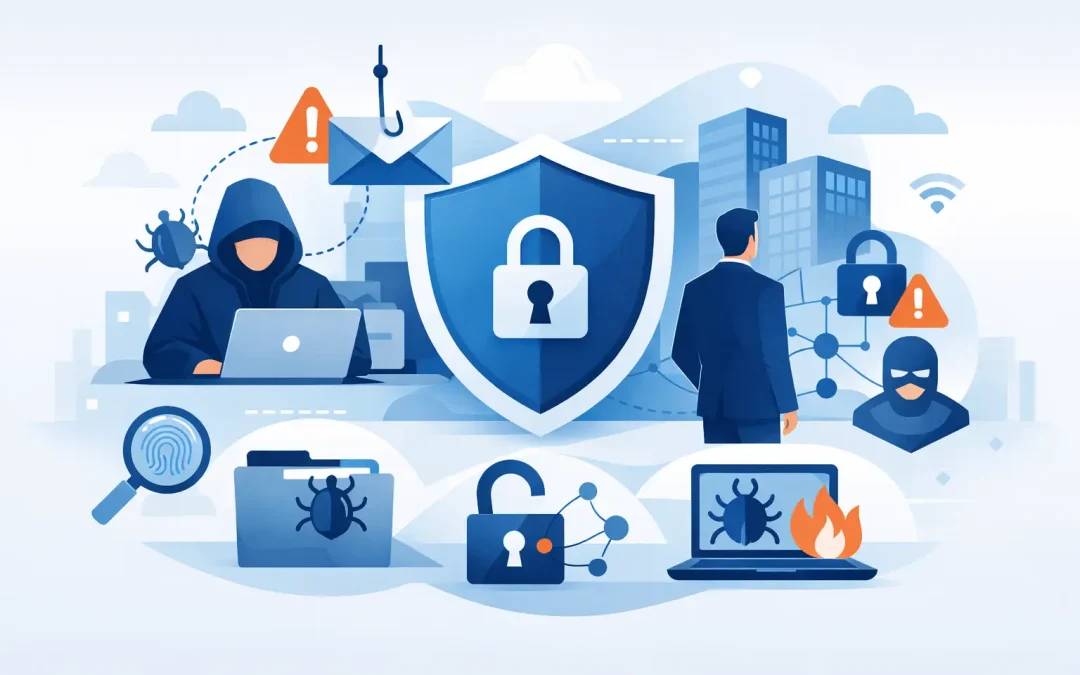
Top Corporate Security Vulnerabilities to Address — ACT NOW!
In today’s fast-moving, high-threat world, violence is surging and the risk of becoming a victim has never been higher — for your people and your company. Every day counts. Delays cost money, reputations, and lives.
The only way to stay ahead of these dangers is to strike first with proactive intelligence. That means immediately building a sharp threat assessment: create a hard-hitting checklist of every possible exposure your organization faces, then use proven investigative techniques to prioritize them, lock down prevention systems, and build a rapid-response action plan that kicks in the moment a breach occurs.
Prevention beats reaction every single time — and it’s far less expensive.
Following are powerful ways West Coast Detectives International has helped corporations just like yours neutralize these vulnerabilities and stay protected:
A company can spend heavily on cybersecurity, access control, insurance, and compliance, yet still be exposed through one poorly vetted vendor, an executive’s predictable travel routine, or an employee who shares too much online. The top corporate security vulnerabilities are rarely isolated technical failures. They are gaps between people, information, physical operations, and decision-making – gaps that determined criminals, hostile actors, competitors, and insiders know how to exploit.
For boards, general counsel, security leaders, and executive teams, the objective is not to eliminate all risk. That is neither practical nor proportionate. The objective is to identify the exposures that can cause unacceptable harm, verify what is happening on the ground, and build a response that holds under pressure.
The top corporate security vulnerabilities are interconnected
A compromised account can lead to fraud. A public executive itinerary can enable surveillance or harassment. Weak due diligence can place a company alongside a corrupt partner, sanctioned intermediary, or hostile influence network. Treating these as separate departments’ problems creates blind spots.
The strongest corporate security posture joins intelligence, investigations, physical protection, travel planning, personnel screening, and cyber governance. It also recognizes that risk changes with a company’s profile. A manufacturer with overseas facilities faces different threats than a media company, defense-adjacent supplier, nonprofit, or firm involved in contentious litigation. The security plan must reflect the organization’s actual exposure, not a generic checklist.
1. Insider risk and privileged access
Insider risk is not limited to the disgruntled employee who steals files before departure. It includes careless staff, contractors with excessive system permissions, temporary workers, compromised insiders, and senior personnel who bypass controls because they believe urgency justifies an exception.
Privileged access deserves particular scrutiny. Finance personnel, IT administrators, executive assistants, legal teams, researchers, and third-party support staff may hold access to highly sensitive information or payment authority. A hostile actor does not always need to breach a network from the outside if they can manipulate, recruit, impersonate, or coerce someone already inside.
Controls should be calibrated to role and consequence. That means clear access boundaries, periodic reviews of permissions, separation of duties for sensitive transactions, and reporting channels that employees trust. It also requires a measured investigative process when concerns arise. Overreaction can damage morale and create legal exposure; underreaction can allow a threat to mature unnoticed.
Many corporate exposures arrive through the supply chain. Vendors, consultants, distributors, local agents, joint-venture partners, and service providers often receive access to systems, facilities, confidential information, or decision-makers. In international operations, the risk may extend to beneficial ownership, political connections, corruption, organized crime, sanctions exposure, labor practices, and local security conditions.
A basic registration check is not due diligence. Records may be incomplete, deliberately obscured, or disconnected from the individuals exercising real control. Before a major engagement, acquisition, market entry, or strategic partnership, decision-makers need factual intelligence that tests the story they have been told.
The level of inquiry should depend on the stakes. A low-value domestic supplier does not warrant the same investigation as an overseas intermediary facilitating government relationships or a company positioned for acquisition. The error is not taking a proportionate approach. The error is assuming a polished presentation, referral, or online presence is evidence of integrity.
3. Executive exposure and predictable routines
Senior leaders are targets because they represent authority, access, money, and reputation. Their exposure can rise sharply during layoffs, litigation, public controversy, labor disputes, mergers, product recalls, or political tension. Threats range from unwanted contact and stalking to extortion, doxxing, targeted theft, and violence.
Predictability is the central weakness. Repeated home-to-office routes, widely advertised appearances, publicly visible family details, and unmanaged social media posts can create an intelligence picture for an adversary. An executive’s schedule may also be revealed indirectly through assistants, event organizers, travel vendors, or family members.
Executive protection is not merely the presence of a close-protection professional. It begins with threat assessment, advance work, privacy discipline, residential considerations, secure transportation, and a clear process for handling suspicious communications or surveillance indicators. The response should be discreet and appropriate to the known threat. A visible protective footprint can be necessary in some circumstances and counterproductive in others.
Digital exposure is physical exposure
Data brokers, social platforms, breached databases, and public records can reveal addresses, relatives, business interests, travel preferences, and personal routines. This material may be assembled by criminals in hours. Companies should help high-risk leaders understand what is publicly available, reduce unnecessary exposure where lawful, and establish a protocol for rapidly escalating credible threats.
4. Social engineering and business email compromise
Social engineering succeeds because it targets human judgment rather than a firewall. An attacker may impersonate a chief executive, attorney, vendor, payroll provider, or government official. The message may arrive through email, text, a phone call, a messaging application, or a fabricated video or voice recording.
Business email compromise remains especially damaging where payment instructions, bank-account changes, or confidential deal information are involved. A convincing request often exploits urgency: a wire must be sent before a closing, a discreet acquisition cannot be discussed openly, or a vendor account must be updated immediately.
The defense is procedural discipline. Payment changes and high-value transfers need independent verification through a known contact method, not the phone number or link supplied in the request. Employees should have authority to slow down a transaction that appears irregular. Senior leadership must model that standard rather than creating a culture in which questioning an urgent request is seen as disloyal.
5. Fragmented incident reporting
Organizations often possess early warning signs but fail to connect them. Human resources may receive reports of threatening behavior. Legal may see hostile correspondence. IT may identify suspicious login activity. A travel coordinator may hear that an executive was approached repeatedly abroad. Facilities may log an unexplained visitor inquiry.
When these signals remain in separate systems, the company loses the opportunity to recognize a pattern. A serious threat-management program establishes who receives reports, how information is assessed, what must be preserved, and who can authorize protective or investigative action.
This does not mean every unusual event should trigger a crisis response. It means the organization must be capable of distinguishing nuisance activity from escalating conduct. Timely factual assessment is often the difference between a manageable concern and an emergency.
6. Travel and international operating risk
International travel introduces variables that corporate headquarters cannot control: local crime patterns, civil unrest, terrorism concerns, surveillance, unreliable transportation, political volatility, corrupt officials, and uneven emergency response. Even routine business travel can become sensitive when an executive carries strategic information, enters a contested market, or attends a high-profile event.
A travel policy that simply requires an itinerary is insufficient. Higher-risk travel calls for destination-specific intelligence, vetted ground transportation, secure lodging decisions, communication procedures, medical contingency planning, and reliable local support. The plan should account for the traveler’s profile and purpose, not just the country’s general risk rating.
Companies should also consider what information employees carry across borders. Devices, documents, presentations, and contact lists can expose proprietary information or individuals in sensitive roles. In some assignments, clean devices and limited data are sensible precautions. In others, the more pressing risk may be kidnapping, targeted crime, or an abrupt loss of mobility.
7. Crisis plans that have never been tested
A binder on a shelf is not a crisis capability. Security plans often fail because the people expected to make difficult decisions have never rehearsed the scenario together. Who contacts the family when an executive is threatened? Who has authority to pause travel? Who communicates with law enforcement, insurers, customers, employees, and the media? What evidence must be preserved before systems are altered or accounts are disabled?
Tabletop exercises expose these weaknesses without waiting for a real incident. They should include plausible scenarios: a credible threat against a senior leader, a fraud attempt during a transaction, a compromised employee device abroad, an activist disruption at a facility, or a third-party allegation involving a key partner. The value lies in the discussion of actual authority, response times, and missing information.
West Coast Detectives International has seen that organizations respond best when intelligence and protective planning are established before the incident, not assembled while executives are making decisions under public and operational pressure.
Turning vulnerabilities into a defensible posture
Start with a risk assessment tied to people, locations, transactions, information, and planned events. Identify the assets that would cause the greatest operational, financial, legal, or reputational harm if compromised. Then test the assumptions around them: who has access, what third parties are involved, what public information exists, and what warning signs may be going unreported.
Prioritize the gaps with the highest consequence and the most realistic path to exploitation. Some can be corrected through policy and training. Others require deeper background inquiries, threat assessments, protective advances, investigative review, or credible local intelligence. The proper measure is not whether a security program appears comprehensive on paper. It is whether the organization can recognize a threat early, make sound decisions, and protect its people when conditions change.
by plittle@westcoastdetectives.us | Jul 11, 2026 | Blog
Counter-Terrorism Security Trends for Leaders: Move Fast, Stay Alive, and Dominate
In the high-velocity world of top executives, every second counts. You’re chasing breakthroughs, closing deals, and making headlines — but none of that matters if you’re not there to finish the mission. A rock-solid counter-terrorism security plan isn’t a slowdown — it’s your ultimate force multiplier. It keeps you protected so you can operate at full throttle.
At West Coast Detectives International, our first move when building an executive counter-terrorism plan is simple and powerful: we educate you on the real risks and prove that elite protection enhances — never hinders — your productivity and timeline.
Too many organizations that should know better treat executive security as a checkbox — a bare-minimum afterthought slapped on to “look compliant.” Worse, some security providers are so eager for the business they let the client dictate the plan, watering down standards and creating dangerous gaps.
Then there are those who lean entirely on technology — scanning for digital red flags and calling it safe. Tech is essential, but it’s only half the picture. Real threats hide in the shadows technology can’t see.
Here’s the truth with urgency: True protection demands a seamless blend of cutting-edge technology and elite HUMINT — boots-on-the-ground human intelligence that uncovers what algorithms miss. Only when both are locked in and working together do we give the green light for travel or high-risk activity.
For 104 years, West Coast Detectives International has honed these battle-tested tools and strategies through real-world operations across the globe. We don’t just follow trends — we set the standard for proactive, prevention-first executive protection.
Ready to lead with confidence instead of crossing your fingers? Let’s build your unbreakable security edge today. Your next big win — and your safety — depends on it.
Contact West Coast Detectives International now. Prevention is always less costly than recovery. Stay ahead. Stay secure. Stay unstoppable.
A principal’s itinerary can be exposed long before a vehicle leaves the hotel. A public appearance, an employee’s social-media post, a compromised travel vendor, or a protest that shifts location can provide an adversary with the timing and context required to act. That is why counter terrorism security trends now demand more than visible guards, access badges, or a standard travel advisory. They require early warning, disciplined assessment, and protective decisions grounded in facts.
For corporations, NGOs, public-facing executives, and prominent individuals, the central question is not whether a threat will look conventional. It is whether the organization can recognize a developing threat before it becomes an operational emergency. The most effective security programs combine technical visibility with experienced human judgment, local context, and the ability to act discreetly.
Counter Terrorism Security Trends Reshaping Risk
The threat environment is becoming more fragmented. Large, centrally directed attacks remain a concern, particularly in politically unstable regions and symbolic locations. Yet many organizations now face greater exposure from loosely connected actors, ideologically motivated individuals, grievance-driven violence, and opportunists who use public information to identify targets.
This changes the planning model. A protective team cannot assess risk solely by country rating or broad threat level. A city may be generally stable while a single event venue, court hearing, labor dispute, controversial announcement, or executive profile creates a concentrated exposure window. The relevant intelligence is specific: who may be motivated, what capabilities they possess, where they can gain access, and how quickly conditions are changing.
The digital environment has intensified this problem. Threat actors can monitor public schedules, map buildings, identify family members, circulate hostile narratives, and coordinate harassment with little expense or technical sophistication. Online activity is not automatically evidence of operational intent. It can, however, reveal escalation, fixation, reconnaissance, or attempts to crowdsource a target’s movements. Treating every hostile post as an emergency wastes resources. Ignoring patterns until a threat becomes explicit is equally dangerous.
A mature threat-management process separates noise from indicators. It records conduct, assesses credibility and capability, preserves evidence, and establishes clear thresholds for protective action. That work is investigative as much as it is protective.
The Return of Human Intelligence
Technology has expanded the volume of available information, but it has not eliminated the need for trusted local sources. Automated monitoring can identify keywords, unusual activity, or changes in a threat picture. It cannot always explain local political loyalties, criminal influence, protest dynamics, corruption risks, or whether a rumored disruption is credible.
Human intelligence, gathered lawfully and responsibly through vetted regional contacts, remains essential in complex environments. It provides context that may not appear in a commercial data feed or official advisory. In some locations, a local source can identify a road closure, a pending demonstration, a hostile group’s presence, or a change in local sentiment before it reaches formal reporting channels.
This is not an argument against technology. The stronger model is layered. Digital monitoring provides breadth and speed. Investigative research tests identities, affiliations, and histories. Local human reporting adds nuance. Experienced analysts then turn those inputs into a decision a client can use.
For high-stakes assignments, information without assessment is not intelligence. A daily stack of alerts may create the appearance of vigilance while leaving leadership uncertain about what to do next. The useful product is concise and factual: the threat, its confidence level, the likely impact, the available mitigation, and the point at which plans should change.
Counter Terrorism Security Trends in Executive Travel
Executive travel remains one of the most exposed parts of a security program because it places people into unfamiliar terrain, often on compressed schedules. The risk may involve terrorism, but it may also involve civil unrest, kidnapping, surveillance, stalking, organized crime, or an incident that disrupts movement and communications.
The current trend is toward travel risk planning that starts before reservations are finalized. Security considerations should influence hotel selection, airport transfers, meeting sites, ground routes, medical support, communications, and contingency departure options. A travel plan should also account for the principal’s visibility. An executive attending a private meeting has a different profile from a public speaker, a political donor, an entertainment figure, or a leader associated with a sensitive transaction.
Predictability is a recurring vulnerability. Fixed pickup locations, published event details, routine routes, and unsecured itineraries make surveillance easier. The answer is not theatrical disruption or unnecessary secrecy. It is sensible control of sensitive information, route planning based on current conditions, and advance coordination among the people responsible for travel, facilities, legal matters, and protection.
Plans must also be proportionate. A full protective detail may be appropriate for an exposed principal in a high-threat setting, while a lower-profile traveler may need advance intelligence, vetted transportation, secure lodging, and an emergency contact structure. Effective planning fits the threat rather than applying a single expensive formula to every trip.
Insider Risk and Vendor Exposure
Counter-terrorism work increasingly overlaps with due diligence. Threats can exploit weak points in an organization’s extended network: contractors, temporary staff, event vendors, drivers, cleaners, hospitality personnel, technology providers, and business partners. Many have legitimate access to facilities, schedules, systems, or confidential conversations.
This does not justify treating every employee or vendor as suspect. It does require disciplined screening, identity verification, access management, and a process for addressing credible concerns. The goal is to understand who has access to what, whether the information supplied during onboarding is accurate, and whether changes in behavior or circumstance warrant review.
High-profile transactions also deserve scrutiny. A new local partner may be commercially attractive but politically exposed. A supplier may have undisclosed criminal ties. A consultant may be misrepresenting relationships or qualifications. These issues can create vulnerabilities that extend beyond financial or reputational loss, especially where sensitive travel, facilities, or executive information is involved.
Preparedness Must Be Operational
Crisis plans often fail for an ordinary reason: the people named in the plan have never tested it together. A document can identify evacuation routes and emergency contacts, yet still leave decision-makers uncertain about who authorizes a movement, how a principal is located, or what information can be shared without increasing risk.
Tabletop exercises are valuable when they are realistic and specific. Test a protest outside a venue, a threat against an executive, a suspicious package, a communications outage, or a sudden border closure. Ask practical questions. Who verifies the report? Who contacts local authorities? Where does the principal go? Which team member speaks to staff, family, or the media? What happens if the first route or safe location is no longer viable?
The exercise should expose friction, not merely confirm that a written policy exists. It may reveal an outdated contact list, an overreliance on one transportation provider, conflicting authority between departments, or a lack of secure communications. Those findings are useful because they can be corrected before a real incident forces the issue.
Security Without Creating Friction
Senior leaders and public figures cannot operate effectively inside a permanent security bubble. They need to meet people, travel, attend events, and make decisions at speed. Security measures that are intrusive, unexplained, or disconnected from business reality will eventually be bypassed.
The right standard is informed protection. Clients should understand the rationale for a change in route, venue, or schedule without being burdened by unnecessary operational detail. Protective personnel should be discreet, professional, and capable of adjusting their posture as circumstances change. The objective is continuity of mission, not a visible display of security.
West Coast Detectives International approaches sensitive assignments through factual intelligence, seasoned investigative judgment, and tailored protective planning. For clients facing elevated exposure, the value lies in knowing what is credible, what is changing, and what action is justified.
The threat picture will continue to evolve, often faster than public reporting or corporate policy. Organizations that build trusted reporting channels, test their decisions, and treat prevention as an active discipline will be better positioned to protect their people without surrendering the mobility and discretion their work requires.

by plittle@westcoastdetectives.us | Jul 9, 2026 | Blog
Executive Protection That Works – Smart, Proactive, and Battle-Tested
When I left law enforcement and stepped into the private sector, executive protection for high-risk clients meant big, visible bodyguards. The bigger and more imposing, the better – it gave clients that immediate feeling of security.
But the world changed fast. By the 1990s, technology exploded and advancements came faster than most firms could handle. Tragedies and heartbreaking losses of life forced a critical evolution: protection shifted from relying on sheer physical size to deploying highly trained, highly skilled protection agents.
Today, with obsessed individuals, mental health challenges, and the rapid rise of advanced technology and AI, one thing is crystal clear – effective protection demands serious advance work. No more winging it.
At West Coast Detectives International, our top-tier executive protection starts with one non-negotiable first step: educating and preparing the client. Many dynamic leaders and high-energy executives want to cut corners or dictate the operation themselves. We get it – you’re used to being in charge. But your safety isn’t optional.
Over decades of real-world operations, we’ve learned this truth the hard way: If a client insists on directing every detail against our expert recommendations, we respectfully pass on the assignment. We’ll clearly lay out the risks of that approach and remind them that their life – and our hard-earned reputation – matter far more than any single paycheck.
This is Executive Protection That Works.
We’ve developed proven, field-tested details and powerful tools to handle every protection assignment with precision, foresight, and unstoppable effectiveness. From comprehensive advance reconnaissance and real-time intelligence to seamless integration of cutting-edge technology, our team delivers proactive, layered security that keeps you steps ahead of every threat.
Ready to move forward with confidence? Let’s lock in the protection your high-stakes world demands – contact West Coast Detectives International today. Your safety is our mission, and we deliver results that work.
A principal lands in a foreign capital for what appears to be a routine series of meetings. The schedule is tight, the hotel is reputable, and the vehicle is booked. Yet the real exposure is not always at the airport or on the street. It often begins weeks earlier – in public calendars, predictable routines, unsecured family details, and incomplete threat reporting. The best executive protection strategies are built long before an agent opens a vehicle door.
Executive protection is often misunderstood as visible security presence. In serious practice, it is a disciplined blend of intelligence, advance work, discretion, and calibrated response. A large detail can create friction, unwanted attention, and cost without meaningfully reducing risk. A smaller, well-briefed team with accurate intelligence and authority to adjust plans in real time may be far more effective.
That distinction matters to corporate leaders, public figures, legal stakeholders, and families with elevated exposure. Protective work succeeds when it prevents incidents, protects reputation, and preserves normal operations. The standard is not appearance. The standard is control.
What the best executive protection strategies actually involve
The strongest programs start with a sober threat picture. That includes known adversaries, grievance actors, stalkers, activist disruption, criminal targeting, travel vulnerabilities, cyber-enabled exposure, and reputational triggers that can quickly become physical risk. Too many protection plans rely on generic assumptions rather than current, client-specific intelligence.
A credible threat assessment also separates noise from intent. Not every hostile message represents a capable actor. Not every public controversy creates a direct physical threat. At the same time, dismissing behavioral warning signs can be costly. Protective teams need investigative discipline, not guesswork. They need to know who may act, how they may act, where opportunity exists, and what indicators should trigger intervention.
From there, executive protection becomes an exercise in layered security. Residence security, secure transportation, route management, venue assessment, communication discipline, family safeguards, and emergency medical readiness all have to work together. If one layer fails, another must compensate. That is how mature programs maintain continuity under pressure.
Intelligence first, visibility second
One of the best executive protection strategies is also the least visible: continuous intelligence support. Before a trip, appearance, board meeting, labor action, or sensitive legal event, the protective picture should be updated with real-world reporting. Open-source review is useful, but it is not enough on its own. The highest-value work often comes from field verification, local knowledge, and human source reporting that clarifies conditions on the ground.
This is especially true for international assignments. A destination may appear stable in broad public reporting while local crime patterns, political agitation, extremist activity, or corrupt service providers create very different realities for a protected principal. Protective planning without ground truth is planning with blind spots.
Intelligence also informs how much security is appropriate. Some environments call for overt presence and hardened movement. Others require low-profile protection to avoid drawing attention to the principal. The right answer depends on threat level, location, purpose of travel, and reputational considerations. A one-size-fits-all model is not serious protective work.
Advance work determines outcomes
Advance work is where competent planning becomes operational control. Sites should be assessed in person whenever practical. Entry and exit points, choke points, alternate routes, rally locations, medical facilities, communications reliability, and local law enforcement posture all need to be understood before the principal arrives.
This process often reveals what schedules do not. A venue may have poor rear access. A hotel may have excellent branding and weak perimeter discipline. A meeting site may sit beside an active protest corridor. A private residence may expose service entrances, delivery routines, or family movement patterns that are easy to exploit.
Good advance work also reduces unnecessary disruption. Principals do not want daily life turned into theater. They want competent protection that anticipates problems and keeps operations moving.
Travel is where exposure expands fastest
For many clients, risk spikes during travel. New drivers, unfamiliar terrain, public appearances, immigration chokepoints, and compressed itineraries create opportunity for both targeted and opportunistic threats. That is why travel risk planning remains one of the best executive protection strategies for corporations and private principals alike.
The process begins with itinerary scrutiny. Public-facing schedules should be minimized. Meeting times and locations should be shared only on a need-to-know basis. Lodging decisions should prioritize security function over prestige. Vehicle selection should match the environment, not image. In some cities, an obvious security convoy advertises importance and invites surveillance. In others, it may be the right deterrent.
Air movement needs equal discipline. Airport transitions are predictable, crowded, and information-rich for hostile observers. Protective teams should control pickup procedures, validate drivers and vehicles, identify fallback options, and account for delays that leave principals exposed in public areas. Small failures in transition management are common precursors to larger incidents.
Travel planning should also include medical contingencies, civil unrest scenarios, detention risk in foreign jurisdictions, and communication failure protocols. Executives often assume these are remote concerns until a strike, road closure, political demonstration, or border complication turns a routine movement into a time-sensitive problem.
Family and inner-circle exposure cannot be ignored
Principals are often protected while spouses, children, assistants, and household staff remain soft targets. That gap is not theoretical. Adversaries regularly exploit predictable family routines, social media leakage, domestic employee access, and support personnel with weak vetting.
A serious protection strategy extends to the inner circle. That may include residential assessments, school and childcare route review, driver screening, staff background work, privacy counseling, and emergency contact protocols. The goal is not to place a security bubble around a family. It is to reduce obvious avenues of exploitation.
This is where discretion matters most. Protective measures that are too heavy-handed can create resistance inside the household. Measures that are too light leave preventable gaps. Experienced teams know how to build cooperation without creating a climate of fear.
Privacy, reputation, and physical security now overlap
A modern executive protection program cannot separate physical safety from digital exposure. Doxxing, location leakage, impersonation, compromised travel details, and hostile online fixation can all migrate into real-world incidents. The principal who posts in real time, uses predictable services, and permits broad access to personal data is easier to track than many realize.
One of the best executive protection strategies is disciplined information control. That includes reviewing public records exposure, tightening social media practices, limiting schedule visibility, securing travel communications, and ensuring household and executive staff understand what should never be disclosed. Security failures often begin with convenience.
Reputation risk also deserves protection planning. A hostile confrontation captured on video, a protest breach at a public event, or an avoidable law enforcement interaction can become both a security incident and a corporate crisis. Protective teams need judgment, not just reaction speed. Sometimes the correct move is immediate extraction. Sometimes it is calm de-escalation that prevents a minor disturbance from becoming national footage.
The best executive protection strategies rely on clear authority
Even highly trained personnel fail when authority is vague. Who can alter the route? Who can cancel an appearance? Who approves a change of hotel, aircraft, or venue? Who speaks with local authorities, legal counsel, or corporate leadership during a live incident? These questions should be resolved before movement begins.
Protection fails when politics overrides security judgment. If agents see threat indicators but lack decision rights, the plan is already compromised. At the same time, security cannot operate in isolation from the client’s business realities. The discipline lies in establishing thresholds: what conditions require adjustment, who must be notified, and how quickly protective decisions can be implemented.
This is one reason bespoke programs outperform generic guard coverage. Mature executive protection is not just manpower. It is command structure, intelligence integration, vetted local support, and the confidence to act early rather than explain late.
Training and rehearsals matter more than equipment
Clients sometimes focus on hardware because it is visible and easy to understand. Vehicles, cameras, alarms, and access systems all have value. But equipment does not replace training. The team that has rehearsed medical response, emergency relocation, route break contact, and communications failure will outperform a better-equipped team that has not.
The same is true for the principal. Executives do not need paramilitary instruction. They do need practical briefings on movement discipline, public posture, travel habits, family privacy, and what to do during an emergency. A protected principal who ignores protocols, improvises constantly, or overrides the plan for convenience creates avoidable exposure.
The most effective programs build protection into the rhythm of executive life. They do not rely on luck, personality, or optics. They rely on preparation.
No credible professional will claim there is a single formula for every client. Threats differ. Geographies differ. Corporate culture, family profile, public visibility, and legal sensitivities all shape the plan. But the pattern is consistent: intelligence before movement, preparation before presence, and discretion backed by decisive capability. Firms such as West Coast Detectives International understand that executive protection is not a show of force. It is the quiet work of keeping control when the stakes are highest.
The right strategy should let a principal keep moving, keep meeting, and keep leading without handing opportunity to those watching from the edges.

by plittle@westcoastdetectives.us | Jul 7, 2026 | Blog
How to Protect Executives During International Travel: Intelligence First, or Don’t Go
Listen up—executive protection in today’s high-threat world is not a checkbox exercise. It’s a high-stakes operation where lives, missions, and millions are on the line. At West Coast Detectives International, we don’t play games with half-measures. We move fast, but we never sacrifice depth for speed. Because when you cut corners on international travel protection, you’re not saving time—you’re rolling the dice with your principal’s safety.
The Non-Negotiable First Step: Intelligence, Intelligence, and More Intelligence
Deep, local, on-the-ground intelligence is the foundation of every successful executive protection assignment. Anything less is just expensive window dressing.
A quick glance at a State Department “do not travel” advisory or a generic threat level? That’s amateur hour. In the real world, that surface-level check invites disruptions, ambushes, extortion, or far worse. Today’s threats move at lightning speed—geopolitical shifts, local corruption, criminal networks, and opportunistic actors don’t wait for your itinerary to update.
At West Coast Detectives International, we’ve been perfecting this craft for 104 years. In my 50+ years leading the firm, I’ve seen every scenario imaginable. And I can tell you this with absolute conviction: Proper planning isn’t a luxury—it’s your lifeline.
We live in a world that rewards speed, but top-tier protection demands depth. Substituting rushed logistics for thorough intelligence is flat-out negligent. Our clients are busy executives who want to close deals and move forward. We get it. We’re in the business of saying yes to protecting them—but only when the setup is done right.
We Educate First, Then We Protect
Our very first responsibility as protection professionals is to tell clients the truth—no sugar-coating, no sales spin. We lay out every real risk, every vulnerability, and exactly what it takes to mitigate them.
I’ve had clients push back hard: “Just get us there, Phil. We don’t have time for all that.”
My response? Calm, clear, and firm: “If we can’t do it right, we won’t do it at all.”
More times than I can count, they’d call me back before I even reached the door: “Mr. Little… what do you need?”
That’s the moment they understand. Real protection isn’t about looking secure—it’s about being secure.
Our Ironclad Lines in the Sand
Before we ever put boots on the ground to protect a principal overseas, West Coast Detectives International draws hard lines we will not cross:
- No deep local intelligence network in place? We don’t move.
- No time or resources for proper threat assessment? We decline.
- Pressure to shortcut surveillance, route planning, or local liaison work? Hard pass.
- Any attempt to treat world-class protection like a budget travel package? We walk away.
We’ve turned down lucrative jobs because the client wanted speed over substance. Why? Because our reputation and your safety are worth more than any single paycheck. Prevention is always less costly than crisis response—and we’ve proven it across tens of thousands of cases.
Bottom line: International executive travel protection is an action sport—but only when it’s built on rock-solid intelligence. At West Coast Detectives International, we combine old-school tradecraft with cutting-edge networks to deliver protection that actually works.
If you’re an executive or organization heading into foreign territory, don’t settle for window dressing. Demand the real thing.
Ready to do this right? Contact us. We’ll give you the straight talk, the deep intelligence, and the uncompromising protection your mission deserves.
West Coast Detectives International – 104 years of keeping principals safe when the stakes are highest.
A chief executive lands in a foreign capital for what appears to be a routine market visit. By nightfall, a labor protest has shifted routes across the city, social media has identified the hotel, and a driver hired through a local contact has not been properly vetted. This is how exposure builds – not usually through one dramatic event, but through a chain of preventable gaps. For organizations asking how to protect executives abroad, the answer begins long before departure and extends well beyond assigning a bodyguard.
Executive protection overseas is a risk management function, not a cosmetic security measure. The objective is to preserve the executive’s safety, mobility, decision-making capacity, and confidentiality while allowing the business mission to continue. That sounds straightforward until travel involves unstable regions, public-facing leadership, contested labor environments, kidnap risk, activist scrutiny, terrorism concerns, or simple local unpredictability.
How to protect executives abroad starts with intelligence
Protection is weakest when it begins with assumptions. A country may be broadly rated as low risk while a specific city district, event venue, or travel corridor presents a very different picture. Effective protection planning starts with current intelligence on the operating environment, not a recycled country brief from six months ago.
That intelligence should cover political conditions, crime patterns, terrorism indicators, protest activity, transportation reliability, police capability, medical infrastructure, cyber exposure, and local cultural dynamics that may affect movement or visibility. It should also account for the executive’s personal profile. A finance executive involved in restructuring, a public company CEO during layoffs, and a high-net-worth family office principal each attract different threat vectors.
Open-source reporting has value, but it is rarely enough on its own. The difference between generic awareness and useful protection planning often comes from human source reporting, local contacts, vetted field assets, and recent operational knowledge. In higher-risk environments, this distinction matters. A hotel may look acceptable on paper and still be unsuitable because staff gossip is common, security access control is inconsistent, or the property is frequently monitored by criminal networks targeting affluent foreigners.
Advance work determines what happens on the ground
If the itinerary is being built faster than the security plan, the organization is already behind. Advance work should examine every movement point – arrival, transfer, lodging, meetings, dining, public appearances, and departure. The goal is not to eliminate all exposure. It is to control variables before they become problems.
Airports require more than meet-and-greet logistics. Teams should know who has access, where choke points form, what alternate exits exist, and how customs processing can create vulnerability. Ground transportation should be vetted in advance, with backup vehicles and drivers available where the environment justifies it. Rideshare use, while convenient, is rarely appropriate for high-profile executives in foreign jurisdictions.
Hotels deserve particular scrutiny. Senior travelers are often placed in well-known luxury properties because they are familiar and efficient. That decision can also make them easy to find. In some locations, a lower-profile property with stronger access control is the better option. Room selection matters as well. Too low creates easy access. Too high complicates emergency evacuation. There is no universal floor number that solves this. It depends on the building, fire capability, civil unrest patterns, and medical contingencies.
Meeting sites also require inspection. The questions are practical. Who controls the venue. How public is the schedule. Is there private entry. What are the evacuation routes. Can hostile surveillance be detected early. Can discussions take place without being overheard or recorded. Protective planning is often won or lost in these details.
Protective coverage should match the threat, not the ego
One of the most common mistakes in overseas executive security is overcorrecting in the wrong direction. Some organizations under-resource protection because they do not want to appear dramatic. Others deploy an unnecessarily visible detail that attracts attention and interferes with the purpose of the trip. Neither approach reflects mature judgment.
The correct posture depends on the threat environment, executive profile, and business activity. In some settings, a low-visibility protective agent with strong local support is the right answer. In others, a full protective detail, secure motorcade procedures, route analysis, and residential or hotel security are warranted. The standard should be operational necessity, not optics.
The protection team must also fit the assignment. Overseas executive protection is not simply domestic close protection transplanted into another country. The work requires local legal awareness, cultural competence, advance capability, communication discipline, contingency planning, and trusted regional infrastructure. Language barriers, police interaction, local licensing issues, and emergency medical coordination all affect performance under stress.
This is where experienced global operators separate themselves from commodity vendors. A tailored model built on intelligence, vetted local assets, and disciplined advance work gives the executive freedom to operate without accepting unnecessary risk.
Secure movement is usually the decisive factor
Most executive exposure abroad occurs in transit. The airport arrival, the drive to the hotel, the route to a plant visit, the return after a late dinner – these are the moments where predictability, congestion, and distance create opportunity for surveillance, harassment, robbery, or targeted attack.
Movement planning should include primary and alternate routes, timing analysis, traffic pattern review, known disruption points, and emergency divert locations. Drivers should be vetted, briefed, and integrated into the protection plan rather than treated as separate contractors. Vehicles should fit the environment. In some cities, an armored vehicle is prudent. In others, it is an unnecessary signal. The right answer comes from local intelligence, not standard policy.
Route discipline matters, but rigidity can become its own problem. Repeating the same departure times and travel patterns increases predictability. Constant last-minute improvisation creates confusion. Effective teams manage both by varying movement intelligently while keeping command and communication tight.
Communications and digital exposure are part of physical security
An executive’s physical location is often compromised digitally before it is compromised physically. Social posts, event promotion, leaked calendars, hotel Wi-Fi use, rideshare records, and even enthusiastic local staff can expose patterns in real time. Any serious conversation about how to protect executives abroad must include communications discipline.
Travel itineraries should be tightly held. Need-to-know distribution is not paranoia. It is standard practice. Devices should be reviewed before travel to sensitive locations, and secure communications protocols should be established in advance. Executives and staff should understand that convenience creates exposure. Posting photos during travel, joining unsecured networks, or discussing movement plans in public spaces can undo weeks of careful preparation.
This area requires balance. Not every executive needs a hardened technical package on every trip. But every executive traveling internationally should assume that hotels, devices, transportation bookings, and meeting environments create intelligence opportunities for adversaries ranging from petty criminals to competitors to politically motivated actors.
Medical, legal, and crisis contingencies cannot be an afterthought
Security teams sometimes focus so heavily on threat prevention that they underprepare for the event that is statistically more likely – a medical emergency, vehicle incident, detention issue, civil disruption, or sudden border problem. Protection abroad is broader than guarding against attack.
Executives should travel with clear medical profiles, local hospital assessments, emergency contact protocols, and evacuation decision criteria where relevant. In some regions, the nearest hospital is not the right hospital. Legal contingencies matter as well. If a traffic incident, customs dispute, or local police encounter occurs, the team must know who to call, how to respond, and what local authorities can and cannot be relied upon to do.
Crisis response becomes credible when roles are established before the incident. Who informs corporate leadership. Who liaises with family. Who handles media exposure if the executive is public-facing. Who coordinates with embassy resources if required. Good planning keeps these decisions from being made in panic.
The principal is part of the protection plan
Even the best protection detail cannot compensate for an executive who defeats the plan. Senior leaders often create risk unintentionally by changing routes casually, insisting on unvetted meetings, extending public dinners, or treating security measures as optional inconveniences. That is not a character flaw. It is often the byproduct of fast decision-making and a bias toward mission completion.
The answer is not to lecture the principal. It is to brief clearly, explain the operational reason for key measures, and earn trust through competence. Executives generally cooperate when they see that the protective plan supports the business objective rather than obstructing it. The relationship works best when protection professionals are calm, discreet, informed, and decisive.
For high-stakes travel, many organizations benefit from a partner that can integrate advance intelligence, protective operations, and investigative support under one command structure. Firms with deep international experience, including West Coast Detectives International, understand that executive safety abroad is not a checklist item. It is a live operational responsibility.
The strongest overseas protection plans are rarely the most visible. They are the ones that anticipate quietly, adapt quickly, and leave the executive free to do the work that justified the trip in the first place.
by plittle@westcoastdetectives.us | Jul 5, 2026 | Blog
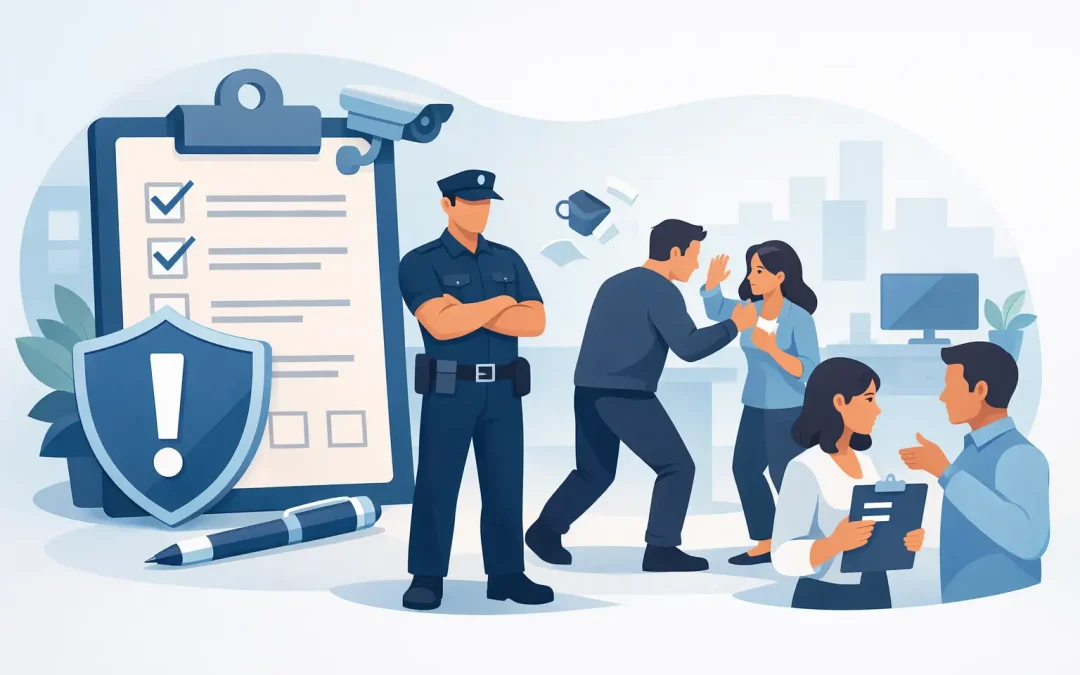
Workplace Violence Prevention Checklist: Act Now to Protect Your Team! At West Coast Detectives International, we’re all about prevention that works—and it starts at the top!
Hey leaders, as CEO and owner of West Coast Detectives International, I live and breathe prevention every single day. I’ve learned firsthand: the companies that stay safest and strongest are the ones where the CEO or owner drives the security program with urgency and commitment. Prevention isn’t optional—it’s your competitive edge!
In today’s high-risk environment, workplace violence is rising fast. Too many states are pulling back on enforcement, leaving workplaces more exposed than ever. Yet I still hear from business owners who believe a “family-style” culture alone will protect them. “We treat everyone like family—they’ll speak up if there’s trouble,” they say. The reality? Employees in those very environments often tell us the opposite: without real systems in place, bad actors take over, management hesitates, and problems escalate.
No workplace is immune. The smartest move? Prevent threats before they strike—and have a rock-solid system ready to respond fast when they do.
At West Coast Detectives, we’ve helped countless organizations build proactive defenses drawn from decades of real-world investigations. Here’s your urgent, action-ready Workplace Violence Prevention Checklist. Review it today, implement it this week, and lead with confidence!
West Coast Detectives International – Workplace Violence Prevention Checklist
1. Leadership Commitment (Start Here!)
- CEO/Owner visibly champions the program—model it, talk about it, fund it.
- Assign a dedicated prevention coordinator or team.
- Integrate violence prevention into your overall security strategy.
2. Zero-Tolerance Policy
- Create and communicate a clear, written policy against violence, threats, harassment, and bullying.
- Cover all forms: employee-to-employee, client-to-staff, and external threats.
- Ensure the policy is distributed, acknowledged in writing, and enforced consistently.
3. Risk Assessment
- Conduct regular workplace violence risk assessments (at least annually).
- Identify high-risk areas, roles, and situations (cash handling, public access, late hours, etc.).
- Evaluate current controls and gaps.
4. Training & Awareness
- Train all employees (at hire, annually, and as needed) on warning signs, de-escalation, conflict resolution, and response protocols.
- Include active shooter/active threat response and non-violent intervention skills.
- Train managers on handling reports and supporting employees.
5. Reporting System
- Establish easy, confidential, non-retaliatory reporting channels (hotline, app, trusted manager).
- Protect reporters and investigate every concern promptly.
- Encourage a “see something, say something” culture.
6. Physical Security & Access Control
- Secure entrances/exits, use cameras, alarms, and visitor management.
- Control cash handling and high-value assets.
- Ensure adequate lighting, escape routes, and panic buttons where needed.
7. Response & Emergency Plans
- Develop and drill clear incident response procedures.
- Coordinate with local law enforcement and your security partners.
- Have post-incident support (counseling, debriefs, investigations) ready.
8. Culture of Respect & Support
- Foster open communication, respect, and early intervention for personal issues.
- Address bullying, discrimination, and workplace stressors proactively.
- Promote employee wellness programs.
9. Ongoing Evaluation
- Review incidents, near-misses, and program effectiveness regularly.
- Update policies, training, and controls based on lessons learned.
- Partner with experts like West Coast Detectives for audits, undercover assessments, or threat intelligence.
Take action today—prevention saves lives, protects your people, and safeguards your business. Don’t wait for a crisis to hit.
At West Coast Detectives International, we’re ready to help you build, audit, or strengthen your program with proven strategies, training, and on-the-ground expertise. Reach out now—let’s make your workplace safer, stronger, and ready for anything!
Prevention is leadership in action. Let’s get it done!
— Philip W. Little, President & CEO West Coast Detectives International 104 Years of Trusted Global Security & Investigations
A threat rarely begins with the incident itself. In most workplaces, it starts earlier – with ignored warning signs, weak reporting channels, unmanaged grievances, poor access control, or leaders assuming that a serious act of violence could not happen inside their organization. A workplace violence prevention checklist is useful not because it simplifies risk, but because it forces disciplined attention on the points where prevention usually succeeds or fails.
For corporations, public-facing offices, nonprofit operations, and executive environments, prevention is not a box to check for compliance. It is a matter of duty of care, operational continuity, reputation, and human safety. The strongest programs do not rely on a single policy or a single guard post. They combine reporting, supervision, personnel procedures, physical security, and threat assessment into one functioning system.
What a workplace violence prevention checklist should actually do
A serious checklist does more than confirm that a policy exists. It should test whether your organization can identify concerning behavior early, escalate concerns appropriately, protect potential targets, and act before a crisis overtakes the workplace.
That means asking practical questions. Do employees know how to report a threat without retaliation? Does management distinguish between a heated disagreement and a pattern of escalating fixation? Are terminations handled with planning when risk factors are present? Can your team account for contractors, former employees, vendors, visitors, and domestic spillover threats? Many organizations can answer yes to one or two of these questions. Fewer can answer yes across the board.
The checklist matters because workplace violence is not limited to one profile or one motive. It can arise from employee conflict, domestic violence crossing into the workplace, stalking, outsider intrusion, grievance-based retaliation, ideological motives, or criminal opportunity. Each category requires a slightly different prevention posture.
Leadership and policy foundations
Start with governance. If no one owns workplace violence prevention at the leadership level, the program will drift. Human resources may manage employee conduct, legal may focus on liability, facilities may handle badges and locks, and security may respond only after a threat becomes obvious. That separation creates blind spots.
A functional program assigns responsibility across leadership, HR, legal, operations, and security. It also defines what constitutes prohibited conduct. Threats, intimidation, stalking, harassment, brandishing weapons, aggressive confrontations, and credible online intimidation should all fall within scope. Vague language creates hesitation, and hesitation is dangerous.
Your policy should also address reporting pathways clearly. Employees need more than one route to raise concern. Some will report to a supervisor, some to HR, some to security, and some only through an anonymous mechanism. If reporting depends on one manager’s judgment, vital information may never reach the right people.
Just as important, the policy must explain what happens after a report. People are more likely to speak up when they believe the organization will act, protect confidentiality where possible, and avoid punishing the reporter for raising a concern.
Behavioral warning signs and threat reporting
A workplace violence prevention checklist should place heavy emphasis on behavior, not rumor or personality conflicts. Threat management is strongest when organizations document observable conduct and patterns over time.
Concerning indicators can include direct threats, fascination with prior attacks, sudden fixation on a supervisor or coworker, repeated boundary violations, stalking behavior, escalating grievance language, severe personal decline, or attempts to bypass security measures. None of these signs guarantees violence. That is the point. Prevention depends on taking clusters of concern seriously before certainty exists.
Supervisors need training in what to observe and how to document it. Generic annual training is often too shallow. A frontline manager should know the difference between ordinary workplace friction and targeted, escalating conduct that requires immediate review.
Reports should be centralized somewhere they can be assessed in context. One isolated complaint may appear minor. Three complaints from different departments over six weeks can reveal a very different picture.
Hiring, screening, and employee lifecycle controls
Prevention begins before a worker enters the building. Screening practices should match the role, environment, and level of access. For sensitive positions, that may include deeper background review, credential verification, reference validation, and examination of unexplained employment gaps where legally appropriate.
Still, screening has limits. Many violent actors would not have been identified by a conventional hiring check alone. This is where organizations make a common mistake – they overvalue pre-employment screening and undervalue post-hire supervision.
The employee lifecycle deserves equal attention. Performance management should not allow long-running misconduct, intimidation, or hostile behavior to become normalized. When discipline is inconsistent, the organization unintentionally trains staff to believe that aggressive conduct carries no meaningful consequence.
Separations and terminations require special planning when risk factors are present. If an employee has made threats, shown fixation, resisted authority in unstable ways, or has known access to weapons, the termination process should involve HR, legal, security, and site leadership. Timing, escort protocols, badge deactivation, device access, parking arrangements, and post-separation monitoring all matter.
Physical security and access control
Even the best reporting culture will fail if the site itself is unsecured. A useful workplace violence prevention checklist examines whether the facility layout helps or hinders prevention.
Access control should be more than a front desk sign-in sheet. Organizations should know who can enter, when, and through which points. Badges, visitor vetting, reception procedures, after-hours restrictions, and contractor controls should all be reviewed. Doors that are routinely propped open or side entrances that are rarely monitored can defeat an otherwise expensive security program.
Environmental design also matters. Reception areas should support controlled interaction. Employees in public-facing roles should have a way to summon help quickly. Parking lots, elevators, and isolated corridors should be assessed for surveillance coverage, lighting, and response time.
Not every organization needs armed protection or a large guard force. That depends on the threat profile, public exposure, labor climate, executive visibility, and history of incidents. But every organization does need to know what level of deterrence and response capability its actual risk justifies.
Response planning and crisis coordination
A prevention checklist is incomplete if it ignores response. Some threats can be interrupted early. Others move fast. When they do, confusion becomes its own hazard.
Employees should know the basic protective actions expected in an emergency, whether that means evacuation, sheltering, lockdown, or immediate notification to law enforcement and internal security leads. The plan should reflect the site, not a generic manual copied from another office.
Crisis communication deserves special attention. Who sends alerts? Who accounts for personnel? Who interfaces with law enforcement, clients, families, or media if necessary? If the workplace includes executives or high-profile individuals, protective movements and secure relocation procedures should be built into the plan.
Drills help, but only when they are realistic and professionally run. Poorly designed exercises can create false confidence. Better exercises test communication delays, badge failures, supervisor judgment, and decision-making under pressure.
Domestic violence, stalking, and external spillover risks
Many organizations still underestimate how often workplace violence risk comes from outside the payroll. Former partners, stalkers, estranged family members, and grievance-driven outsiders often target people at work because it is a predictable location.
A workplace violence prevention checklist should ask whether the organization has a process for receiving protective orders, flagging known external threats, adjusting parking or arrival procedures, and briefing reception or security personnel discreetly. The target employee should not be left to manage that risk alone.
This is one area where empathy and security discipline have to work together. Overreaction can expose private matters unnecessarily. Underreaction can leave a known threat unaddressed until it reaches the front door.
Assessment, documentation, and outside expertise
When a case moves beyond ordinary HR handling, structured threat assessment becomes critical. That means evaluating the subject’s motive, grievance, pattern of behavior, stressors, capacity, access, and triggering events. It is not fortune-telling. It is a disciplined method for judging whether concern is increasing, decreasing, or becoming acute.
Documentation must be factual, consistent, and centralized. Emotional labels such as unstable or dangerous are less useful than specific descriptions of conduct, statements, timing, witnesses, and prior interventions. Clear records support better decisions and help leadership act from evidence rather than fear or denial.
There are times when outside support is warranted, especially in executive environments, politically exposed organizations, contentious terminations, stalking matters, or cases with cross-border dimensions. Firms such as West Coast Detectives International are typically engaged when discretion, investigative rigor, and protective judgment need to operate together rather than in separate silos.
How to use this checklist without turning it into paperwork
The best checklist is the one your organization can operationalize. If it is too broad, teams will admire it and ignore it. If it is too superficial, they will complete it and remain exposed.
Review the checklist against your actual environment: headcount, public access, labor tensions, executive profile, travel patterns, recent incidents, and geographic footprint. A downtown headquarters, a warehouse, a field office, and a family-owned company all face different threat conditions. The core principles remain, but the controls should reflect reality.
A mature workplace is not one that claims threats never arise. It is one that notices change early, shares information responsibly, protects people without theatrics, and acts before warning signs harden into harm. That is the standard worth building toward.
Page 5 of 16« First«...34567...10...»Last »