by plittle@westcoastdetectives.us | Jul 25, 2026 | Blog
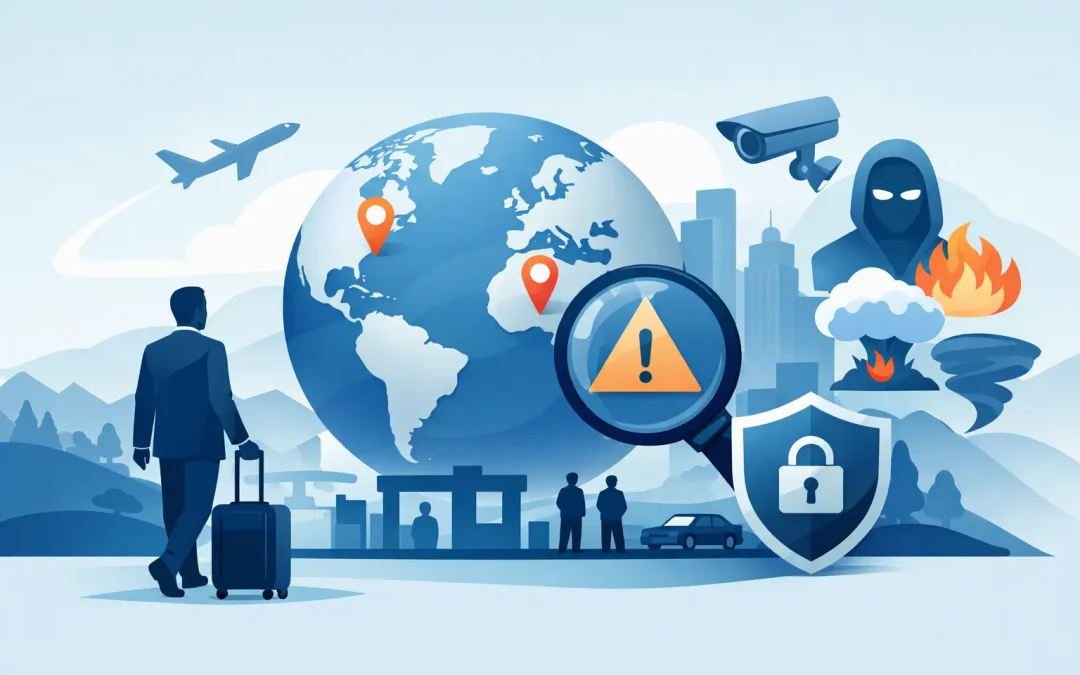
A senior executive lands in a capital city for a two-day meeting. The itinerary appears routine: airport transfer, hotel, boardroom, departure. Yet the real risk picture may include a protest route that changes by the hour, a local kidnapping pattern targeting affluent visitors, compromised hotel Wi-Fi, an online disclosure of the traveler’s location, or a medical evacuation route that no longer functions as planned. Global travel threat trends are no longer confined to conventional travel warnings. They are layered, fast-moving, and often personal.
For corporations, NGOs, government personnel, legal teams, and high-profile individuals, travel security cannot be treated as an administrative task completed when tickets are issued. It is an intelligence and protection function. The objective is not to eliminate every uncertainty. It is to identify material threats early, make sound decisions under changing conditions, and ensure that the traveler has credible support on the ground.
Global Travel Threat Trends Are Becoming More Interconnected
The most significant change in international travel risk is convergence. Political instability can create criminal opportunity. Armed conflict can disrupt commercial aviation, border access, fuel supplies, and medical care well beyond the immediate area of fighting. A public controversy or commercial dispute can become a personal threat when an executive’s identity, schedule, or location is exposed online.
This convergence matters because a destination assessed as broadly safe may still present a serious exposure for a particular traveler. A company representative involved in a sensitive negotiation faces a different risk profile than a tourist. A public figure may attract unwanted attention in a country with low violent crime. A legal professional carrying evidence or attending a contentious proceeding may face surveillance, theft, or coercion risks that ordinary travelers do not.
Risk assessments must therefore move beyond country-level color coding. They should account for the traveler’s profile, purpose of travel, public visibility, affiliations, route, accommodation, local contacts, and ability to leave quickly if circumstances deteriorate.
Political Volatility and Civil Unrest Can Shift Without Warning
Demonstrations, labor actions, election-related unrest, and sudden government restrictions are among the most operationally disruptive travel threats. Many gatherings remain peaceful. The danger lies in assuming that a peaceful event will remain peaceful, or that a protest affecting one district will not interrupt access to an airport, hotel, office, or hospital.
Travelers often encounter the practical consequences before they encounter direct violence. Roads close. Mobile networks slow or fail. Ride services disappear. Curfews are imposed with limited notice. Police activity changes normal traffic patterns, while crowds can make an otherwise secure route unusable.
The appropriate response depends on proximity and purpose. A traveler with no essential business near an affected area should avoid it. A team whose assignment requires movement through a volatile environment needs current route intelligence, vetted transportation, a reliable communications plan, and a clear authority structure for deciding when to pause or depart. Improvisation is rarely a protective strategy.
Conflict Risk Extends Beyond Active War Zones
Conflict-related risk is not limited to destinations formally designated as war zones. Neighboring countries can experience refugee flows, border restrictions, heightened policing, supply shortages, cyber activity, or retaliatory violence. Airspace closures and altered flight paths may affect travel far from the original flashpoint.
For organizations, the concern is continuity as much as physical safety. Can personnel communicate? Is there a functioning medical capability? Are secure ground transfers available? Does the traveler have documents, funds, medications, and an alternate departure option if commercial transport is interrupted? These are operational questions, not theoretical ones.
Criminal Threats Are More Targeted and More Informational
Street crime remains a concern in many locations, but sophisticated travelers increasingly face targeted theft, express kidnapping, fraud, surveillance, and social engineering. Criminal groups do not need to know every detail of a target’s life. A visible watch, a branded vehicle, a public conference appearance, or an unsecured social media post can be sufficient to identify opportunity.
Business travelers are particularly vulnerable when their movements are predictable. Airport arrivals, hotel lobbies, conference venues, upscale restaurants, and nightlife districts are places where criminals can observe behavior and build a profile. The threat may be financial rather than violent: theft of a laptop, device compromise, credential harvesting, or a fraudulent payment request timed to coincide with a traveler’s absence from the office.
Hotel selection deserves more scrutiny than star ratings and convenience. A suitable property should be evaluated for access control, room location, emergency exits, vehicle approach, surrounding environment, and the reliability of its response during an incident. The closest hotel to a meeting may not be the best choice if it limits movement or exposes the traveler’s routine.
Digital Exposure Has Become a Physical Security Issue
The separation between cyber risk and personal security is steadily disappearing. A compromised phone can reveal location data, contacts, travel plans, and commercial information. A spoofed message may redirect a traveler to an unsafe pickup point. Public posts can disclose a real-time itinerary to people who have no legitimate need to know it.
Travelers should assume that unfamiliar networks, charging stations, QR codes, and urgent messages require scrutiny. This does not mean avoiding technology. It means using it with discipline. Corporate devices should be configured for travel, sensitive data should be minimized, multi-factor authentication should not rely solely on an inaccessible phone number, and reporting procedures should be understood before departure.
High-profile travelers require additional care. Publicity schedules, paparazzi interest, litigation, relationship disputes, and persistent unwanted contact can generate risks that do not appear in standard destination reporting. A tailored threat review can determine whether protective presence, controlled transportation, discrete advance work, or itinerary adjustments are warranted.
Medical and Infrastructure Disruption Remain Decisive Factors
A security plan that overlooks medical capability is incomplete. Illness, accidents, and chronic health events can become critical when local emergency care is limited, roads are blocked, or language barriers delay treatment. Environmental conditions such as extreme heat, flooding, severe storms, poor air quality, and infectious disease activity can compound the problem.
Infrastructure failure also changes the risk equation quickly. Power outages affect elevators, access systems, communications, and fuel availability. Flooding can isolate districts and close airports. A strike can suspend public transportation and leave travelers dependent on unvetted alternatives. The question is not whether every disruption can be predicted. It is whether the traveler has practical options when normal systems fail.
What Mission-Ready Travel Planning Looks Like
Effective travel risk planning is proportionate. An executive visiting a stable city for a private meeting does not necessarily require the same protective posture as a team entering a politically sensitive region. Excessive security can draw attention, impede business, and waste resources. Insufficient preparation can leave an organization without choices when conditions change.
A defensible plan normally addresses five areas:
- A current assessment of destination, traveler, and assignment-specific threats.
- Vetted transportation, accommodations, local contacts, and alternate routes.
- Communications procedures, including check-ins, emergency contacts, and escalation authority.
- Medical preparation, document security, contingency funds, and evacuation considerations.
- Real-time monitoring that can convert information into a decision before an incident reaches the traveler.
The final point separates static travel advice from protective intelligence. A report prepared a week before departure may establish a baseline, but it cannot account for a sudden demonstration, a developing threat against a facility, or a route closure on the day of movement. Relevant intelligence must be current, verified, and connected to someone empowered to act.
The Value of Local Human Intelligence
Public reporting and automated alerts are useful, but they have limits. They may be delayed, incomplete, or unable to distinguish a broad disruption from a threat affecting a specific hotel, route, neighborhood, or individual. On-the-ground human intelligence provides context: whether an area is actually passable, whether a protest is expanding, whether a local contact is credible, and whether a security concern is routine or exceptional.
This is where experienced investigative and protective resources matter. West Coast Detectives International approaches travel security as a tailored operational assignment, drawing on investigative judgment, international contacts, threat management, and protective planning rather than issuing generic safety advice. The right level of support depends on the assignment, but the standard should remain the same: factual intelligence, clear recommendations, and discretion.
Travel will always involve uncertainty. The responsible course is not to surrender mobility or treat every destination as hostile. It is to recognize that a traveler’s exposure is shaped by more than geography. Before the next departure, ask the question that matters most: if the plan changes at midnight, who has the facts, who can make the decision, and who can get the traveler safely to the next point?
by plittle@westcoastdetectives.us | Jul 23, 2026 | Blog
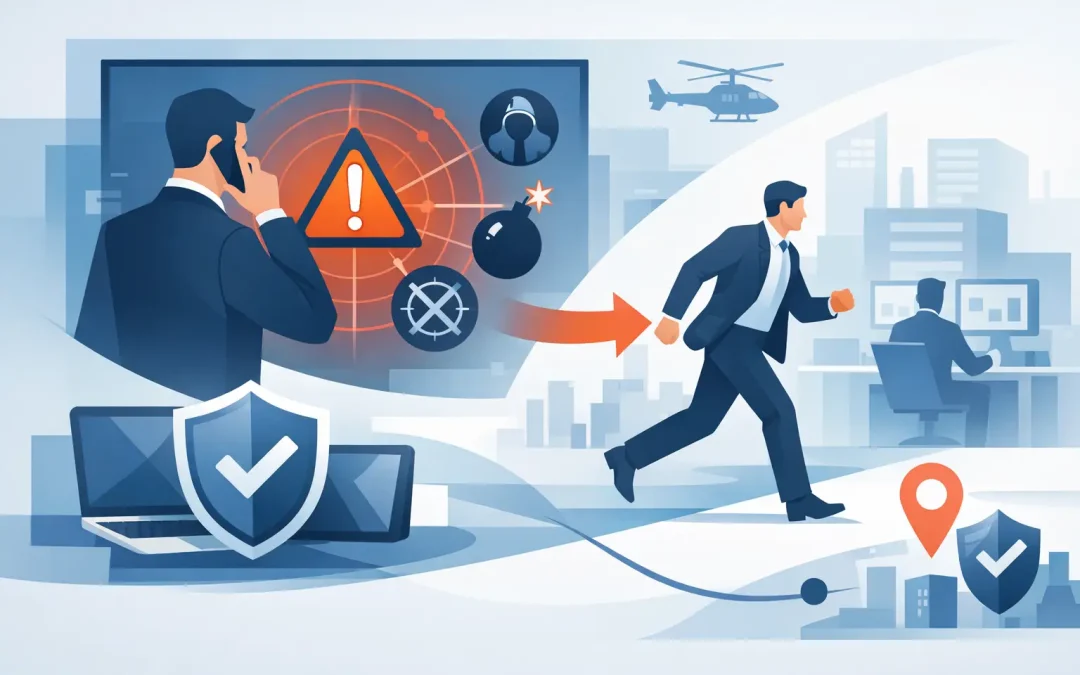
A threat does not need to contain a detailed plan to create real exposure. A direct message naming a location, a former employee who begins appearing near an executive’s residence, or a hostile actor who knows a travel itinerary may each require action. Knowing how to respond to credible threats begins with one principle: do not dismiss the warning, and do not improvise the response.
A credible threat is an operational problem, not merely an unpleasant communication. The objective is to protect people, preserve facts, establish the threat actor’s capability and intent, and make proportionate decisions before a situation escalates. For corporations, public figures, legal teams, and families facing elevated risk, those decisions should be orderly, confidential, and based on evidence.
Establish Whether the Threat Is Credible
Not every hostile statement presents the same level of danger. Anger, criticism, and abusive language are often distressing but may lack a stated target, means, opportunity, or pattern of escalation. A credible threat has indicators that make harm reasonably possible, even if timing and intent remain uncertain.
The most concerning indicators include specificity, access, persistence, and behavioral change. Specificity may involve a named person, address, office, event, route, vehicle, or date. Access may mean the subject has proximity to the target, insider knowledge, financial resources, weapons access, or the ability to travel. Persistence can include repeated unwanted contact across platforms, surveillance-like behavior, impersonation, or efforts to bypass normal boundaries.
Context matters. A vague message from an unknown account warrants documentation and assessment. The same language from a terminated employee, a former intimate partner, a person with a history of violence, or someone who has appeared at a protected location requires a different response. Credibility is not established by one phrase alone. It is assessed through the totality of facts.
Do not require certainty before taking protective measures. Threat assessment is concerned with likelihood, capability, and consequence. If the potential consequence is severe, a prudent response may be warranted even where the available evidence is incomplete.
Take Immediate Protective Action
If there is an immediate danger to life or a person is actively attempting to gain access to a residence, workplace, event, or vehicle, contact 911 or the appropriate local emergency authority at once. Move the threatened person to a secure location if it can be done safely. Do not confront, negotiate with, or attempt to detain the individual.
Where the threat is serious but not immediate, reduce predictable exposure while the facts are being assessed. This may mean changing a meeting location, adjusting a travel plan, limiting public disclosure of movements, notifying reception and building security, or arranging secure transport. The correct measure depends on the target’s visibility, the threat actor’s access, and the environment.
Avoid broadcasting the response. Social media posts, public accusations, and messages sent through mutual contacts can alert the subject, provoke retaliation, or compromise an investigation. A controlled response protects both the individual at risk and the integrity of any later legal or investigative action.
For organizations, activate a small need-to-know team. It should normally include the person responsible for security, a senior decision-maker, legal counsel when appropriate, and human resources if the matter involves an employee or former employee. Wider circulation should occur only when it supports a defined protective purpose.
Preserve Evidence Before It Disappears
Threat cases are often weakened by well-intentioned but careless handling of evidence. Deleted messages, edited screenshots, lost voicemail files, and informal retellings can obscure the facts that investigators and law enforcement need.
Preserve the original material whenever possible. Save emails in their native format, retain voicemail recordings, capture full-page screenshots that show account names and timestamps, and record the exact date, time, platform, and recipient. If a threat is delivered in person or by telephone, write a contemporaneous account using the speaker’s words as closely as possible. Note witnesses, nearby cameras, vehicles, and any identifying details without placing anyone in danger.
Do not alter, annotate, crop, or publicly repost the original evidence. Maintain a simple incident log that records what occurred, who received the information, what protective steps were taken, and when notifications were made. This creates a factual timeline rather than a collection of disconnected impressions.
Digital material requires particular care. An account may be anonymous but still leave investigative leads through usernames, writing patterns, linked profiles, prior posts, email headers, payment activity, or known associations. The goal is not for a threatened person to conduct their own online investigation. It is to retain the available information so qualified professionals can assess it lawfully and accurately.
Report Through the Right Channels
Law enforcement should be notified when a threat includes violence, stalking, extortion, harassment that persists after clear boundaries, threats against facilities, or conduct suggesting an imminent risk. The initial report should be factual and concise: who is involved, what was said or done, when it happened, what evidence exists, and why the target may be vulnerable.
A report number, officer name, and contact information should be retained. If circumstances change, such as a new message, appearance near a residence, or an attempt to contact family members, update the report promptly. One report should not be treated as the end of the matter. Threat situations can develop quickly.
Corporate and institutional cases may also require internal reporting, counsel review, insurer notification, or communication with event venues, property management, schools, or travel partners. These decisions should be guided by necessity, confidentiality obligations, and the risk of alerting the threat actor. A broad email distribution is rarely a substitute for a security plan.
Assess the Person, Not Just the Message
The most useful threat assessments examine behavior over time. What does the person want? Have they shown fixation on an individual, grievance against an organization, or a belief that violence is justified? Have they tried to gather information, recruit others, test security boundaries, acquire tools, or make sudden travel plans?
This distinction matters because many serious cases involve a progression from communication to action. A person may begin with emails, then attempt to contact staff, appear at a location, post private information, or follow a target’s routine. Each step can reveal increasing commitment and access.
Conversely, a harsh message may be less concerning if the sender has no identifiable target, no practical access, no history of escalation, and no continuing contact. That is not a reason to ignore it. It is a reason to calibrate resources intelligently rather than treating every incident as identical.
An independent assessment can be especially valuable where the subject is overseas, anonymous, connected to multiple jurisdictions, or potentially linked to organized criminal, extremist, or insider activity. Experienced investigative and protective teams can combine open-source review, discreet field inquiries, local intelligence, and security planning to replace assumptions with actionable facts.
Build a Protection Plan That Fits the Risk
A credible threat response should not end with a police report or a single security briefing. It should establish clear responsibilities, decision thresholds, and communications procedures for the period that follows.
For an executive, that may involve route variation, advance review of venues, a check-in protocol, trained protective personnel, and tighter control of calendars and personal data. For a company, it may include access-control review, visitor screening, staff awareness, mail and package procedures, and a plan for handling hostile communications. For a family facing stalking or domestic-related threats, the priorities may be residence security, school coordination, documentation, and safe movement routines.
There are trade-offs. Highly visible security can deter some actors but may draw unwanted attention or disrupt business. Restricting travel and appearances can reduce exposure but may not be sustainable. The appropriate plan is the least disruptive measure that reliably addresses the assessed risk, with the ability to increase protection quickly if conditions change.
West Coast Detectives International approaches these assignments as intelligence-led protection problems: establish the facts, identify the exposure, and put practical safeguards in place before the threat gains momentum. The strongest response is rarely dramatic. It is disciplined, discreet, and ready to adapt when new information arrives.
A threat should never be managed by fear alone. Preserve the facts, protect the people involved, report through the proper channels, and bring in qualified support when the stakes exceed routine security measures. Timely judgment can prevent a troubling warning from becoming an irreversible event.
by plittle@westcoastdetectives.us | Jul 21, 2026 | Blog
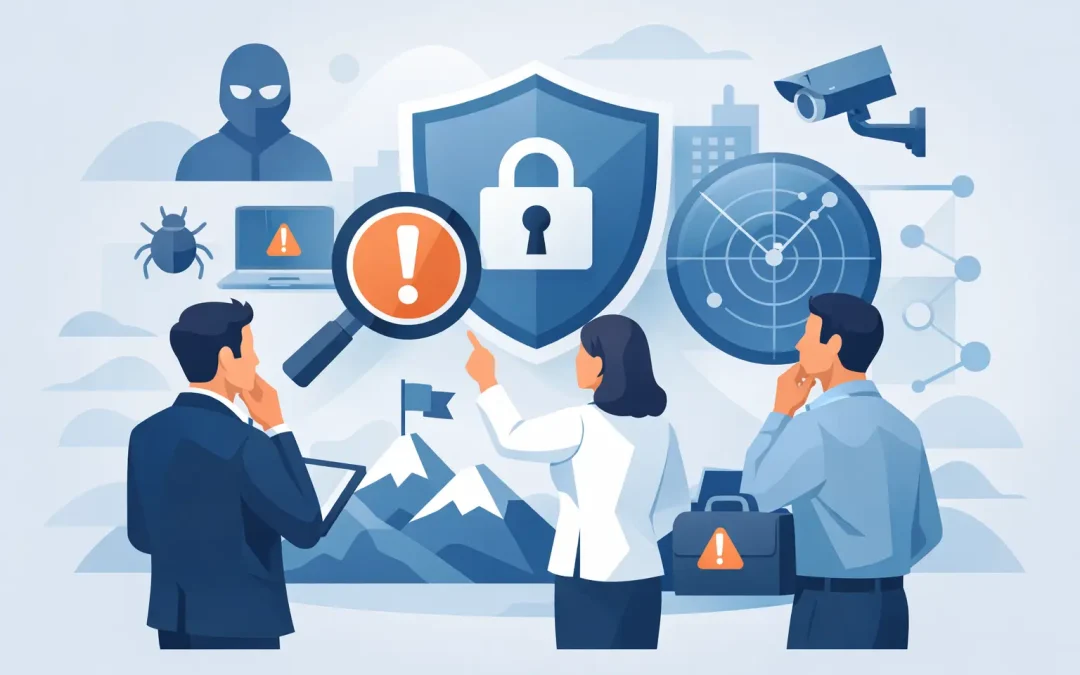
A credible threat rarely arrives as a single, obvious event. It develops through fragments: an employee complaint, hostile online commentary, unusual contact with an executive, a disputed termination, an upcoming overseas trip, or intelligence that does not yet fit a clear pattern. This corporate threat assessment guide explains how leadership teams can turn those fragments into defensible decisions before an issue becomes a crisis.
The objective is not to predict every act of violence, disruption, fraud, or reputational attack. It is to establish facts, judge intent and capability, identify vulnerabilities, and apply proportionate protective measures. For organizations with visible leaders, sensitive operations, contentious public profiles, or international exposure, that discipline is a core management responsibility.
What a Corporate Threat Assessment Is Designed to Do
A corporate threat assessment is a structured examination of a person, group, event, location, or circumstance that may create harm to people, assets, operations, information, or reputation. It goes beyond a generic security review. A security review may identify that a facility has poor access control. A threat assessment asks who may exploit that weakness, why they may act, what warning behavior exists, and what action is justified now.
The distinction matters. Organizations often overreact to alarming language while underreacting to credible behavioral indicators. A threatening email from an unknown sender may require preservation and initial review, but not necessarily a major protective deployment. By contrast, a former employee who knows a principal’s routine, has made targeted grievances, has attempted repeated contact, and has demonstrated access to weapons or restricted areas presents a materially different concern.
Threat assessment is therefore both an intelligence process and a decision-making process. It should give leaders a clear view of what is known, what remains unverified, what could change the risk picture, and who is responsible for the next action.
The Corporate Threat Assessment Guide: Start With Facts
The first discipline is separating reported information from established fact. Early reports are often incomplete, emotional, or shaped by internal assumptions. Security teams should preserve the original communication, record dates and times, identify witnesses, secure relevant video or access-control records, and document the precise source of each claim.
A useful assessment begins by defining the subject and the potential target. Is the concern centered on a current or former employee, an activist group, a competitor, a criminal actor, a disgruntled vendor, an intimate partner, or an unknown individual? Is the target a named executive, a family member, a site, an event, a travel itinerary, proprietary information, or the organization itself?
This may appear elementary, but ambiguity produces weak protective decisions. “There is a threat against the company” is not actionable. “A former contractor made two direct statements naming the chief financial officer, appeared at a controlled facility after termination, and has attempted to obtain the executive’s home address” gives an assessment team a defined starting point.
At this stage, avoid turning a concern into a label. Calling someone dangerous before evidence supports that conclusion can create legal, employment, and reputational consequences. The task is to document behavior, context, access, and escalation indicators without speculation.
Evaluate Intent, Capability, Access, and Escalation
Threat level is not determined by language alone. Some individuals make loud but non-specific statements and lack proximity, capability, or sustained focus. Others communicate little, yet conduct surveillance, research routines, test security boundaries, acquire materials, or seek personal information. The latter pattern may require immediate attention.
An effective assessment examines four connected questions:
- Intent: Has the subject expressed a grievance, fixation, revenge motive, ideological objective, financial motive, or desire to cause harm?
- Capability: Does the subject possess relevant skills, resources, associates, weapons, technical knowledge, or financial means?
- Access: Can the subject reach the person, facility, systems, event, or travel route at issue?
- Escalation: Has behavior become more frequent, specific, personal, organized, or invasive over time?
No single factor decides the case. A person may have strong motive but no apparent access. A sophisticated adversary may have capability but no verified intent. Risk rises when several factors converge, particularly when a subject demonstrates planning, target-specific knowledge, repeated boundary testing, or unwillingness to disengage after clear instruction.
The assessment should also account for stabilizing factors. A subject who accepts legal boundaries, has no history of approach behavior, and communicates through counsel may present a different risk than someone who ignores court orders, workplace restrictions, or repeated requests to cease contact. Fair assessment requires attention to both aggravating and mitigating evidence.
Look Beyond the Immediate Incident
A threat is often connected to a wider operational environment. Corporate leaders should assess whether the incident intersects with layoffs, litigation, labor disputes, controversial announcements, product recalls, political activity, regulatory action, media exposure, or a high-profile event. These conditions can increase visibility and create new opportunities for an adversary.
International operations require another layer of analysis. An executive traveling to a stable business center may face a different set of concerns than one visiting a jurisdiction with civil unrest, kidnapping risk, terrorism activity, weak emergency response, or active surveillance by commercial or state-linked interests. The itinerary, public profile, local transportation, hotel selection, meeting locations, digital exposure, and family travel all affect the risk calculation.
This is where broad intelligence and local reporting become decisive. Open-source information can reveal public posts, media coverage, litigation records, and online grievances. It does not always reveal the full picture. Credible assessment may require discreet source inquiries, local verification, records research, physical security review, or direct coordination with counsel and law enforcement.
Match Protective Measures to the Actual Risk
The right response is rarely the most visible one. A heavily armed presence may be appropriate in exceptional circumstances, but it can also disrupt operations, alarm employees, and draw attention to the principal. In other cases, a quiet change in travel arrangements, access controls, information handling, or executive routines can reduce exposure without unnecessary visibility.
Protective measures should be specific to the assessment. They may include notification protocols for reception staff, photography and distribution of a subject profile where lawful, revised visitor screening, travel route variation, secure transportation, workplace access restrictions, digital privacy measures, executive protection, or liaison with local authorities. When there is an imminent threat, emergency procedures and law enforcement notification take priority.
Every action should have an owner and a review date. A threat assessment that sits in a file without assigned tasks is not a protective program. Leadership should know who will monitor developments, who can authorize further action, how new reports will be received after hours, and what threshold triggers escalation.
Preserve Confidentiality Without Creating Blind Spots
Threat matters are sensitive by nature. Loose internal circulation can compromise an investigation, expose private information, create workplace rumors, and alert the subject. At the same time, excessive compartmentalization can leave frontline personnel unaware of a genuine concern.
The practical answer is controlled distribution. Those with a legitimate operational need should receive concise, relevant instructions. Senior decision-makers and counsel may receive the full assessment. Security personnel need enough detail to recognize behavior and follow procedures. Human resources may need direction on workplace actions, while investigators retain protected source material and sensitive findings.
Organizations should also establish a reporting culture that avoids both dismissal and panic. Employees should know where to report concerning behavior, how to preserve evidence, and why they should not confront a subject independently. Reports need prompt review, even when they ultimately prove benign. Early reporting is one of the few advantages an organization has before an incident escalates.
Reassess as Conditions Change
A threat assessment is a living record, not a one-time score. New information can lower risk as readily as it can raise it. The subject may move away, comply with boundaries, lose access, or redirect attention. Conversely, a court hearing, termination date, public appearance, travel plan, anniversary, or online campaign can alter the operational picture quickly.
Set reassessment points based on the nature of the threat. A fast-moving stalking matter may require daily review. A facility concern tied to an upcoming protest may require assessment before each event milestone. A geopolitical travel risk may require updates as conditions change on the ground. Document what changed, why it matters, and whether the protective posture remains proportionate.
For high-consequence matters, an external investigative and protective partner can provide independent judgment, field verification, and the discretion needed when internal teams face conflicts of interest or limited international reach. West Coast Detectives International approaches these assignments as operational intelligence work: factual reporting, careful source evaluation, and protective recommendations calibrated to the client’s real exposure.
The strongest corporate security decisions are often quiet ones. They are made early, based on evidence rather than fear, and revisited before circumstances force leadership into a public and costly response.

by plittle@westcoastdetectives.us | Jul 20, 2026 | Blog
Client Thinks They’re Being Followed? Act Fast and Smart!
Your phone rings or a message hits: “I think I’m being followed.” This is how many of our most important cases begin — and we treat every single one with urgency and precision.
The wrong move? Panicking and immediately dispatching bodyguards. That’s reactive, not effective. In reality, many clients have simply misread a situation and jumped straight to danger mode. We don’t guess — we act decisively with the right information.
Here’s our high-energy, professional protocol:
1. Immediate Danger Check First question, asked instantly: “Are you in immediate danger right now?”
If yes ? We spring into action with emergency steps (detailed in the full report). If no ? We move quickly but calmly into smart information gathering.
2. Rapid Fact-Finding We gather the critical details that shape a powerful, tailored action plan. No guesswork. No wasted time. Just clear, actionable intelligence.
3. Professional Execution The key to real protection is knowing the facts before taking action. That’s what separates a top-tier firm from the rest.
Below is the proven protocol we’ve refined and use on every potential threat case. Follow it, stay sharp, and take control of the situation.
Ready to turn concern into confidence? We’re here and ready when you are. Let’s protect what matters — starting now.
A client calls, thinks he is being followed, and is concerned about his safety. The first objective is not to prove the suspicion on the phone. It is to reduce immediate exposure, establish the facts without creating further risk, and preserve information that may become critical to law enforcement or a protective operation.
Being followed can be a genuine precursor to stalking, harassment, extortion, workplace violence, domestic abuse, organized criminal activity, or a targeted threat. It can also be a misunderstanding created by a familiar vehicle, a repeated commute pattern, or heightened stress after a difficult event. A professional response makes room for both possibilities. It does not dismiss the caller, and it does not turn an unverified concern into a confrontation.
When a Client Thinks He Is Being Followed
The caller should first be asked whether there is an immediate danger. Is the suspected individual attempting to block the vehicle, approach the client, threaten them, enter their property, or follow them into an isolated location? Has there been prior violence, a restraining order, hostile communications, a termination, a business dispute, or a known fixation?
If the answer suggests an active threat, the client should call 911 or the relevant local emergency number immediately. They should move toward a populated, well-lit location with visible staff, such as a police or fire station, hospital emergency entrance, hotel lobby, or major retail location. They should not drive home, go to a child’s school, or lead a suspected follower to a regular workplace.
A client who is driving should keep doors locked, windows up, and maintain normal, lawful driving. Sudden high-speed maneuvers, aggressive turns, or attempts to force the other vehicle off the road raise the risk for everyone involved. The purpose is to reach safety, not to test the other driver’s intentions.
If the client is on foot, they should enter a secure public location and ask staff to call law enforcement if necessary. They should avoid parking structures, alleys, isolated transit platforms, and any place where sight lines or exit routes are limited.
Do Not Confront or Try to Conduct Surveillance
The urge to confront a suspected follower is understandable. It is also frequently the wrong move. A person who is merely coincidentally traveling in the same direction may react unpredictably when accused. A person with hostile intent may use confrontation to gather information, provoke a response, or accelerate an encounter.
The same applies to amateur counter-surveillance. Repeated U-turns, circling blocks, taking unfamiliar shortcuts, or stopping in remote areas can make a client more vulnerable. A single, sensible route adjustment toward a public location may be appropriate. A prolonged effort to “shake” a vehicle is not.
Clients should also resist the temptation to post vehicle descriptions, names, photographs, or accusations on social media. Public speculation can compromise an investigation, trigger retaliation, misidentify an innocent party, and create legal exposure. A factual record shared with the appropriate authorities or qualified security professionals is far more useful than an online accusation.
Build a Factual Record While Preserving Safety
Once the client is in a safe place, the focus shifts to documentation. Memory degrades quickly under stress, and small details can establish whether a pattern exists. The client should write down what happened as soon as practical, using plain facts rather than conclusions.
The record should include the date, time, location, direction of travel, vehicle description, license plate if safely observed, number of occupants, clothing or physical description, and any conduct that caused concern. If a vehicle appeared more than once, note where it was first seen and whether it remained present through route changes that would be unusual for ordinary traffic.
Screenshots, photographs, and video can be valuable, but only if captured without placing the client at risk. A passenger may safely document an incident from inside a locked vehicle. A driver should not handle a phone while moving. Doorbell cameras, building security footage, parking lot video, access-control records, threatening messages, call logs, and prior incident reports may later provide the context that a single sighting cannot.
A pattern is often more significant than one event. The same vehicle near a residence, office, gym, or child’s school on several occasions deserves closer attention, particularly when paired with messages, unwanted gifts, unauthorized account access, or inquiries about the client’s schedule.
Assess the Context, Not Just the Vehicle
A credible threat assessment begins with context. The question is not simply, “Was someone behind the client?” The more useful question is, “Who may have motive, access, capability, and knowledge of the client’s movements?”
Recent events may change the risk picture. Examples include a contentious separation, a dismissed employee, a lawsuit, an executive decision affecting others, a public appearance, a social media dispute, an inheritance conflict, a corporate investigation, or a sensitive overseas assignment. For executives and public-facing individuals, exposure can also increase when travel plans, real-time location data, or family information are easily available online.
At the same time, context should be handled carefully. Suspicion alone is not proof. Threat management requires disciplined distinctions between confirmed facts, credible indicators, and assumptions. That distinction protects the client from both complacency and unnecessary disruption.
Immediate Protective Measures That Make Sense
The appropriate response depends on the threat level. A single ambiguous incident may call for heightened awareness and better documentation. Repeated appearances, prior threats, or signs of surveillance near home and work may justify a more structured protective plan.
For the next several days, clients should avoid predictable routines where practical. This does not mean behaving erratically or abandoning normal responsibilities. It means varying departure times, parking locations, routes, and public entry points within reasonable limits. Family members, household staff, and key workplace personnel should receive only the information they need to support safety.
Residential and workplace security should also be reviewed. Confirm that exterior lighting, cameras, locks, visitor procedures, garage access, and reception protocols are functioning. Employees should know not to disclose a client’s schedule, travel details, contact information, or presence on-site. A seemingly harmless call asking, “Is he in today?” can be part of a broader information-gathering effort.
For higher-risk clients, trained protective personnel can provide secure transportation, advance planning, residential assessment, route review, and discreet presence during vulnerable movements. The goal is not theater. It is to create time, distance, visibility, and reliable decision-making when uncertainty is highest.
When Professional Investigation Is Appropriate
Law enforcement should be involved whenever there is immediate danger, a criminal threat, repeated harassment, trespass, stalking behavior, or a violation of a protective order. A police report may be essential even when the available evidence appears limited. It establishes a record and may support future action if conduct escalates.
A qualified investigative and protective team can assist when the situation is persistent, sensitive, cross-jurisdictional, or connected to business, family, reputational, or travel risks. The work may include threat assessment, lawful evidence review, background intelligence, digital exposure analysis, protective planning, and coordination with counsel or law enforcement where appropriate.
West Coast Detectives International approaches such matters as a fact-finding and risk-reduction mission. The objective is to identify what is known, determine what requires verification, and give the client a practical protective posture without compromising discretion or creating avoidable attention.
A Calm Response Preserves Options
Fear can create pressure to act immediately, publicly, and alone. That is precisely when judgment matters most. A client who thinks he is being followed should move to safety, contact emergency services if there is an active threat, document only what can be gathered safely, and avoid confrontation.
The strongest next step is rarely dramatic. It is a quiet, disciplined decision that preserves evidence, protects family and colleagues, and leaves the client with more options than he had when the concern first arose.

by plittle@westcoastdetectives.us | Jul 19, 2026 | Blog
A prospective international partner may arrive with a polished presentation, a respected local intermediary, and documents that appear complete. None of that establishes trust. Knowing how to vet international partners means determining who truly controls the entity, what pressures shape its conduct, and whether its claims survive independent verification before money, personnel, data, or reputation are placed at risk.
For multinational companies, NGOs, investors, executives, and legal stakeholders, this is not a procurement exercise. A weak partner can expose an organization to sanctions violations, corruption allegations, supply-chain disruption, hostile influence, fraud, kidnapping risk, or severe reputational damage. The right level of scrutiny depends on the country, sector, transaction value, and access the partner will receive. But the central discipline is consistent: verify facts independently, assess the operating environment, and do not confuse a lack of obvious adverse information with evidence of good character.
How to Vet International Partners Beyond the Paperwork
Corporate registration records, tax documents, references, and bank letters are appropriate starting points. They are not an endpoint. In many jurisdictions, records may be incomplete, delayed, manipulated, or held in the names of nominees. A partner can be legally registered while concealing conflicts of interest, politically exposed owners, criminal associations, or a history of failed entities.
Begin by defining the proposed relationship in operational terms. Will the party introduce government officials, manage local staff, receive confidential technical information, arrange travel, hold funds, secure permits, provide security, or act under your organization’s name? The greater the authority, visibility, and access, the more exacting the inquiry must be.
The most useful question is not simply, “Is this company legitimate?” It is, “What could this company expose us to, and who benefits if the relationship succeeds?” That question directs the investigation toward actual risk rather than a generic compliance checklist.
Establish beneficial ownership and control
Identify every person with a material ownership interest, voting authority, financial claim, or practical ability to direct the business. This includes founders, board members, senior officers, major shareholders, family members acting as proxies, and intermediaries who may not appear in formal filings.
Ownership structures require close attention when they involve multiple jurisdictions, recently formed holding companies, trusts, frequent directorship changes, or entities registered in secrecy-oriented locations. These arrangements can be legitimate. They can also be designed to obscure a sanctioned interest, politically connected beneficiary, or source of illicit funds. The issue is not complexity alone. It is whether the explanation for that complexity is credible, documented, and consistent with the commercial purpose.
Compare corporate records with bank information, litigation history, trade data where available, public statements, professional biographies, and local reporting. Discrepancies should be treated as investigative leads, not administrative inconveniences.
Screen for legal, regulatory, and integrity concerns
A formal screening process should include relevant sanctions and watchlists, enforcement actions, debarments, criminal proceedings, civil litigation, insolvencies, and adverse media. The names of beneficial owners, directors, key employees, subsidiaries, and known affiliates should be examined, including reasonable spelling variations and local-language forms.
Screening results need context. A common-name match is not proof of a problem, and an old civil dispute may have little bearing on a current engagement. Conversely, a clean database result does not answer whether a company relies on bribery, coerced labor, criminal logistics networks, or informal political patronage to operate.
Look for patterns: repeated allegations involving the same individuals, contracts awarded without apparent competition, links to high-risk state-owned enterprises, unexplained wealth, opaque subcontractors, or a history of changing company names after disputes. A pattern is often more revealing than a single headline.
Conduct Local Verification Where It Matters
International due diligence fails when it remains entirely desk-based. Records can establish what an organization says it is. On-the-ground inquiry can help establish what it actually does.
Local verification may include confirming the business address, observing whether facilities and staffing match claimed capabilities, validating licenses with issuing authorities, and discreetly assessing reputation through credible industry, legal, and community sources. For a manufacturer, that may mean confirming production capacity and labor conditions. For an agent or consultant, it may mean understanding how they obtain introductions and whether their influence depends on improper payments.
Human-source intelligence must be handled professionally. Rumor is not factual reporting. Local sources can carry personal, commercial, or political bias, particularly in contested markets. Information should be corroborated, sources evaluated for reliability, and conclusions clearly separated from unverified allegations. A seasoned investigator records both what is known and what remains uncertain.
This work is particularly valuable in regions where commercial registries are limited, political influence is concentrated, or security conditions affect the reliability of formal information. It can also identify a concern that conventional searches miss: a partner’s relationship with local power brokers, organized crime figures, hostile actors, or corrupt officials.
Assess Country, Sector, and Security Exposure
A partner cannot be assessed in isolation from its environment. The same business relationship may carry modest risk in one jurisdiction and substantial exposure in another. Consider the rule of law, corruption environment, sanctions posture, civil unrest, terrorist activity, organized crime presence, data protection requirements, and the reliability of transport and communications.
Sector-specific risk matters just as much. Extractives, defense, logistics, construction, pharmaceuticals, telecommunications, financial services, and public procurement often involve heightened regulatory or integrity concerns. A local logistics provider may appear low profile but control access to cargo routes, customs interactions, warehouse security, and sensitive movement data. A security contractor may have local reach but lack adequate training, licensing, insurance, or command discipline.
If personnel will travel or deploy, assess the partner’s ability to protect them. Ask who provides transport, who controls drivers, how accommodations are selected, what happens during civil disorder, and whether emergency communications and extraction procedures exist. Business due diligence and protective intelligence should not be treated as separate functions when the relationship places people in difficult environments.
Test the Commercial Story
A credible partner should be able to explain its revenue, customers, service capacity, supply chain, pricing, and role in the proposed transaction. The explanation should remain consistent across documents, interviews, and independent checks.
Warning signs often appear in the details. Be cautious when a company claims extensive experience but cannot identify verifiable projects; offers pricing far below market norms; resists disclosure of subcontractors; demands unusual payment arrangements; or insists that official approvals can be obtained through personal relationships. Pressure for rapid onboarding is another concern, especially where the transaction involves public contracts, strategic assets, regulated goods, or sensitive data.
References are useful only when they are independently validated. A list of satisfied clients supplied by the partner is not the same as speaking with actual counterparties selected through independent research. Ask references about performance under pressure, payment practices, dispute handling, compliance conduct, and whether the organization delivered the work itself or passed it to undisclosed third parties.
Use Interviews to Identify Gaps and Evasion
A structured interview with principals can reveal more than another round of forms. Ask direct questions about ownership, prior company failures, government relationships, litigation, sanctions exposure, subcontracting, and the source of any claimed special access. Professional partners understand why these questions are necessary in serious cross-border work.
Pay attention to the quality of answers. A clear answer supported by documents is different from rehearsed assurances, hostility toward routine verification, or shifting explanations between representatives. Cultural norms affect communication styles, so evasiveness should never be inferred from manner alone. The concern is inconsistency, refusal to provide reasonable evidence, or pressure to bypass controls.
Document representations in writing. Where appropriate, contracts should require accurate disclosure, notification of ownership or sanctions changes, audit rights, approval of subcontractors, compliance with applicable law, and termination rights for material misrepresentation. Contract language does not eliminate risk, but it establishes accountability and gives the organization a defined response if conditions change.
Make a Defensible Decision, Then Keep Watching
Vetting should produce a decision record, not an undifferentiated file of search results. State the relationship’s purpose, the risks identified, the evidence reviewed, unresolved questions, mitigating controls, and the authority approving the engagement. This creates a defensible basis for action if the relationship is later questioned by regulators, boards, insurers, or counterparties.
Not every adverse finding requires rejection. A minor historical dispute may be manageable. An ownership structure that is complex but transparent may be acceptable. A politically exposed person is not automatically disqualifying, but the relationship may require enhanced review and strict controls. By contrast, concealed beneficial ownership, credible corruption indicators, sanctions concerns, or threats to personnel safety can justify walking away regardless of commercial opportunity.
The assessment also cannot remain static. Ownership changes, elections, conflict, sanctions designations, financial distress, and new allegations can transform a partner’s risk profile quickly. Establish monitoring that reflects the exposure. A low-risk supplier may need periodic review; a politically connected agent operating in a high-risk jurisdiction may warrant continuous scrutiny and senior-level oversight.
When the facts are thin, the stakes are high, or local conditions are sensitive, independent investigative support is often the prudent course. West Coast Detectives International approaches these matters through factual reporting, discreet field capability, and a clear focus on the decisions clients must make. The purpose is not to manufacture suspicion. It is to ensure that confidence is earned before your organization is committed.
Page 3 of 16«12345...10...»Last »