
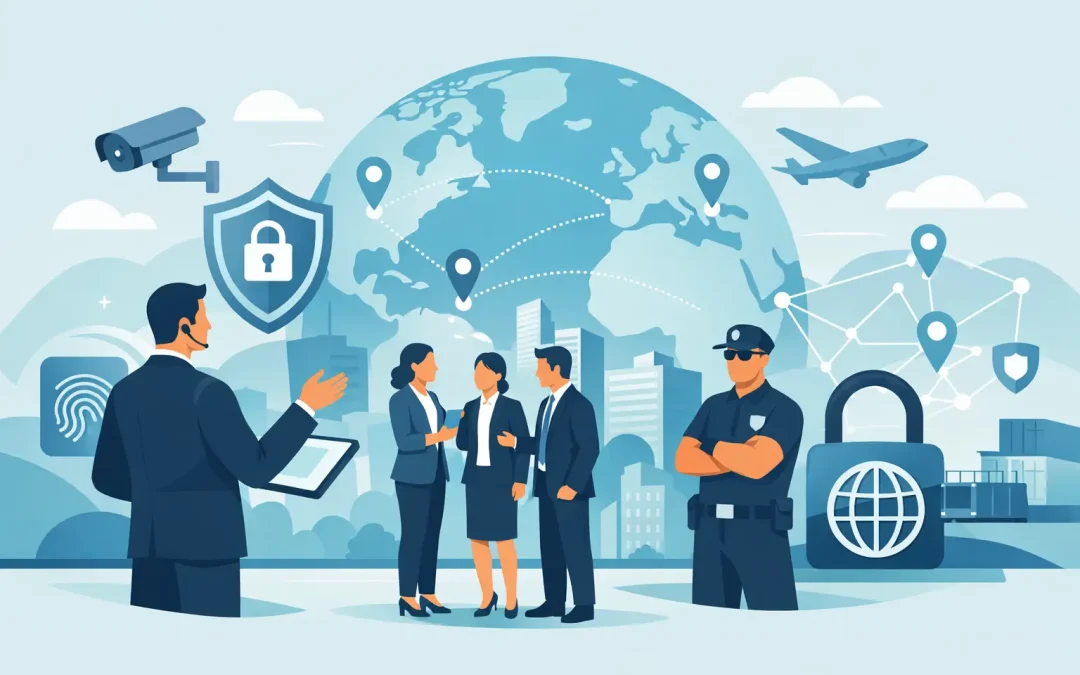
Security Consulting for Multinational Companies
Imagine this: A major client calls us at West Coast Detectives International in full crisis mode—something that should never have happened. They rushed into a high-stakes international deal after a quick, surface-level due diligence check that turned up “clean.” Big mistake.
In today’s high-risk global environment, it’s dangerously naive to believe any person or company is without issues. Every potential partner has a history—and those hidden risks demand immediate, deep-dive analysis to uncover what happened, what’s still lingering, and how it could impact your operations.
The good news? You can stop problems before they explode. Expert due diligence and security consulting let you expose every issue upfront, assess the real future risk, and move forward with confidence. Not every negative finding is a deal-breaker—when handled by seasoned professionals, many can be managed, mitigated, or even turned into an advantage.
This is not the place to cut corners. A modest investment in proper prevention today protects you from devastating losses of thousands—or even millions—tomorrow. Act decisively. Protect your company, your people, and your future.
At West Coast Detectives International, we’ve mastered this over 104 years of global investigations and security operations. Here are just some of the powerful lessons we’ve learned—and now deliver to multinational clients like you:
A regional incident can become a global corporate problem in a matter of hours. One executive is delayed at a border crossing, a local partner triggers corruption concerns, a protest forms near a plant, or a staff member posts sensitive location details online. For companies operating across jurisdictions, security consulting for multinational companies is not a narrow guard-force function. It is a strategic discipline that protects people, operations, reputation, and decision-making under pressure.
Multinational firms face a risk profile that is fundamentally different from that of domestic businesses. Their exposure is layered. Physical security, travel risk, cyber-adjacent human vulnerability, political instability, insider threat, activist disruption, kidnap concerns, sanctions issues, and supply chain opacity often intersect. When leadership treats these as separate workstreams, critical warning signs are missed. The more effective model is intelligence-led security planning built around how the business actually moves.
What security consulting for multinational companies should cover
At the enterprise level, security consulting is not simply a matter of writing policies or conducting site surveys. It should begin with a clear view of the company’s operational footprint, leadership exposure, public visibility, third-party relationships, and expansion plans. A multinational entering a new market does not face the same threat picture as one managing mature operations in ten countries. Likewise, a consumer brand with a visible executive team carries different risks than a low-profile industrial supplier.
That is why serious security consulting for multinational companies usually combines several disciplines at once. Protective intelligence matters because threat conditions shift quickly. Due diligence matters because local partners, vendors, and facilitators can create hidden liability. Executive protection planning matters because leadership travel often follows compressed schedules and public-facing events. Crisis response matters because even well-run organizations eventually confront a disruptive incident abroad.
The quality of the assessment depends on the quality of the information. Desktop reports alone rarely tell the full story. In higher-risk environments, on-the-ground insight, local source validation, and experienced investigative review often make the difference between a generic recommendation and a reliable operating picture.
The real issue is coordination, not just threat detection
Many multinational companies already have pieces of a security framework in place. They may have legal counsel reviewing jurisdictional issues, HR managing travel protocols, procurement screening vendors, and internal security overseeing facilities. The weakness is often not effort. It is fragmentation.
A fragmented structure creates blind spots. A local office may report civil unrest as a temporary inconvenience while headquarters sees no connection to an upcoming board visit. A procurement team may onboard a third party that appears commercially attractive but carries unresolved reputational or political ties. A principal may insist on keeping a public event on the calendar without understanding local threat chatter or route vulnerabilities. None of these failures begin as dramatic mistakes. They begin as ordinary silos.
Experienced consultants close those gaps by building a common threat picture across functions. That work is rarely glamorous, but it is where serious risk reduction happens. Security becomes more effective when intelligence, travel planning, executive support, investigations, and incident response are treated as connected responsibilities rather than isolated tasks.
Security consulting for multinational companies in volatile markets
Operating in stable business centers is one thing. Expanding into politically sensitive, corruption-prone, or terrorism-affected regions is another. In those markets, assumptions imported from the US or Western Europe can create unnecessary exposure.
A standard corporate travel policy may not be adequate where airport transfers are routinely monitored, kidnapping patterns are underreported, or police response is inconsistent. A conventional vendor review may miss beneficial ownership structures designed to hide criminal, sanctioned, or politically exposed interests. A site security audit may appear satisfactory on paper while local labor tensions, organized crime influence, or extremist activity are building around the area.
This is where consultancy must move beyond compliance language and into operational reality. An effective advisory team should be able to answer practical questions. Who controls access around the site? Which routes are predictable and which should be avoided? What local political developments could trigger demonstrations? Are executives being discussed publicly in ways that increase targeting risk? Which counterparties have been independently vetted, and which are relying on self-reported credentials?
For clients with high public visibility or sensitive sector exposure, the threshold for confidence must be higher. This is particularly true in energy, infrastructure, defense-adjacent, media, extractives, and humanitarian operations, where the threat environment can change rapidly and reputational consequences travel faster than formal reporting channels.
Why due diligence and protective planning belong together
One common mistake is treating due diligence as a dealmaking exercise and protection as a travel or event function. In practice, the two often overlap.
If a company is considering a local distributor, acquisition target, joint venture, or market entry partner, the findings from due diligence should shape security posture immediately. Questions about ownership, political affiliation, litigation history, labor practices, criminal links, and local standing are not just legal concerns. They can affect protest risk, extortion exposure, insider threat, and executive safety.
The same applies to leadership movements. If a principal is visiting a country where a proposed partner has controversy attached to it, that meeting can draw attention from hostile actors, activists, competitors, or local power brokers. Protective planning cannot be built on itinerary logistics alone. It must be informed by context.
This integrated model is where seasoned firms distinguish themselves. West Coast Detectives International, for example, operates from the premise that factual intelligence and protection planning should reinforce each other. That approach is better suited to multinational decision-making than a commodity security model focused only on visible deterrence.
What strong consulting looks like in practice
The best consulting engagements are tailored, not packaged. A board-level review for a multinational manufacturer will not look the same as a threat management plan for a media company, a travel risk framework for an NGO, or an executive protection program for a family-led global enterprise.
Still, the strongest work tends to share several characteristics. It is grounded in verified information rather than assumptions. It reflects both strategic and field-level realities. It addresses the client’s actual operating tempo. And it recognizes that not every risk can be eliminated, only managed intelligently.
That last point matters. Some firms oversell certainty. Serious professionals do not. In global operations, there are trade-offs. More visible security can deter some threats but attract attention in certain jurisdictions. Tight travel controls can reduce exposure but slow commercial activity. Deep screening of counterparties improves confidence but may lengthen transaction timelines. Good consulting does not hide those tensions. It helps leadership make informed choices with eyes open.
Choosing a partner for security consulting for multinational companies
The market is crowded with firms that can produce presentations, checklists, and generic country summaries. That is not the same as operational capability. Multinational clients should look closely at the background behind the advice.
A credible consulting partner should understand investigations, not just policy. They should be able to assess human behavior, local influence networks, reputational exposure, and the difference between stated conditions and real conditions on the ground. International reach also deserves scrutiny. Many vendors claim global capability when they are actually dependent on thin subcontractor networks with limited oversight.
Leadership credibility matters as well. In high-stakes environments, clients need access to people who have handled live incidents, advised exposed principals, briefed institutions, and worked through ambiguity. That background informs judgment. And judgment is what organizations rely on when the facts are incomplete and time is short.
Confidentiality should be non-negotiable. So should discretion in reporting. Senior decision-makers do not need inflated language or speculative alarmism. They need clear facts, credible threat interpretation, and practical options.
The business case is broader than loss prevention
The value of good security consulting is often misunderstood because it is measured too narrowly. This work is not only about preventing attacks or avoiding a worst-case event. It also supports continuity, executive confidence, market entry discipline, and reputational resilience.
When leaders know they are traveling with current intelligence, vetted routes, and a realistic contingency plan, they make better decisions. When a company understands who it is doing business with before signing, it avoids expensive corrections later. When threat indicators are interpreted early, management has room to adjust rather than react. Those outcomes protect more than assets. They protect strategic freedom.
For multinational companies, that is the real standard. Security should not sit at the edge of the business as a reactive cost center. It should function as a disciplined advisory capability tied directly to operations, governance, and risk tolerance.
The firms that handle this well are rarely the loudest. They are the ones that gather facts carefully, brief leadership honestly, and prepare for conditions as they are, not as anyone wishes them to be. In a cross-border environment where small failures can escalate quickly, that kind of quiet competence is often the most valuable protection a company can put in place.
