
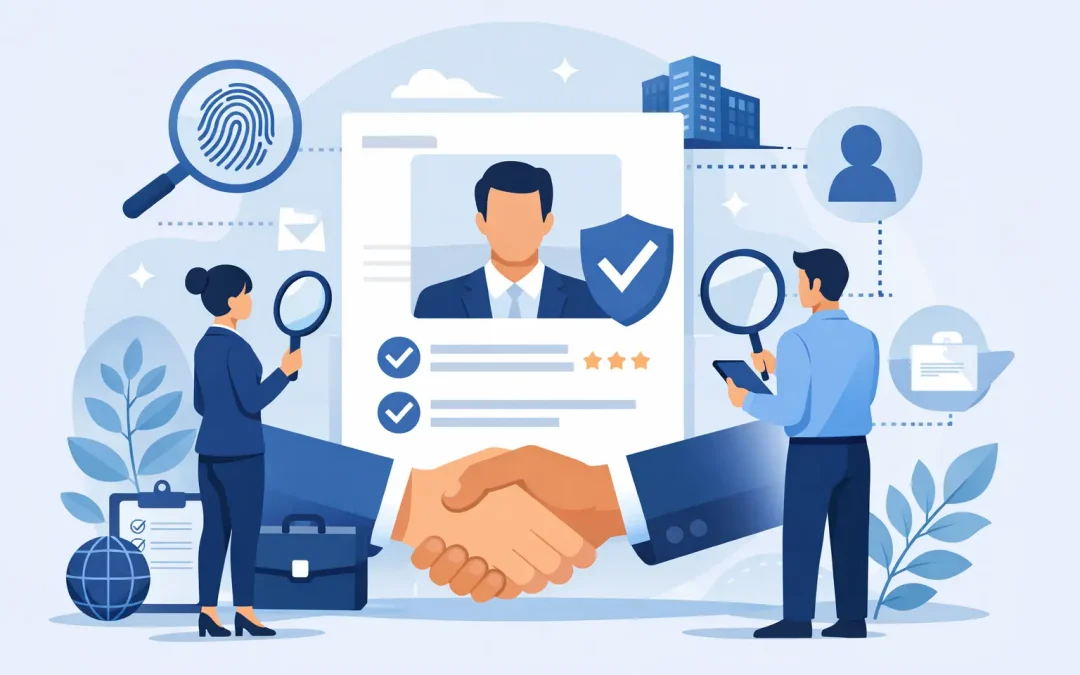
A promising partner can arrive with polished financials, recognizable references, and a persuasive growth story. None of that establishes who controls the company, where its capital comes from, or what liabilities may surface after your name, assets, or personnel are attached to the deal. Knowing how to verify business partners means testing the facts beneath the presentation before exposure becomes difficult to reverse.
For a routine domestic vendor relationship, basic corporate records and credit checks may be proportionate. For an acquisition, international joint venture, executive appointment, distribution agreement, or relationship involving regulated markets, public figures, government touchpoints, or travel to high-risk regions, verification must go further. The objective is not to find a reason to reject every opportunity. It is to make a decision with a clear understanding of the people, incentives, risks, and undisclosed facts involved.
How to Verify Business Partners Before Money Moves
Verification works best when it begins before contracts are signed, funds are transferred, or sensitive information is shared. Once a counterpart has access to intellectual property, customer data, supply chains, or executive travel details, the cost of a weak initial review rises sharply.
Start by defining the decision at hand. A minority investment calls for a different inquiry than selecting a logistics provider. If a prospective partner will handle payments, represent your organization abroad, gain access to facilities, or introduce you to political or commercial intermediaries, your review should be more demanding. The scope should follow the exposure, not the speed of the transaction.
Ask for core documentation early: formation records, business registrations, ownership information, tax identifiers where appropriate, key contracts, banking references, licenses, and details of directors and senior officers. A legitimate organization should expect reasonable diligence. Resistance, unexplained delays, or shifting answers do not prove misconduct, but they are operational signals that deserve attention.
Establish the Corporate Identity and Control Structure
A company name is not an identity. Similar names, recently formed entities, shell companies, nominee directors, and layered holding structures can obscure who is actually making decisions and benefiting from the relationship.
Confirm the legal entity’s exact name, jurisdiction, registration number, operating address, and status. Determine whether it is active, dissolved, recently renamed, or involved in frequent changes of directors or ownership. Then map the chain of control to the ultimate beneficial owners, not merely the individuals listed on a website or introductory deck.
This work is especially important across borders. Some jurisdictions provide limited public information, while others allow corporate records to be searched but do not reveal the practical controller behind an intermediary entity. In those cases, a paper trail alone may be insufficient. Experienced investigators compare corporate filings with litigation records, professional histories, local reporting, former associations, and credible human-source intelligence to identify inconsistencies.
Ownership is not the only issue. You also need to know whether a partner is financially and operationally real. Confirm that the stated offices, facilities, personnel, and commercial footprint exist. A prestigious address can be a serviced office. A sophisticated website can conceal a company with no meaningful capacity to perform.
Screen for Legal, Financial, and Reputational Exposure
Public-record research should establish whether the company and its principals have a history that conflicts with their representations. The review should include civil litigation, criminal allegations where lawfully available, insolvencies, regulatory actions, licensing issues, liens, judgments, procurement disputes, and adverse media.
Sanctions and watchlist screening are essential when a transaction has international reach, a government connection, or a complex ownership chain. Screen the entity, its directors, beneficial owners, major intermediaries, and closely linked companies. A match requires careful resolution. Treating a common name as proof is careless; dismissing a possible match without examining identifiers is equally dangerous.
Reputational research requires judgment. Online accusations, anonymous complaints, and sensational reporting may be inaccurate or commercially motivated. Look instead for patterns: repeated disputes with different parties, unexplained litigation, allegations that align with official actions, or a consistent gap between claimed credentials and verifiable experience.
Financial warning signs should be evaluated in context. A young company may have thin credit history without being deceptive. But unexplained pressure for advance payment, reluctance to identify banking relationships, sudden changes to payment instructions, chronic late-payment allegations, or a mismatch between claimed revenue and visible operations warrant scrutiny. Fraud frequently exploits urgency and ambiguity.
Verify the People Behind the Proposal
The business relationship will be carried by people, not corporate documents. Verify the backgrounds of founders, directors, executives, authorized signatories, and the individuals who will control the day-to-day engagement.
Confirm employment history, qualifications, board roles, professional licenses, and claimed commercial successes. Review whether a principal has been associated with failed entities, misconduct allegations, undisclosed conflicts of interest, or competitors with a stake in the proposed arrangement. Pay particular attention to individuals who appear to operate through relatives, associates, or a sequence of short-lived companies.
References should be independently validated. Do not rely solely on contacts supplied by the prospective partner. Locate former clients, industry participants, suppliers, and other informed parties through your own research. Ask specific questions: Did the company perform as promised? Who actually led the work? Were payments timely? Did the relationship end cleanly? Vague praise is less useful than concrete examples.
When the stakes are high, discreet source inquiries can reveal information absent from databases: a concealed business dispute, local political influence, a questionable intermediary, or a reputation for making commitments the organization cannot fulfill. Such work must be lawful, proportionate, and handled with strict confidentiality.
Test the Commercial Story Against Reality
A capable due diligence process does not stop after finding no obvious derogatory information. It tests the central claims that justify the partnership.
If a distributor says it has national reach, verify its customer network, warehouse capacity, sales team, and permissions to operate. If an investment partner claims access to capital, establish the source of funds and authority to deploy them. If a technology provider claims proprietary capability, examine its personnel, prior deployments, intellectual property position, and ability to support the product after launch.
The most valuable questions are often practical. Who will sign the agreement? Who will receive payment? Who has access to data or sites? Which third parties are involved? What happens if the local principal is unavailable? A credible partner can answer these questions consistently and provide evidence. A weak partner often responds with generalities, substitutes a new contact, or changes the structure when asked for verification.
Match the Investigation to the Risk
Not every partnership requires a full investigative deployment. Over investigating a low value, low access vendor can consume time without improving the decision. Under investigating a strategic relationship can expose an organization to financial loss, sanctions concerns, reputational damage, insider threats, or personal security risk.
A proportionate review usually considers five areas:
- Legal identity, ownership, and authority to act
- Financial condition, payment behavior, and source of funds
- Litigation, regulatory, sanctions, and adverse information exposure
- Background, reputation, and conflicts involving key individuals
- Operational capability and the reality of the commercial claims
Escalate the review when any of the following factors are present: opaque ownership, cross-border payments, politically exposed persons, sensitive industries, unusual intermediaries, requests for confidentiality beyond normal commercial practice, or access to protected information and facilities. The same applies when your executives will travel, meet, or negotiate in a location where local intelligence and security conditions are uncertain.
Preserve Evidence and Build Protective Terms
Verification should produce a defensible record, not just a verbal assurance that a partner “checked out.” Keep a clear file of documents reviewed, sources consulted, findings, unresolved questions, and the rationale for the final decision. This record helps leadership, counsel, compliance teams, and insurers understand what was known at the time.
Use the findings to shape the agreement. Depending on the risk, protective measures may include staged payments, audit rights, beneficial ownership disclosures, compliance representations, termination rights, restrictions on subcontracting, information-security controls, and approval requirements for changes in ownership or banking instructions. Due diligence is most useful when it changes how the relationship is managed.
For complex or sensitive engagements, independent investigative support can provide the field verification and discretion that ordinary database searches cannot. West Coast Detectives International approaches these assignments as decision-support missions: establish the facts, identify material exposure, and report findings that leadership can act on.
Before committing capital, access, or reputation to a new partner, pause long enough to confirm that the opportunity is attached to a real, accountable, and capable organization. The right relationship can strengthen an enterprise. The wrong one can create a problem that no contract can fully contain.
